A compact portrait
| Field | Detail |
|---|---|
| Full name | Emil Erich Zellweger |
| Place of origin / Birthplace | Au, Canton St. Gallen, Switzerland (reported) |
| Occupation | Mechanical and electrical engineer; worked in oil-refining (reported) |
| Spouse | Kjellfrid Irene (née Andreassen) — Norwegian-born, nurse/midwife (married c. 1963, reported) |
| Children (notable) | Drew (Andrew) Zellweger — b. 1967 (reported); Renée Kathleen Zellweger — b. April 25, 1969 |
| Known residences | Family associated with Katy / Baytown, Texas (United States) during children’s upbringing |
| Public records available | Family and biographical mentions; no authoritative public birthdate or obituary for Emil publicly verified |
Early life and origins
Emil Erich Zellweger is presented in public family narratives as a man who began life in a small Swiss town and carried that practical, northern-European steadiness into a life abroad. The town of Au in the canton of St. Gallen — a quiet place of stone and alpine air — is given as his place of origin. The specifics of his early years are sparse in public accounts: no firmly documented birthdate appears in open profiles, and public records that would read like a conventional CV are not available. What remains consistent across descriptions is a through-line: trained and practiced in engineering, with skills in both mechanical and electrical disciplines.
Career and craft: engineer in the oil-refining world
The simplest, clearest label applied to Emil in public family sketches is engineer — mechanical and electrical. That duality suggests a mind comfortable with moving parts and circuits, torque and current. The industry repeatedly associated with his professional life is oil refining: a sector that blends heavy industrial engineering, process control, and long hours supervising complex systems. There are no widely circulated patents, academic publications, or industry awards attached to Emil’s name in the public domain; instead, his professional identity is conveyed primarily through biographical summaries that emphasize occupation and industry rather than a public career track.
If an engineer’s life can be likened to a bridge — spanning theory and application, load and tolerance — Emil’s described role in oil-refining would place him in the thick of that bridge’s maintenance, where precision and steady judgment matter more than headlines.
Family life and the timeline of key dates
The family timeline, as it is generally presented, moves from Europe across the Atlantic and into a Texas landscape where two children would grow up. Dates and numbers that are commonly associated with the family include:
| Year / Date | Event |
|---|---|
| circa 1963 | Marriage of Emil Zellweger and Kjellfrid Irene Andreassen (reported) |
| 1967 | Birth of Drew (Andrew) Zellweger (reported) |
| April 25, 1969 | Birth of Renée Kathleen Zellweger in Texas |
These anchor points create a domestic arc: a Swiss-born father, a Norwegian-born mother, and a household in Texas during the late 1960s and 1970s where two children were raised. The couple’s marriage date and the children’s birth years offer concrete numbers, even when some personal details about Emil himself — such as an exact birthdate — remain unconfirmed in the public sphere.
Siblings and trajectories: Drew and Renée
Sibling relationships often illuminate a parent’s influence, and in this family that is sharply visible. Drew (Andrew), born in 1967, is described in public summaries as pursuing a business and marketing career; he has appeared in public family moments tied to his sister’s milestones. Renée, born April 25, 1969, became a widely recognized actress, and in interviews and profiles she has referenced her parents’ immigrant backgrounds and working-class influences. The two siblings trace different professional paths, but both reflect the cultural mixing of Swiss, Norwegian, and Texan environments in which they were raised.
Heritage and cultural threads
The household was formed by two distinct European heritages: Emil’s Swiss roots in St. Gallen and Kjellfrid’s Norwegian background, reportedly from northern Norway. That combination is often highlighted in descriptions of the family’s identity — an Alpine sensibility and a Scandinavian resilience meeting the broad plains and suburban neighborhoods of Texas. Cultural threads appear in anecdotes and profile sketches: values of diligence, understatedness, and a focus on practical trades and caring professions (the mother’s career as a nurse and midwife is cited alongside Emil’s engineering work).
Numbers and geography here matter less than pattern: movement from Au to the United States; a marriage in the early 1960s; two children arriving before 1970. Those discrete data points sketch a migratory and generational shift rather than a dramatic public saga.
Public footprints and verifiability
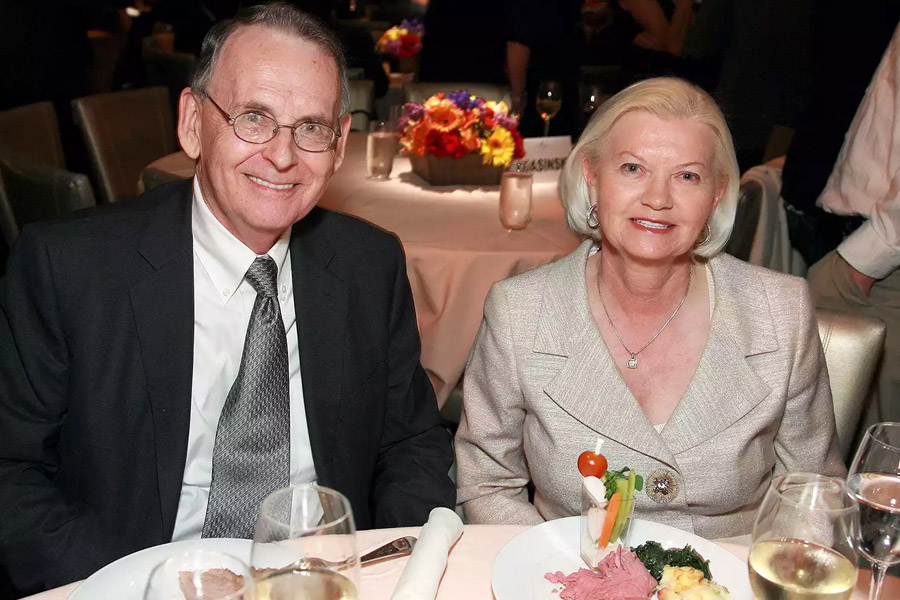
Emil’s public footprint is modest and largely familial. When his name appears in the press it does so in service of another story — most often as a part of a larger profile about his daughter. Photographs of family members appear in galleries connected to public events. Video interviews with his children occasionally reference their family background and note Emil’s Swiss origin and engineering career, but those segments focus on the celebrity child rather than the private life of the engineer.
There are clear gaps in the public record. No widely accessible engineering publications, patents, or media profiles singularly devoted to Emil have surfaced in standard public browsing. Similarly, an authoritative public death notice or comprehensive civil registry entry that ties a birthdate or full career record to him is not present in open, freely available press archives. In short: the available narrative is sturdy enough to confirm the essentials — Swiss origin, engineering career in oil-refining, marriage to Kjellfrid, two children born in 1967 and 1969 — but not detailed enough to assemble a full professional dossier.
The story as a fabric of facts and silences
When you hold the known dates and names together, the image is of a family stitched from different European threads into American soil. Numbers anchor that image: a marriage around 1963, an elder child in 1967, another in 1969, and a hometown in Au that carries an unspoken origin story. The silences — missing exact birthdates, limited public career records — are themselves part of the portrait. They suggest a life lived largely outside the media spotlight, one where occupational competence mattered more than public acclaim, and where family life, rather than public record, formed the principal evidence of a man’s passage through time.