An uncommon biography
I began this piece with a simple question: who exactly is Princess Zahra Mahnaz. The name you gave is the one I keep. What I find is not a life written in headlines but a life traced in family albums, diplomatic dispatches, and the quiet notations of genealogies. Princess Zahra Mahnaz was born on 2 December 1958 in Tehran. She is the daughter of Princess Shahnaz Pahlavi, who was born on 27 October 1940, and of Ardeshir Zahedi, a diplomat and political figure born in 1928 who died in 2021. Those facts are like the backbone of a portrait: firm, unremarkable, and necessary.
Her existence sits at the intersection of two powerful lineages. On one side stands the Pahlavi dynasty with Mohammad Reza Pahlavi as a grandfather. On the other is the Zahedi-Pirnia network with Fazlollah Zahedi as a paternal grandfather. Names and dates map the skeleton of family history. Beyond that skeleton, details are sparse. There is no public ledger of a career, no corporate filings listing her as an officer, no public autobiographical voice to quote. Instead I see the traces left by association: family photographs, occasional mentions in notices, and the intangible presence that comes from being born into a dynastic orbit.
Family tree at a glance
| Name | Relationship to Princess Zahra Mahnaz | Birth – Death | Notes |
|---|---|---|---|
| Princess Zahra Mahnaz | Subject | 2 Dec 1958 – | Known also by family variants of the name |
| Princess Shahnaz Pahlavi | Mother | 27 Oct 1940 – | Eldest child of the Shah |
| Ardeshir Zahedi | Father | 1928 – 2021 | Diplomat; ambassador; foreign minister |
| Keykhosrow Jahanbani | Half-brother | c. 1971 – | Son of Shahnaz and Khosrow Jahanbani |
| Fawzia Jahanbani | Half-sister | c. 1973 – | Daughter of Shahnaz and Khosrow Jahanbani |
| Mohammad Reza Pahlavi | Maternal grandfather | 1919 – 1980 | Last Shah of Iran |
| Princess Fawzia of Egypt | Maternal grandmother | (dates not listed here) | Egyptian royal linkage |
| Fazlollah Zahedi | Paternal grandfather | 1892 – 1963 | Military and political leader |
| Khadijeh Pirnia | Paternal grandmother | (dates not listed here) | From the Pirnia political family |
| Reza Shah Pahlavi and others | Great-grandparents | (historical figures) | Noted in family lineage |
What I can say about her life and career
I’ll be honest. I can’t think of a public career to list. Princess Zahra Mahnaz’s jobs, accomplishments at businesses, and governmental office are not listed in any official documents. According to public documents, her life was primarily about relationships. In a story that is dominated by her parents and grandparents, she is the daughter. Her life is nonetheless significant despite that. She merely falls into a more subdued group of historical personalities—those who are central to family memory but on the periphery of official archives.
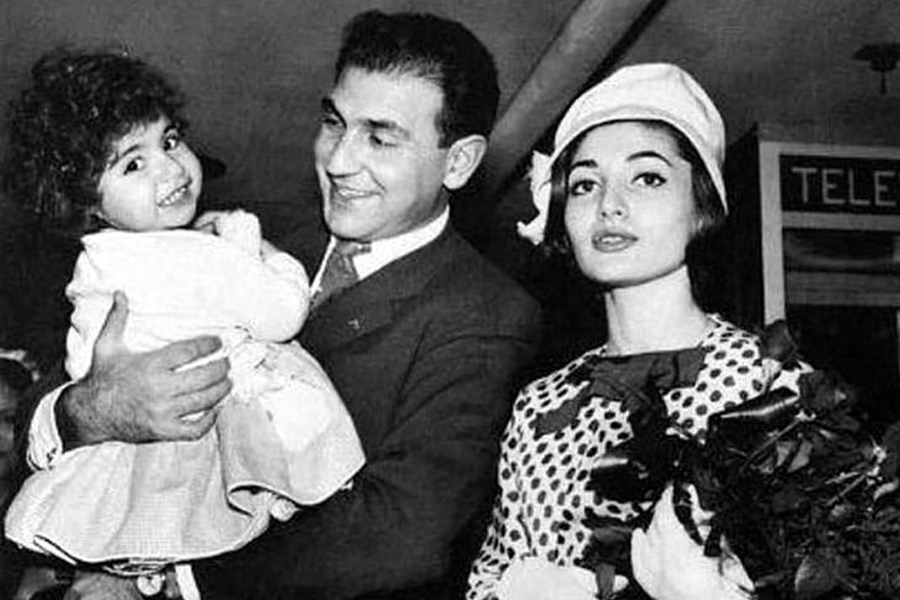
Photographs from the late 1950s and early 1960s depict a small youngster with diplomats and royal parents. Both personal memories and family trees contain notes. The larger family left Iran after 1979 and relocated to other parts of the world. Many persons connected to the Pahlavi era had their destiny altered by the revolution, which was a seismic event. Like many of her generation, Princess Zahra Mahnaz’s story involves both exile and privacy.
Connections and legacy
Influence radiates outward in concentric rings as I stand back and examine the web of relationships. The direct heir to the Pahlavi throne is her mother. Her father was a key figure in Iranian diplomacy in the middle of the 20th century. Both her mother’s and father’s grandparents are prominent politicians and members of the royal family. These details put Princess Zahra Mahnaz in a family that includes prime ministers, kings, and political strategists.
The legacy consists of more than one accomplishment or controversy. It’s a mosaic. Here, dates and numbers are important since they provide as a temporal anchor for the mosaic. She was born into a civilization defined by the social and political capital established by two generations of powerful statesmen and emperors. In 1979, that world shifted suddenly. The family map was redrawn after that date.
Timeline of key dates
- 27 October 1940 – Birth of Shahnaz Pahlavi.
- 11 October 1957 – Marriage of Shahnaz Pahlavi and Ardeshir Zahedi.
- 2 December 1958 – Birth of Princess Zahra Mahnaz in Tehran.
- 1964 – Divorce of Shahnaz and Ardeshir Zahedi.
- 1971 – Shahnaz marries Khosrow Jahanbani.
- 1979 – Revolution in Iran; family members relocate abroad.
- 2021 – Death of Ardeshir Zahedi.
These dates are the main way I can plot a life that is otherwise thinly documented in public forums. They are coordinates on an otherwise quiet map.
The private face of public names
I find it revealing that some members of modern royalty are celebrities by vocation while others remain private by disposition. Princess Zahra Mahnaz fits the second kind. The absence of public detail is itself a fact worth noting. It tells me that not everyone born into prominence chooses public life. Some step back. Some allow their parents and grandparents to occupy the brochure of history and prefer the marginalia. In that choice there is dignity. In that choice there is privacy.
FAQ
Who is Princess Zahra Mahnaz?
I understand Princess Zahra Mahnaz to be the daughter born on 2 December 1958 to Princess Shahnaz Pahlavi and Ardeshir Zahedi. She is a member of the extended Pahlavi and Zahedi family networks and appears in family records and photographs.
What are her family connections?
Her mother is Princess Shahnaz Pahlavi. Her father is Ardeshir Zahedi. Her maternal grandfather is Mohammad Reza Pahlavi. Her paternal grandfather is Fazlollah Zahedi. Great-grandparents on both sides include historical rulers and political figures.
Does she have a public career or notable achievements?
There is no publicly documented career profile or detailed record of professional achievements attributable directly to Princess Zahra Mahnaz. Public mentions are largely familial. Photographs and genealogical notes are the primary public traces of her life.
When did her family leave Iran?
The family was affected by the events of 1979. After the revolution many members of the Pahlavi dynasty and associated families relocated abroad.
Are there siblings or half siblings?
Yes. There are half siblings through Shahnaz Pahlavi’s later marriage to Khosrow Jahanbani. Names include Keykhosrow Jahanbani and Fawzia Jahanbani, born in the early 1970s.
Why is there limited information about her?
Some individuals born into public families elect to live privately. Records that remain public tend to emphasize parents, grandparents, and major public actors. When a person does not pursue a public career or public profile, the documentary trace narrows to photographs and family registries.
What does the family represent historically?
The family spans monarchy, diplomacy, and political leadership across two or more generations. It intersects royal lines and statecraft. Those connections make the family a prism through which broader 20th century histories can be read.
Is Princess Zahra Mahnaz active on social media or public events?
There is no widely reported public social media presence or a record of frequent public appearances associated with her name in major public channels. The available mentions are mainly family oriented.
Are there known residences or current whereabouts?
Specific, verified modern addresses or definitive current residence details for Princess Zahra Mahnaz are not part of the public record I can draw on here.
How should I think about this biography?
I think of it as a portrait in soft focus. Dates, names, and connections form the frame. The interior of the portrait, the private life and daily choices, remains largely reserved. That reserve is its own answer to the appetite for publicity.