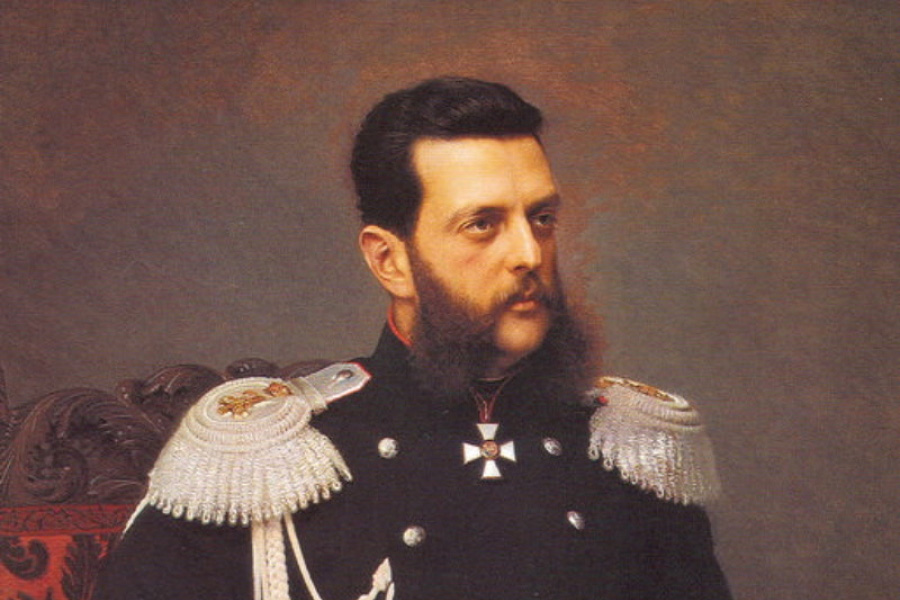
The man behind the title
I think of Grand Duke Vladimir Alexandrovich Of Russia as one of those Romanov figures who stood at the crossroads of ceremony, power, and private taste. He was born in 1847 in the Winter Palace, the third son and fourth child of Emperor Alexander II and Empress Maria Alexandrovna. That birth placed him near the center of imperial gravity from the start. He did not become emperor, but he lived in the bright, dangerous orbit of empire, where rank could feel like armor and a cage at the same time.
He grew up in a dynasty that expected discipline, loyalty, and public service. His life moved along a military path, yet he was never only a soldier. He was also a patron, a collector, a court figure with a sharp eye for art and display. In him, I see the Romanov blend of steel and silk. He could command troops and admire paintings, direct institutions and shape culture. That combination made him unusually influential in late imperial Russia.
Military service, court power, and public duty
His career started early and grew. In the Life Guards, he rose in the imperial military. He was a significant guard commander and military administrator by the 1870s and 1880s. He became lieutenant general in 1874 and commanded the Guards Corps and St. Petersburg Military District. He was a senator, adjutant general, and State Council member. He joined the Council of Ministers later, getting close to government.
I read his career as an influence map. Not a distant ceremonial prince. He was in the room, chain of command, and state structure. Besides his family name, he gained power through office and responsibilities. He was honored for his Russo-Turkish War service. He became president of the Imperial Academy of Fine Arts, which fit his creative tastes and let him shape culture.
His public service went beyond war and bureaucracy. He sponsored the Church of the Savior on Spilled Blood, the massive memorial to his father’s murder. That effort alone reveals his era’s emotional and political climate. Vladimir stood at the memorial to loss, defiance, and memory.
His wife, children, and the Romanov household
His marriage tied him to another important dynastic line. In 1874, he married Duchess Marie of Mecklenburg-Schwerin, who became Grand Duchess Maria Pavlovna of Russia. Their marriage was delayed by religion and court negotiation, but once it happened, she became one of the most formidable women in the Romanov world. She was elegant, determined, and socially powerful. In the grand theater of imperial Russia, she was no background figure. She was a star with a strong voice.
Their household was large, complicated, and highly significant for later Romanov history. I like to think of it as a branching tree whose limbs reached deep into 20th century Europe.
| Family member | Relationship to Vladimir Alexandrovich | Notes |
|---|---|---|
| Emperor Alexander II | Father | Emperor of Russia |
| Empress Maria Alexandrovna | Mother | Born Marie of Hesse and by Rhine |
| Grand Duchess Alexandra Alexandrovna | Sister | Died in childhood |
| Tsarevich Nicholas Alexandrovich | Brother | Original heir, died young |
| Alexander III | Brother | Later Emperor of Russia |
| Grand Duke Alexei Alexandrovich | Brother | Senior Romanov grand duke |
| Grand Duchess Maria Alexandrovna | Sister | Married Alfred, Duke of Edinburgh |
| Grand Duke Sergei Alexandrovich | Brother | Governor-general of Moscow, assassinated in 1905 |
| Grand Duke Paul Alexandrovich | Brother | Had children from two marriages |
| Grand Duchess Maria Pavlovna | Wife | Born Duchess Marie of Mecklenburg-Schwerin |
| Grand Duke Alexander Vladimirovich | Son | Died in infancy |
| Grand Duke Kirill Vladimirovich | Son | Major dynastic claimant later in exile |
| Grand Duke Boris Vladimirovich | Son | Married morganatically |
| Grand Duke Andrei Vladimirovich | Son | Married ballerina Matilda Kschessinskaya |
| Grand Duchess Elena Vladimirovna | Daughter | Married Prince Nicholas of Greece and Denmark |
That table only starts the story. Each family member casts a shadow across his life.
His eldest son, Alexander Vladimirovich, died in infancy, a brief candle in a room full of torchlight. Kirill Vladimirovich became one of the most politically important descendants of the Romanov line. Boris Vladimirovich lived a more unconventional aristocratic life. Andrei Vladimirovich became famous partly through his relationship with the ballerina Matilda Kschessinskaya, a figure who stood at the edge of imperial glamour and scandal. His daughter Elena Vladimirovna married into the Greek royal family and became a bridge between Romanov Russia and wider European royalty.
Their children ensured that Vladimir Alexandrovich’s line would continue to matter long after the empire itself collapsed. In a family full of headlines, he was one of the central trunks.
Wealth, taste, and cultural influence
Vladimir Alexandrovich was wealthy, but imperial money, not personal profit. He lived at St. Petersburg’s Vladimir Palace, famous for its size, magnificence, and art collection. The palace was more than a dwelling. This stone, wood, glass, and gold statement was crafted. He owned books, paintings, icons, and other items he liked. I think he approached collecting like writing. The things that spoke to him formed his universe.
Scale and flair explain his finances better than ledger sheets. The palace was expensive and had hundreds of apartments. He kept a large private library that became an important international acquisition. His diverse interests are shown by that alone. He wasn’t pleased with passive land ownership. He collected and organized. He wanted beauty to be structured.
Power also came from his art sponsorship. He promoted ballet, artists, and cultural institutions. Culture and politics were intertwined in imperial Russia. A political mask. That was clear to Vladimir.
Later years and memory
His later years were marked by decline in influence but not disappearance. The political climate changed, the court became more unstable, and family tensions sharpened. The crisis around Kirill’s marriage caused trouble. By 1905, Vladimir had retired from active command. He died in 1909 at Vladimir Palace and was buried in the Grand Ducal Mausoleum near the Peter and Paul Cathedral.
I think his memory survives because he was more than a name in a dynastic chart. He was a Romanov of substance. He commanded, collected, commissioned, and performed. He fathered children whose lives shaped the next generation of imperial and post imperial history. He moved through the last bright decades of the empire like a man walking through a palace whose windows already hinted at storm.
FAQ
Who was Grand Duke Vladimir Alexandrovich Of Russia?
He was a son of Emperor Alexander II and Empress Maria Alexandrovna, a senior Romanov grand duke, military leader, patron of the arts, and a major figure in late imperial Russian court life.
Who was his wife?
His wife was Duchess Marie of Mecklenburg-Schwerin, later Grand Duchess Maria Pavlovna of Russia. She was a powerful court personality and an important Romanov mother figure.
How many children did he have?
He had five children. One died in infancy, and four became historically important adults: Kirill, Boris, Andrei, and Elena.
Which of his children became especially significant?
Grand Duke Kirill Vladimirovich became especially significant because he later emerged as a leading dynastic claimant. Grand Duchess Elena Vladimirovna also became important through her marriage into the Greek royal family.
What was his main public role?
His main public role combined military command, state service, and cultural patronage. He served in elite guards units, held senior administrative posts, and led the Imperial Academy of Fine Arts.
Why is he remembered today?
He is remembered for his position within the Romanov family, his military and cultural influence, his notable marriage, his children’s later importance, and his role in the final decades of imperial Russia.