Getting a real estate investment loan does not have to mean dealing with a mountain of paperwork. However, knowing what a private money lender needs before you apply can make the process much easier. At Simplending Financial, we understand that real estate investors often need financing that is straightforward, responsive, and suited to the specific property and investment strategy. The company provides private money financing for business purpose investment properties nationwide, with financing options for fix and flip projects, ground up construction, rental properties, and bridge financing.
When you apply for private money loans, the lender generally wants to understand three things: who you are, what property you are buying or refinancing, and how the loan will be repaid. Depending on the transaction, you may need to provide identification, entity documents, bank statements, a purchase agreement, property information, a renovation budget, contractor estimates, and an exit strategy.
The exact requirements can vary from one lender to another. A lender financing a fix and flip project may request different information than a lender financing a rental property, multifamily building, or ground up construction project.
The good news is that preparing your documents before applying can make the process much smoother. A complete loan package also helps the lender understand your deal faster and determine whether the property and financing structure make sense.
This guide explains the most common documents requested during private money lending for real estate investors in the United States. It also explains why each document matters and how you can prepare before approaching a lender.
What Documents Do Private Money Lenders Usually Require?
A private money lender will generally want documents in several main categories. These include borrower information, financial information, entity documents, property information, project details, and the planned exit strategy.
Common documents include:
- Government issued identification
- Completed loan application
- LLC or business entity documents
- Bank statements
- Proof of available funds
- Purchase agreement
- Property information
- Property photos
- Scope of work
- Renovation budget
- Contractor estimates
- Title information
- Insurance information
- Real estate experience or project history
- Exit strategy information
Not every borrower will need every document. Requirements depend on the lender, property, loan purpose, location, transaction structure, and borrower profile. Current investor loan checklists from private and alternative lenders show that documentation commonly covers both the borrower and the investment property.
1. Government Issued Identification
The first document most lenders need is identification for the borrower and other key parties involved in the transaction.
This may include:
- Driver license
- Passport
- Other government issued photo identification
If the property is being purchased through an LLC, the lender may also need identification for the members, managers, guarantors, or other individuals who are required to sign the loan documents.
This step is straightforward, but it is important. The lender needs to know exactly who is borrowing the money and who is responsible for the loan.
Providing clear copies of your identification at the beginning can prevent unnecessary delays later in the process.
2. Completed Loan Application
A private money lender will normally ask you to complete a loan application.
The application may request information such as:
- Your legal name
- Contact information
- Property address
- Purchase price
- Requested loan amount
- Estimated renovation costs
- Loan purpose
- Ownership structure
- Real estate experience
- Expected repayment strategy
The lender uses this information to understand the basic structure of your deal before reviewing supporting documents.
Be accurate when completing the application. If the information in your application does not match the purchase contract, bank statements, or other documents, the lender may need additional explanations.
3. LLC and Business Entity Documents
Many real estate investors purchase investment properties through an LLC or another business entity.
If you are borrowing through an LLC, the lender may request documents that confirm the entity exists and identify who has authority to borrow money on its behalf.
Common documents can include:
- Articles of Organization
- Operating Agreement
- EIN documentation
- Certificate of Formation
- Certificate of Good Standing when applicable
- Business registration documents
- Ownership information
Some lenders may also request documents for multiple layers of ownership if the borrowing entity is owned by another entity.
For this reason, investors should have their entity records organized before submitting a loan application.
A properly organized entity file can make it easier for the lender, title company, and closing attorney to verify the transaction.
4. Bank Statements and Proof of Funds
Bank statements are another common part of the documentation process.
A private lender for real estate may want to confirm that you have enough liquid funds to cover your required contribution, closing costs, reserves, or other expenses that are not covered by the loan.
Depending on the transaction, the lender may request recent personal or business bank statements.
The lender may be looking for evidence of:
- Available cash
- Down payment funds
- Closing cost funds
- Renovation reserves
- Carrying cost reserves
- Liquidity after closing
Not every private money lender uses the same financial documentation requirements. Some focus heavily on the property and deal structure, while others may place greater emphasis on borrower liquidity.
Current private lending checklists commonly include bank statements and proof of liquidity among borrower documents.
5. Purchase Agreement
If you are purchasing a property, the signed purchase agreement is one of the most important documents in the loan file.
The purchase contract tells the lender:
- Agreed purchase price
- Property address
- Buyer and seller information
- Closing date
- Contract terms
- Relevant contingencies
- Earnest money information
The lender needs this information to understand how much you are paying for the property and how the requested financing fits into the transaction.
A missing or incomplete purchase agreement can slow down the underwriting process.
If you have already signed a contract, provide the complete executed agreement and any relevant amendments or addenda.
6. Property Information
A private money lender needs to understand the property being used as collateral.
At a minimum, you should be prepared to provide the property address and basic information about the asset.
Depending on the loan, the lender may ask for:
- Property type
- Current occupancy
- Number of units
- Current condition
- Existing liens
- Property taxes
- Existing leases
- Rental information
- Current property photos
- Previous listing information when relevant
The lender may also order an appraisal, valuation, inspection, or other property level review.
The purpose is to determine whether the property provides sufficient collateral for the proposed loan.
7. Property Photos
Photos may seem simple, but they can be extremely useful during the initial review.
For a renovation project, provide clear photos showing the current condition of the property.
Include photographs of:
- Front exterior
- Rear exterior
- Kitchen
- Bathrooms
- Bedrooms
- Living areas
- Major structural concerns
- Damaged areas
- Mechanical systems when relevant
- Other areas requiring renovation
Do not intentionally hide problems from the lender.
A professional lender would rather understand the property’s condition at the beginning than discover unexpected problems later.
Current lender checklists commonly request interior and exterior property photos as part of the initial file.
8. Scope of Work
If you are requesting financing for a renovation, your scope of work is especially important.
The scope of work explains what you plan to change at the property.
For example, a fix and flip project may include:
- Kitchen renovation
- Bathroom renovation
- Flooring
- Painting
- Roofing
- Plumbing
- Electrical work
- HVAC work
- Exterior improvements
- Landscaping
The lender uses the scope of work to understand the project and determine whether the renovation budget appears reasonable.
A vague statement such as “renovate the property” is usually not enough.
A stronger scope describes the work in specific terms and provides estimated costs for the major components.
9. Renovation Budget
The renovation budget works closely with the scope of work.
Your budget should show how much you expect to spend on the project.
For example:
Kitchen: $25,000
Bathrooms: $18,000
Roof: $12,000
Flooring: $8,000
Painting: $7,000
Electrical and plumbing: $10,000
Landscaping: $5,000
You should also consider whether the project needs a contingency reserve for unexpected costs.
A private money lender wants to know whether the requested loan amount and renovation budget make sense relative to the property’s value and expected finished condition.
Current lending guidance commonly identifies an itemized renovation budget and scope of work as important documents for renovation financing.
10. Contractor Estimates and Bids
For larger renovation or construction projects, the lender may request contractor bids or estimates.
These documents can provide additional support for the renovation budget.
A contractor estimate may include:
- Labor costs
- Material costs
- Individual project phases
- Expected completion timeline
- Total project cost
If you are working with an established contractor, having a professional written estimate can make your project presentation stronger.
It also helps the lender understand how renovation funds may be used during the project.
11. Comparable Sales and Property Valuation Information
If you are buying a property below market value or planning a major renovation, comparable sales can help support your projected value.
For a fix and flip project, investors often focus on the expected value after improvements.
You may provide comparable properties that are similar in:
- Location
- Size
- Property type
- Bedroom and bathroom count
- Condition
- Recent sale date
The lender may conduct its own valuation or appraisal, but providing reasonable comparable sales can help explain your investment strategy.
Do not choose only the most expensive properties you can find. Strong comparable sales should genuinely support your projected value.
12. Title and Existing Lien Information
Title information is important because the lender needs to know who owns the property and whether other claims or liens exist.
The title company will normally conduct its own title search and provide the required documentation.
Depending on the transaction, the lender may review:
- Preliminary title report
- Title commitment
- Existing mortgage information
- Lien information
- Ownership records
- Other encumbrances
Title issues can create serious closing delays, so identifying them early is beneficial.
Current investor lending checklists commonly include title reports, existing liens, and payoff information among property documentation.
13. Insurance Information
Real estate lenders generally want to know that the property will have appropriate insurance coverage.
Depending on the property and loan, you may need evidence of property insurance, builders risk coverage, or other applicable policies.
For renovation projects, investors should discuss insurance requirements with their lender and insurance professional before closing.
Do not assume that the insurance policy you currently have will automatically meet the lender’s requirements.
14. Real Estate Experience and Track Record
Experience can be particularly relevant for investment property financing.
A lender may ask about your previous projects, especially if you are requesting financing for a renovation or construction project.
You may be asked to provide:
- List of previous properties
- Purchase prices
- Renovation costs
- Sale prices
- Project timelines
- Previous lenders
- Rental property experience
- Current real estate owned schedule
First time investors should not automatically assume they cannot qualify.
Some private money lenders consider the property, available equity, liquidity, project team, and exit strategy along with borrower experience.
The important thing is to be transparent about your experience.
If this is your first project, explain how you plan to manage the work and identify experienced professionals who will support the project.
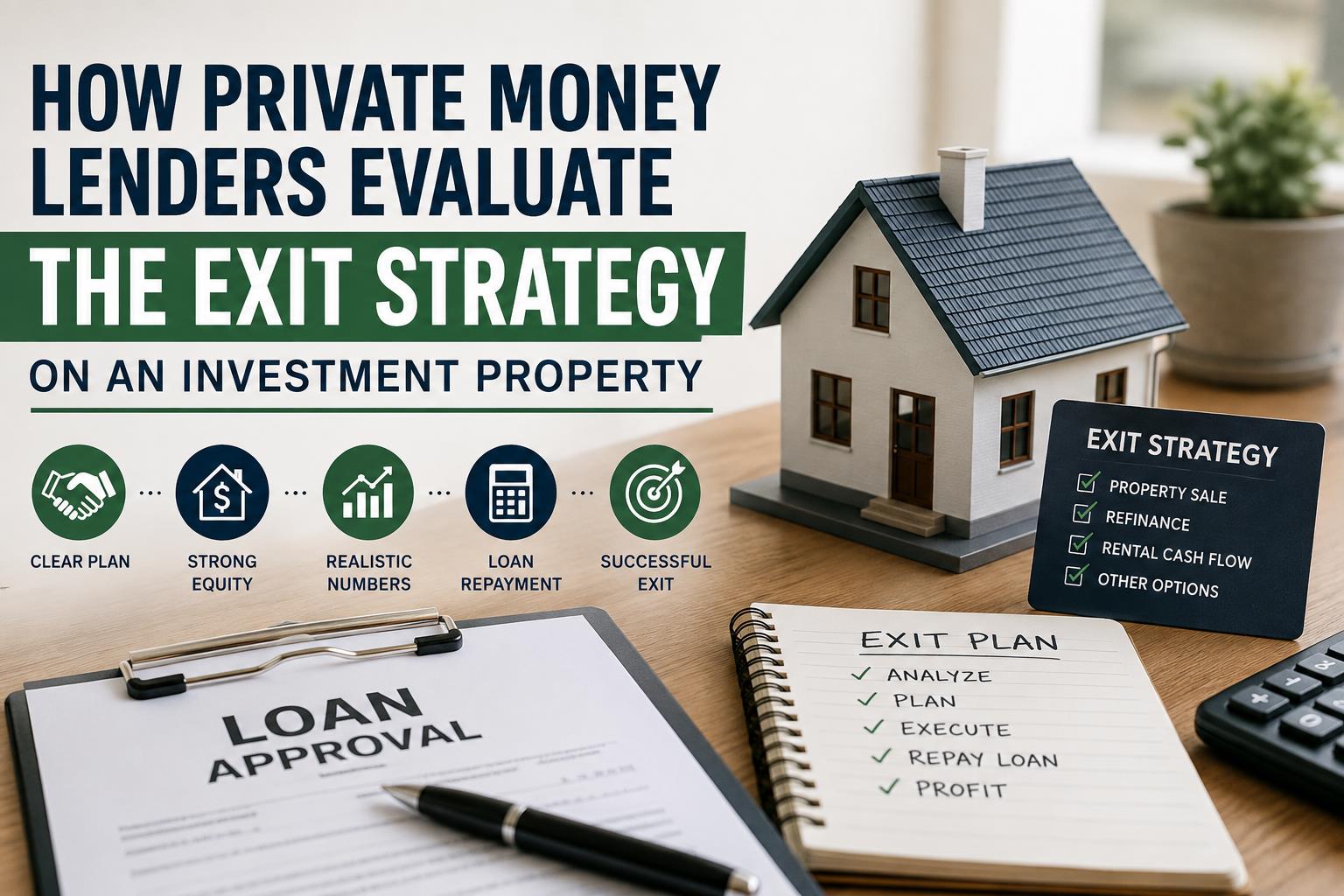
15. Exit Strategy
One of the most important parts of a private money lending application is explaining how the loan will be repaid.
A lender wants to know your exit strategy.
Common exit strategies include:
- Selling the renovated property
- Refinancing into a long term rental loan
- Refinancing through a DSCR loan
- Selling another investment property
- Paying off the loan through available capital
For example, suppose an investor buys a property, renovates it, and plans to rent it after completion. The investor may use a short term private money loan to acquire and improve the property, then refinance into long term rental financing after the renovation.
The documents supporting the exit strategy may vary depending on the transaction.
The key is to show that you have thought beyond the initial purchase.
Documents for Rental Properties
Rental property investors may need additional documentation depending on the property.
Potential documents include:
- Existing leases
- Rent roll
- Current rental income information
- Property management agreement
- Operating statements
- Property tax information
- Insurance information
- Utility information when relevant
If the property is already occupied, current leases can help the lender understand the property’s income situation.
For multifamily properties, lenders may request more detailed operating information because the income and expenses can have a greater impact on the property’s value.
Documents for Fix and Flip Loans
Fix and flip investors should be prepared with a particularly detailed project package.
A typical package may include:
- Purchase agreement
- Property photos
- Scope of work
- Renovation budget
- Contractor bids
- Comparable sales
- Expected after renovation value
- Borrower experience
- Bank statements
- Exit strategy
The more complicated the renovation, the more important it becomes to provide clear information.
A lender does not simply want to know that you think the project will make money. The lender needs enough information to evaluate the assumptions behind your numbers.
What If You Are a First Time Investor?
One common misconception is that every private money lender requires an extensive real estate track record.
That is not necessarily true.
Some lenders are willing to work with newer investors, although they may evaluate the deal and borrower profile differently.
If you have limited experience, strengthen your application by preparing:
- A detailed business plan
- A realistic renovation budget
- Strong property comparables
- Evidence of available funds
- A qualified contractor
- A clear exit strategy
- Information about your professional team
Being organized can help demonstrate that you understand the project even if you do not have years of investment experience.
How to Organize Your Private Money Loan Documents
One of the easiest ways to make the process smoother is to organize your documents before submitting your application.
Create separate folders for:
Borrower
Identification, financial information, resume, and real estate experience.
Business Entity
LLC documents, EIN information, operating agreement, and ownership information.
Property
Purchase agreement, photos, title information, appraisal information, and property details.
Project
Scope of work, contractor estimates, renovation budget, and project timeline.
Financials
Bank statements, proof of funds, and other requested financial information.
Exit Strategy
Sale projections, refinance plans, rental information, or other repayment documentation.
This approach makes it easier to answer lender questions quickly.
A current private capital checklist similarly emphasizes that a clean and complete submission can reduce back and forth during the review process.
Do Private Money Lenders Need Tax Returns?
This is one of the most common questions investors ask.
The answer is: it depends.
Traditional mortgage lenders often place significant emphasis on income documentation and tax returns. Private money loans can be structured differently because the lender may place greater emphasis on the investment property, collateral, borrower liquidity, experience, and exit strategy.
Some private lenders may still request tax returns or other income documentation, particularly for certain transactions or borrower profiles.
Other lenders may not require them.
Never assume that one lender’s documentation requirements apply to every lender.
Ask the lender for a complete checklist before preparing your application.
Private Money Loan Document Checklist
Before approaching a private money lender, use this checklist as a starting point:
Borrower Documents
Government issued ID
Completed loan application
Credit authorization when required
Personal financial statement when required
Bank statements
Proof of funds or liquidity
Real estate resume or track record
Schedule of real estate owned when requested
Entity Documents
Articles of Organization
Operating Agreement
EIN documentation
Certificate of Formation
Ownership information
Certificate of Good Standing when applicable
Property Documents
Purchase agreement
Property address
Property photos
Existing leases when applicable
Rent roll when applicable
Title information
Insurance information
Appraisal or valuation information
Project Documents
Scope of work
Renovation budget
Contractor bids
Project timeline
Comparable sales
Expected finished value
Exit Strategy Documents
Sale strategy
Refinance plan
Rental projections
Supporting financial information
The actual requirements will vary by lender and transaction.
How Can Investors Get Their Documents Ready Faster?
Start preparing your documents before you find the property if possible.
Keep your identification, entity documents, bank statements, real estate resume, and other frequently requested information in one secure location.
Once you identify a property, add the purchase agreement, property photos, renovation budget, contractor estimates, comparable sales, and exit strategy.
Also make sure the numbers are consistent.
If your purchase agreement shows one purchase price while your loan application shows another, expect questions.
If your renovation budget says $100,000 but your contractor estimate says $150,000, be prepared to explain the difference.
Accuracy is just as important as speed.
Final Thoughts
Applying for private money loans can be much easier when investors understand what a lender needs to evaluate.
The goal is not simply to provide a stack of paperwork. The goal is to give the lender a clear picture of the borrower, property, project, financing request, and repayment plan.
The most common documents include identification, loan applications, entity documents, bank statements, proof of funds, purchase agreements, property information, renovation budgets, contractor estimates, title information, insurance documents, and exit strategy details.
A private money lender may also request additional documentation based on the type and complexity of the transaction. Investors should therefore ask for a specific documentation checklist before submitting their complete loan package.
If you are searching for a Private lender for real estate, preparation can make a meaningful difference. Having your documents organized, your project numbers checked, and your exit strategy clearly explained can help reduce unnecessary back and forth during the lending process.
At Simplending Financial, the goal is to make real estate financing simple and straightforward for investors. The company works with investors nationwide and offers financing options designed around different investment strategies, including fix and flip, ground up construction, rental, and bridge financing.
Ready to Discuss Your Next Investment Property?
If you have a property under contract or are evaluating your next real estate investment, Simplending Financial can help you understand your financing options and the documentation needed for your deal.
Submit your deal to Simplending Financial today and take the next step toward securing private money financing for your investment property. Inquire with Simplending Financial
Frequently Asked Questions
What documents do private money lenders need?
Most private money lenders commonly request borrower identification, a loan application, entity documents, bank statements, proof of funds, purchase agreements, property information, and details about the project and exit strategy. Additional documents may be required depending on the property and loan type.
Do private money lenders require tax returns?
Not always. Documentation requirements vary by lender and transaction. Some private lenders may request tax returns, while others may focus more heavily on the property, collateral, liquidity, experience, and exit strategy.
Do I need bank statements for a private money loan?
Many lenders request recent bank statements to verify liquidity and available funds for items such as the borrower’s contribution, closing costs, reserves, or project expenses. However, requirements vary between lenders.
Can a first time investor get a private money loan?
Yes, some private lenders work with first time investors. A strong property, realistic numbers, sufficient liquidity, a detailed project plan, and a clear exit strategy can help strengthen an application.
What property documents does a private money lender need?
Common property documents include the purchase agreement, property address, photos, title information, insurance information, appraisal or valuation information, leases, and rent rolls when applicable.
What documents are needed for a private money fix and flip loan?
Fix and flip investors commonly need a purchase agreement, property photos, scope of work, renovation budget, contractor estimates, comparable sales, borrower information, bank statements, and an exit strategy.
Do private money lenders check credit?
Some do, while others may place greater emphasis on the property and overall deal. Credit requirements vary significantly among private lenders. Investors should ask about credit requirements before submitting a full application.
What is the most important document for a private money loan?
There is no single document that guarantees approval. The purchase agreement, property information, renovation budget, financial information, and exit strategy can all play important roles depending on the transaction.
How long does it take to get approved for a private money loan?
The timeline varies by lender, property, transaction complexity, title condition, appraisal requirements, and documentation. Having a complete and organized loan package can help reduce avoidable delays.
What should I prepare before contacting a private money lender?
At minimum, prepare your identification, entity documents, property details, purchase agreement if available, estimated project costs, bank statements or proof of funds, real estate experience information, and proposed exit strategy.
Are private money loans only for fix and flip properties?
No. Private money loans can be used for different types of real estate investments, including fix and flip projects, rental properties, multifamily properties, commercial real estate, acquisitions, bridge financing, and certain construction projects. The available financing depends on the lender and transaction.
How can I make my private money loan application stronger?
Present a realistic deal with clear numbers. Provide accurate documentation, explain your investment strategy, show available funds, provide a detailed project budget when applicable, and explain exactly how you plan to repay the loan.
What happens if a lender asks for additional documents?
Additional requests are normal, particularly when the transaction is complex. Respond quickly and provide accurate information. If you are unsure why a document is needed, ask the lender what they are trying to verify before submitting it.
Is private money lending faster than traditional financing?
It can be, but there is no universal closing timeline. Private money lending may offer more flexibility in how a transaction is evaluated, but the actual timeline depends on the lender, property, title, appraisal, documentation, and complexity of the deal.