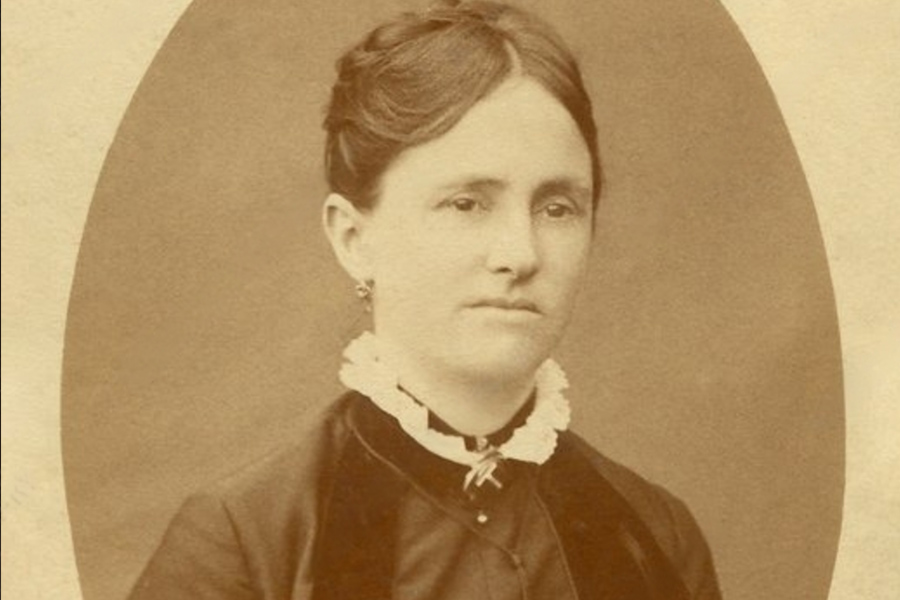
A Family Rooted in Faith, Loss, and Talent
When I look at Angelina Tesla, I do not see a public celebrity in the modern sense. I see something more durable. I see the kind of person who stands just outside the spotlight but holds the shape of the whole room. Angelina Tesla lived in the long shadow cast by one of history’s brightest names, Nikola Tesla, yet her own life belonged to a family story that was already rich with faith, hardship, movement, and resilience.
Angelina was born in the Tesla family of Smiljan, with records placing her birth somewhere between 1850 and 1853. That uncertainty matters less than the larger truth. She was part of a household shaped by Milutin Tesla, a Serbian Orthodox priest, and Đuka, also known as Georgina Mandić Tesla, whose family life was tied to discipline, piety, and constant responsibility. In that world, children did not simply grow up. They were folded into a larger moral and social structure, one built like a stone house against a hard wind.
Angelina was one of the Tesla siblings alongside Dane, Milka, Nikola, and Marica. The family was dense with memory and tension. Dane’s early death left a scar that was never only personal. Nikola Tesla’s genius would later become legendary, but genius often grows in soil turned by grief. Angelina belonged to that same soil. She was not the lightning bolt. She was the earth that held it.
Marriage, Home, and the Trbojević Line
Following her marriage to Orthodox priest Jovo John Trbojević, Angelina became Angelina Trbojević. Her marriage tied her to parish duties, travel, and family. This was not a mansion or salon she helped design. Working families lived there via service, responsibility, and survival pressure.
Her narrative counts for that reason. Family is more than its most renowned member. The web also sustains that member. Angelina’s life demonstrates that. She had offspring who continued the Tesla and Trbojević legacy in medical, law, education, priesthood, engineering, and family stewardship.
Mica, Pero, Uros, Nikola John Trbojevich, and Marica were her children. Names open diverse doors. Mica was a doctor and hospital leader. Priest Pero. Uros entered law and public service. Marica taught. Nikola John, also known as Nicholas J. Terbo, was the most technically recorded youngster, focusing on mathematics, invention, and engineering. He took the family line to the US and connected Nikola Tesla’s legacy to later generations.
The family tree isn’t linear. Like roots under a riverbed, it spreads in diverse ways yet draws from the same ground. Angelina was in the root system’s center.
Nikola Tesla and the Sibling Bond
Nikola Tesla is the name the world knows. Angelina is one of the names that helps explain the world he came from. Their sibling relationship was part of a larger family structure where support, loss, and shared memory mattered deeply.
I see Angelina as part of the emotional architecture around Nikola. Family records and later reflections suggest that Nikola remained connected to his sisters and often helped them financially. That detail may sound small, but it is not. Money in a family is never only money. It is proof of attention. It is care made visible. Nikola’s support for his family suggests that even while he worked among sparks, coils, and impossible ideas, he still carried obligations that were older than any invention.
Angelina’s place in this story is not passive. She represents the kind of family presence that gives a genius his human frame. Her life reminds me that even the brightest towers need foundations hidden in the ground. The public remembers the tower. The family remembers the foundation.
Children, Descendants, and the Afterlife of a Family Name
Angelina’s descendants kept the family story moving across generations. This is where the biography widens. Her son Nikola John Trbojevich became especially significant because his life connects the Tesla family to later public memory in the United States. He is described as an engineer and inventor with an impressive patent record. That matters because it extends the family pattern. The Tesla name did not remain frozen in the nineteenth century. It kept breathing.
Her grandson William H. Terbo became one of the public faces of the family’s later legacy. Another grandson, John Terbo, appears in the family record as well. Through these descendants, Angelina’s branch remained attached to Tesla history long after the original household in Smiljan had become a memory preserved in archives, family trees, and ceremonial remembrances.
This is one of the most striking parts of Angelina’s story. A person may live quietly, but descendants can turn quiet lives into long echoes. Her line moved through generations like a river under ice, still flowing even when the surface looked still.
A Life Measured by Family Rather Than Fame
Angelina Tesla appears to have continued her public career. Not many inventions, public offices, or published writings are hers. However, absence is not nothingness. This informs me how many women of her era were remembered and how many were not.
Historical records list her as a sister, wife, mother, and grandma. Those duties were important. They organized daily life. They taught, disciplined, cared, and continued. She and her family were the silent machinery that enabled public achievement elsewhere. I perceive her life as a lantern in a dark corridor. It may not illuminate the world, but it illuminates the road.
Her 1931 death in Kistanje ended a life that spanned the mid-19th century to the present. She saw Europe change, electrical power rise, family branches migrate, and her brother Nikola’s fame expand. Her memory persists because the family focused on themselves. Not a minor thing. Families keep history which disappears.
FAQ
Who was Angelina Tesla?
Angelina Tesla was Nikola Tesla’s sister and later Angelina Trbojević after marriage. She belonged to the Tesla family of Smiljan and lived a life shaped by faith, family duty, and the raising of children who carried the family line into later generations.
Who were Angelina Tesla’s parents?
Her parents were Milutin Tesla and Đuka, also known as Georgina Mandić Tesla. Milutin was a Serbian Orthodox priest, and the family home was rooted in religious life and strong discipline.
Who were Angelina Tesla’s siblings?
Her siblings included Dane Tesla, Milka Tesla Glumičić, Nikola Tesla, and Marica Tesla Kosanović. They formed a family group that later became one of the most discussed family networks in the history of invention.
Who was Angelina Tesla’s husband?
She married Jovo John Trbojević, an Orthodox priest. Their marriage linked her to the Trbojević family and to a life shaped by parish service and family continuity.
How many children did Angelina Tesla have?
She had five children: Milica, also called Mica, Pero, Uros, Nikola John Trbojevich, and Marica. Their later lives are described across family records as spanning medicine, priesthood, law, teaching, and engineering.
Did Angelina Tesla have a career of her own?
No major independent public career is clearly documented for her. Her importance lies mainly in her family role as daughter, sister, wife, mother, and ancestor within the Tesla and Trbojević lines.
Why is Angelina Tesla historically important?
She matters because she is part of the family structure around Nikola Tesla and because her descendants helped preserve and extend that legacy. Her life shows that history is not only made by famous inventors. It is also held together by the people who raised them, supported them, and carried the family name forward.