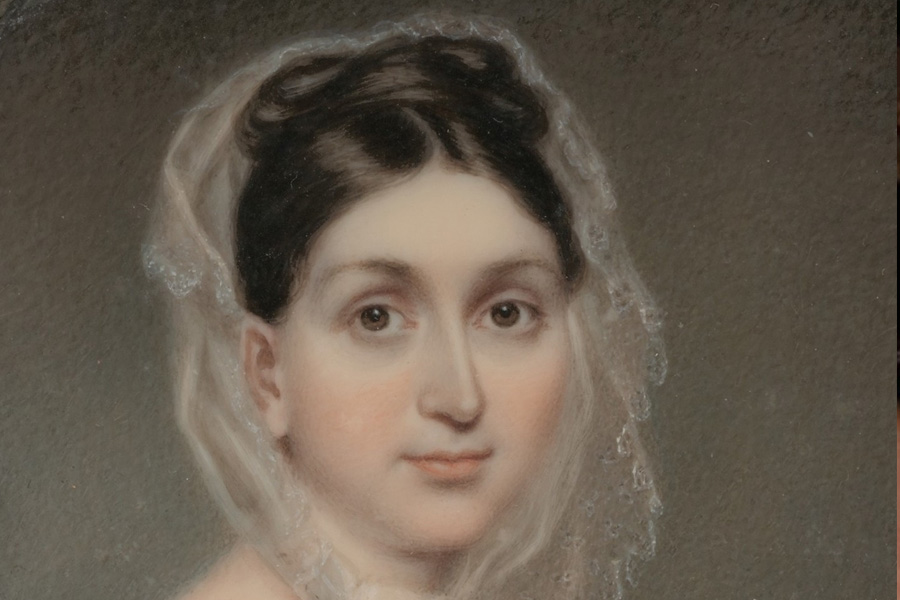
My Deep Dive into Her World of Privilege and Kinship
I have always been drawn to the quiet figures who held elite American families together across centuries. Cornelia Patterson Van Rensselaer stands out as one such pillar. Born on January 24 1823 in the historic Manor House at Albany New York she entered life as a direct descendant of Dutch patroon land barons. Her world blended vast Hudson River estates with the refined circles of 19th century society. She passed away on March 4 1897 in Boston at the age of 74. In between those dates she forged a union that merged two powerhouse bloodlines. Her story feels like a living bridge spanning colonial land grants and industrial fortunes. I see her not as a footnote but as the steady hand guiding generations through change.
The Marriage That Wove Van Rensselaer Threads into Thayer Wealth
On June 10 1846 Cornelia married Nathaniel Thayer Jr. in Albany. He was 38 and she was 23. This union shifted her from New York manor life to the heart of Boston Brahmin society. Nathaniel built his name in banking and railroads. He partnered in John E. Thayer and Brother and poured resources into western rail lines and factories. By 1865 he retired with a fortune that let the family maintain homes in Boston Lancaster and Newport Rhode Island. I picture their household as a well oiled machine of influence. Cornelia managed the residences with grace after his death on March 7 1883. She oversaw properties including the notable Back Bay mansion at 305 Commonwealth Avenue. No formal career defined her days. Instead she focused on family estate oversight and social hosting. Her role mirrored the expectations of her era yet her quiet decisions shaped fortunes that echoed for decades.
Exhaustive Family Ties That Span Generations
I detailed Cornelia Patterson Van Rensselaers family ties. Each participant colors the larger portrait. Her parents laid the groundwork. The tenth and final Patroon of Rensselaerswyck was Stephen Van Rensselaer IV (1789–1868). Through the Anti Rent War over Hudson lands, he earned appreciation for his compassion. The Manor House was culturally rich and welcoming thanks to Harriet Elizabeth Bayard (1799–1875). She stressed education and community service to her family.
Cornelia’s 1808–1883 husband Nathaniel Thayer Jr. anchored the next chapter. Thayer was known by his Harvard charity and banking prowess. They had seven Boston-born children between 1847 and 1862.
Their son Stephen Van Rensselaer Thayer died 1871. His 1870 marriage to Alice Robeson produced one son. Cornelia Van Rensselaer Thayer (1849–1903) married James Hampden Robb in 1868. Their descendants introduced the name to new circles. Banker and railroad president Nathaniel Thayer III (1851–1911) commanded. He inherited important holdings from two marriages. Harriet Bayard Thayer (1853–1891) married J. Forrester Andrew in 1883. In 1880, Eugene Van Rensselaer Thayer (1855–1907) married Susan Spring. Yachtsman and horticulturist Bayard Thayer died 1916. Colonel and ornithologist John Eliot Thayer was his twin, born 1862 and died 1933. He founded a Lancaster museum and gave Harvard substantial collections.
Stephen Van Rensselaer, the ninth Patroon and founder of Rensselaer Polytechnic Institute, was a paternal ancestor. Peggy Schuyler (1758-1801) was linked to Revolutionary War generals. William Bayard Jr. and Elizabeth Cornell Bayard were maternal grandparents. Great grandparents Philip Schuyler and Catherine Van Rensselaer connected the family to early American military and land history.
Grandchildren expand reach. Eugene Van Rensselaer Thayer Jr. was famous through his father. Katherine Spring Russell descended from Spring Thayer. Extended records include Peggy Hamilton as part of the network. Peggy Schuyler ties like grandmothers. These descendants entered finance, diplomacy, and society. A granddaughter married a Danish count who was US ambassador. At least 12 direct grandchildren throughout the branches preserve the blended heritage.
To organize this web I created a simple table of immediate descendants.
| Relation to Cornelia | Name | Birth Year | Death Year | Key Note |
|---|---|---|---|---|
| Son | Stephen Van Rensselaer Thayer | 1847 | 1871 | Married 1870 one son |
| Daughter | Cornelia Van Rensselaer Thayer | 1849 | 1903 | Married 1868 four children |
| Son | Nathaniel Thayer III | 1851 | 1911 | Banker railroad leader |
| Daughter | Harriet Bayard Thayer | 1853 | 1891 | Married 1883 two children |
| Son | Eugene Van Rensselaer Thayer | 1855 | 1907 | Married 1880 four children |
| Son | Bayard Thayer | 1862 | 1916 | Yachtsman horticulturalist |
| Son | John Eliot Thayer | 1862 | 1933 | Colonel naturalist museum founder |
This table captures 7 children and hints at the 20 plus grandchildren who followed.
Finances Estates and the Invisible Hand of Influence
Cornelia Patterson Van Rensselaer never worked or was elected. Her station’s women focused on family and legacy. Yet her finances buzzed with hereditary power. The Van Rensselaer family owned Hudson land for centuries. Thayer contributed railroad and banking wealth. Nathaniel was wealthy before 1865. Cornelia ran the Boston mansion and Lancaster retreat after widowhood in 1883. Heirs inherited properties effortlessly. Statistics tell part of the tale. Seven children, 20 grandchildren, and 19th-century million-dollar estates. Her story shows how personal monitoring grew family capital over decades.
Milestones That Shaped a Century
I compiled an extended timeline to highlight key dates and events in her 74 years. The numbers reveal a life of steady transitions.
1846 June 10 marriage to Nathaniel Thayer Jr.
1847 birth of first son Stephen Van Rensselaer Thayer
1849 birth of daughter Cornelia Van Rensselaer Thayer
1851 birth of son Nathaniel Thayer III
1853 birth of daughter Harriet Bayard Thayer
1855 birth of son Eugene Van Rensselaer Thayer
1862 births of twin sons Bayard Thayer and John Eliot Thayer
1865 husband retires from active business
1868 father Stephen Van Rensselaer IV dies
1871 eldest son dies at age 24
1875 mother Harriet Elizabeth Bayard dies
1883 husband dies March 7
1891 daughter Harriet Bayard Thayer dies
1897 Cornelia dies March 4 in Boston
Each entry marks a pivot. Births added branches. Deaths tested resilience. The timeline spans from manor childhood to Boston matriarch status.
FAQ
How many children did Cornelia Patterson Van Rensselaer raise and what were their birth years?
Cornelia Patterson Van Rensselaer and Nathaniel Thayer Jr. had exactly seven children. The births stretched across 15 years from 1847 to 1862. I list them in order Stephen Van Rensselaer Thayer in 1847 Cornelia Van Rensselaer Thayer in 1849 Nathaniel Thayer III in 1851 Harriet Bayard Thayer in 1853 Eugene Van Rensselaer Thayer in 1855 and the twins Bayard Thayer and John Eliot Thayer both in 1862. Each child built on the family name in unique ways.
What role did her parents play in shaping her early years?
Her father Stephen Van Rensselaer IV managed the final days of the Rensselaerswyck manor system until his death in 1868. Her mother Harriet Elizabeth Bayard hosted with legendary warmth and emphasized education until 1875. Together they provided Cornelia with a childhood rooted in 300 years of Dutch American tradition inside the Albany Manor House.
Who was her husband and how did his career influence the family?
Nathaniel Thayer Jr. born 1808 and died 1883 worked as a banker and railroad investor. He retired in 1865 with substantial holdings. His success funded multiple residences and Harvard gifts. After 1883 Cornelia managed those assets ensuring the next generation inherited both wealth and connections.
Which grandchildren carried the family name forward in notable ways?
Grandchildren included Eugene Van Rensselaer Thayer Jr. Katherine Spring Russell Peggy Hamilton and others through various branches. They entered finance diplomacy and high society. One line even linked to a Danish ambassador. Their lives extended the Van Rensselaer Thayer influence well into the 20th century.
How did Cornelia Patterson Van Rensselaer handle widowhood and property?
After March 7 1883 she directed the family Boston mansion and Lancaster home. She oversaw divisions among heirs without public drama. Her approach kept the estates intact and supported charitable and educational causes tied to the Thayer name.
What makes her story a bridge between old and new American wealth?
Born into patroon land grants in 1823 she married into industrial fortunes by 1846. By 1897 her descendants blended colonial roots with modern banking and rail power. Her life connected 17th century Dutch settlements to 19th century Gilded Age networks.