A lift kit and a set of bigger tires change how a truck looks, and they also change how you use it. Add a couple of inches of suspension height and a taller tire, and the cab floor can end up several inches higher than it was from the factory. It’s an easy thing to overlook when you’re picking parts.
You notice it the first time you climb in wearing work boots, carrying a coffee, or holding a toddler. What used to be a simple step up now takes a small hop or a grab of the door frame. That raises a fair question: do you need running boards after a lift kit, or is that just another accessory you could skip?
The answer depends on how tall your truck is now and who rides in it.
Why Getting Into a Lifted Truck Can Be More Difficult
Ride height is the obvious factor. A taller truck means a bigger first step, and that step gets harder when you’re carrying something or wearing the wrong shoes. Wet pavement, snow, or a muddy trailhead make it worse.
Not every lift affects access the same way. A modest leveling kit on a full-size pickup may change very little. A larger suspension lift combined with oversized tires is a different story, especially if the truck sat fairly high to begin with. Measure the step from the ground to your floor rather than assuming.
The people who feel it most are usually not the driver. Kids, older relatives, shorter passengers, and anyone with bad knees or a sore back tend to struggle first. If your truck is a family vehicle, that matters more than any spec sheet.
Owners who tend to benefit most from running boards for trucks and SUVs include:
- Families who regularly carry children or older passengers
- Daily commuters who get in and out many times a week
- Drivers who haul gear and need a stable spot to stand while loading a roof rack or bed
- Anyone whose lift pushed the cab noticeably higher than stock
Do You Really Need Running Boards After a Lift Kit?
Not always. If you’re comfortable with the step, you drive alone, and the truck mostly lives on trails, skipping side steps is a perfectly reasonable choice. Plenty of lifted trucks run without them.
But for daily use, running boards after a lift kit solve a simple problem. They give your foot a stable platform halfway up, so entering and exiting becomes less of an effort. Over years of commuting, school pickups, and grocery runs, that adds up.
They also help with some small jobs people forget about, like reaching a roof carrier or wiping down the roof. A step beats a tiptoe stretch.
What running boards won’t do is fix everything. If your truck is extremely tall, a fixed side step may still leave a big gap, and some owners look at deployable or taller options instead. The point is to match the solution to the problem rather than assume one accessory covers it.
Running Boards vs. Rock Sliders: What’s the Difference?
This is where people get confused, so it’s worth being clear. Running boards vs. rock sliders is not a question of which is better. They do different jobs.
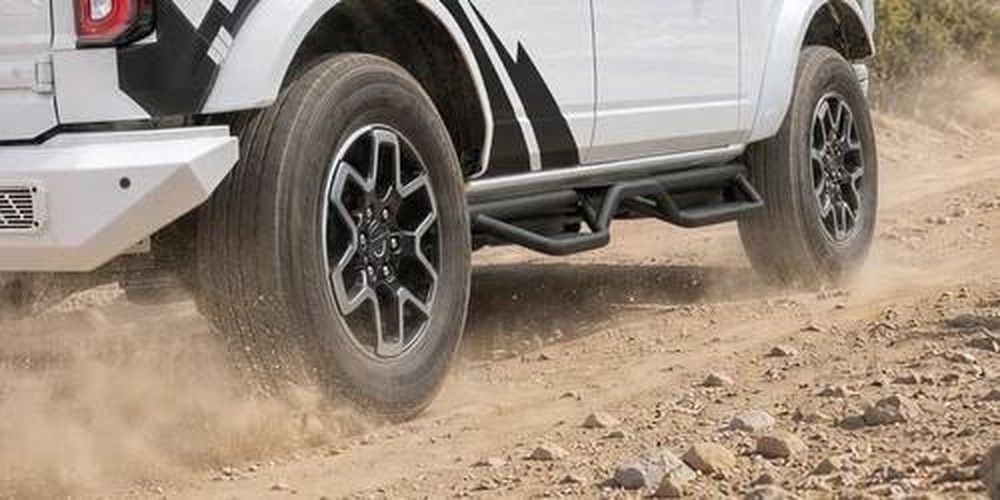
Running boards are built for access. They’re typically a step surface mounted along the cab, designed so you can climb in and out comfortably. Some designs cover a lot of the rocker area, but protection is not their main purpose.
Rock sliders are built for protection. They’re usually heavy-duty tubes or boxed sections that attach to the frame or reinforced mounting points and take the hit when you drag the side of the truck over a boulder. Their job is to protect the rocker panels from damage on demanding terrain.
Some rock sliders can be stepped on, but that’s a side benefit, not the design goal. And an ordinary running board should not be treated as off-road armor. If you’re regularly crawling over rocks, a purpose-built slider is the right tool. If you’re mostly driving to work and the occasional campsite, a running board is usually the more sensible fit.
Treating the two as interchangeable is how people end up with a bent step or a dented rocker.
Will Running Boards Affect Ground Clearance?
Ground clearance is the distance between the lowest point of your vehicle and the ground. Side steps rarely define that number, since axles, differentials, and skid plates usually sit lower. But they can still matter in other ways.
A few design details affect how a running board behaves on the trail:
- Mounting position: Boards that sit close to the body and high up are less likely to snag than ones hanging low.
- Width: A wider step is easier to use but sticks out farther, which can catch on ledges, rocks, or the edge of a deep rut.
- Bracket design: The brackets are often the lowest part, so their shape and placement matter as much as the board itself.
Not all running boards significantly reduce clearance. Many sit well above the lowest points of the chassis. The risk shows up when the vehicle tilts, such as on a side slope, in a rutted two-track, or while crossing a rock step at an angle.
If you go off-road occasionally, think about the terrain. Graded forest roads and dirt trails are one thing. Tight, rocky trails are another. A drivers who only visits easy routes may be fine with a good running board. Someone tackling rough terrain should seriously consider a different setup.
What to Look for When Choosing Running Boards for a Lifted Truck
If you’ve decided you want them, keep it practical. Here are five things worth checking.
Vehicle Fitment and Compatibility
This is the biggest one. Fitment depends on vehicle year, model, cab configuration, and mounting design. A Jeep Wrangler with two doors needs something different from a four-door. A Jeep Gladiator, a Ford Bronco, and a Toyota Tacoma each have their own body lines and mounting points. On a RAM 1500 or Chevrolet Silverado, cab style (regular, extended, or crew) changes the length and bracket layout.
Lift height also matters, because brackets designed for a stock-height truck may not suit a lifted one. When you’re comparing options, a resource like this collection of vehicle-specific running boards and side steps can be handy for seeing how listings are organized by make, model, and year. Confirm every detail against your exact vehicle before ordering.
Step Width and Accessibility
A wider step is more comfortable, especially for kids and passengers in dress shoes. But it also sticks out more, which circles back to the clearance issue. Pick the narrowest step that you can still use comfortably.
Anti-Slip Surface Design
Rain, mud, snow, and ice all end up on your boots. Look for a textured or perforated surface that sheds debris and gives you grip. A good-looking step that turns slick when wet isn’t doing its job.
Material and Construction
Running boards are commonly made from aluminum or steel, and finishes vary. Each has trade-offs in weight, corrosion resistance, and feel. Rather than trusting broad claims, check what the manufacturer actually specifies and how the board attaches to your truck.
Weight Capacity
If adults will regularly stand on the step, look for a stated load rating from the manufacturer. Don’t assume. If it isn’t listed, ask, and treat a missing number as a reason for caution.
Daily Driving vs. Off-Road Use: Which Setup Makes More Sense?
Here’s how different driving habits tend to line up.
Daily commuting: Running boards are usually the practical choice. You’re getting in and out constantly, and trail protection rarely comes into play.
Family road trips: Easy entry matters most here, especially with kids. Side steps for lifted trucks make loading the family faster and safer, and a fitted set is usually worth considering.
Light off-roading: This is the gray area. If your trips are mostly dirt roads and gentle trails, a well-mounted running board can work, as long as you drive carefully and understand its limits.
Rock crawling: Go with rock sliders. Rocker-panel protection matters more than a comfortable step, and many crawlers simply accept a harder climb into the cab.
Some people run one setup for daily life and swap to another for trail season. That’s a legitimate approach if your truck serves two very different roles.
Final Thoughts: Choose Based on How You Actually Use Your Truck
Lifting a truck changes how it feels to live with, not just how it looks. Whether running boards make sense comes down to three things: how tall your truck is now, who rides in it, and where you actually drive.
If you carry family and commute daily, a good set of truck side steps will likely make life easier. If you spend weekends on technical trails, off-road accessories like rock sliders deserve the budget first. And if you’re somewhere in the middle, think honestly about which situation you face more often.
Measure the step, check the fitment details for your exact vehicle, and be realistic about the terrain. That will serve you better than any trend.
For reference, https://www.joytutus.com/ is an automotive and outdoor gear brand that offers accessories for truck, SUV, and outdoor enthusiasts.