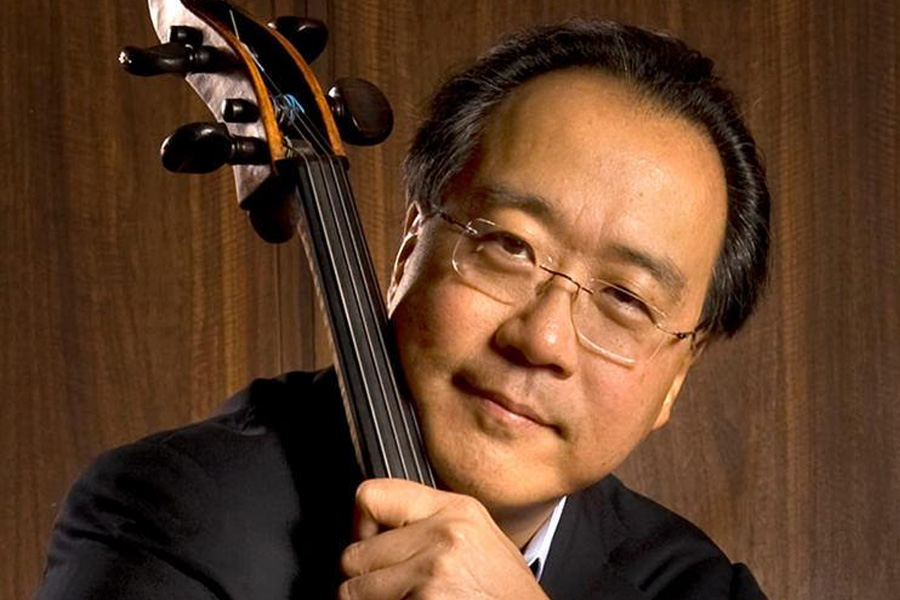
My first encounter with a life in music
I grew up listening to stories about a man who built a household where scales and Bach felt like family heirlooms. That man was Hiao-tsiun Ma. He was born in 1911 and carried a lifetime of study across continents. He left a pattern of discipline and curiosity that shaped at least two generations. I write this because the imprint he left is both intimate and wide. It is like an old map that still guides performances in practice rooms and classrooms.
Early life and the map of migration
Hiao-tsiun Ma was born in Ningbo in eastern China. He studied music in Nanjing and later in Paris. The city of Paris became a temporary home for the family during the 1950s. In October 1955 a son was born, a child who would become one of the most recognized cellists in the world. The family moved to the United States in the early 1960s and settled in New York and its suburbs. I imagine those moves as stepping stones across a river of history. Each stone holds a date, a lesson, a practice session.
Family and personal relationships
Hiao-tsiun Ma lived for music and family. A domestic duet was completed by his marriage to Marina Lu, a singer. Their children will keep music in their daily routine.
Their daughter Yeou-Cheng Ma merged music and work. Yeou-Cheng, subsequently a doctor and director, supported her father’s educational institutes. I’ll name her again to represent the family thread: Yeou-Cheng Ma.
Their son became famous. Yo-Yo Ma learned home-grown technique and practice habits. As someone who heard the narrative in living rooms with albums and scores stacked like fortresses, I say that.
Next generation continuing arc. Emily Ma and Nicholas Ma are grandchildren. Both have creative and professional backgrounds like their grandparents. The thread appears in family photos and public mentions. The family story also includes Michael Dadap, who married into the family and taught music. His name is Michael Dadap.
Teaching, organization, and the children’s orchestra
Hiao-tsiun Ma created a durable program in 1962. The organization evolved from modest classes into a youth orchestra. Citywide, that ensemble is known as the Children’s Orchestra Society. His teaching emphasised daily practice, technique, and respect for baroque and modern repertoire. I think of this as a garden design where daily maintenance produces enormous flowers over time.
His school model captured his children’s early public performances. Students who view rehearsal and repetition as virtues also resulted. That peaceful habitual architecture endures.
Career highlights and works
Hiao-tsiun Ma was not only a teacher. He worked as a violinist, composer, conductor, and scholar. His interests spanned composition for strings and research in musicology. He wrote pieces and arranged works for educational ensembles. He also taught at institutions and maintained ties to academic study that dated back to the 1930s and 1940s. Those decades included study in Nanjing, advanced work in Paris, and eventual settling in the United States.
Dates to keep in mind
| Year | Event |
|---|---|
| 1911 | Birth in Ningbo |
| 1955 | Son born in Paris |
| 1962 | Founded a children orchestra program in New York |
| 1991 | Death in Long Beach, New York area |
I include this table because I like to see the skeleton of a life laid out numerically. Numbers give a kind of honest backbone to memory.
The household as conservatory
If you have ever watched a family turn into an ensemble you notice small rituals. In the Ma household the ritual was practice. Short sessions. Repetition. Correction. Praise. The father, Hiao-tsiun Ma, conducted not only ensembles but domestic discipline. He was an educator at home and in school. Those two roles are related, and one fed the other.
Public presence and private notes
He died in 1991. After that, the household stories continued to travel through interviews, program notes, and alumni memories. The family produced public artists and private professionals. The generational transmission is tangible: a son who performs worldwide, a daughter who carried the educational torch, grandchildren who work in film and in other professions. For me, the most striking thing is how ordinary the work was. Hours. Days. Years.
Timeline of key moments
| Date | Moment |
|---|---|
| July 11, 1911 | Birth in Ningbo |
| 1930s to 1940s | Studies in Nanjing and Paris |
| October 7, 1955 | Birth of a son in Paris |
| Early 1960s | Move to New York area |
| 1962 | Founding of a children orchestra program |
| 1970s | Active pedagogy and community teaching |
| August 28, 1991 | Passing in Long Beach area |
FAQ
Who was Hiao-tsiun Ma in one sentence?
He was a musician and teacher who built a musical household and an educational institution that trained young players and shaped a family of artists.
What were his main accomplishments?
He founded a children orchestra program in 1962, taught for decades, composed and arranged works for student ensembles, and trained children who would go on to professional musical careers.
Who were his immediate family members?
His wife was Marina Lu. His children include a daughter who became an educator and physician and a son who became a world famous cellist. Later generations include grandchildren who pursued creative careers.
Where did he live and work?
He was born in Ningbo. He studied in Nanjing and Paris. He moved to New York in the early 1960s and worked there for the remainder of his life.
How did his teaching method influence his children?
He emphasized daily practice, study of Bach and foundational repertoire, and attention to technical detail. That steady regimen produced early public performances and professional careers.
Are there organizations that continue his legacy?
Yes. The educational ensemble he founded continues to operate and to train young musicians in the New York area.
What is the most surprising fact about his life?
That a man who worked quietly as a teacher created a household that launched internationally recognized musicians and professionals across multiple generations.
When did he pass away?
He died in 1991 at the age of 80.
Who carries forward his work today?
Family members and music educators who were his students continue the practice of youth orchestra education in his tradition.