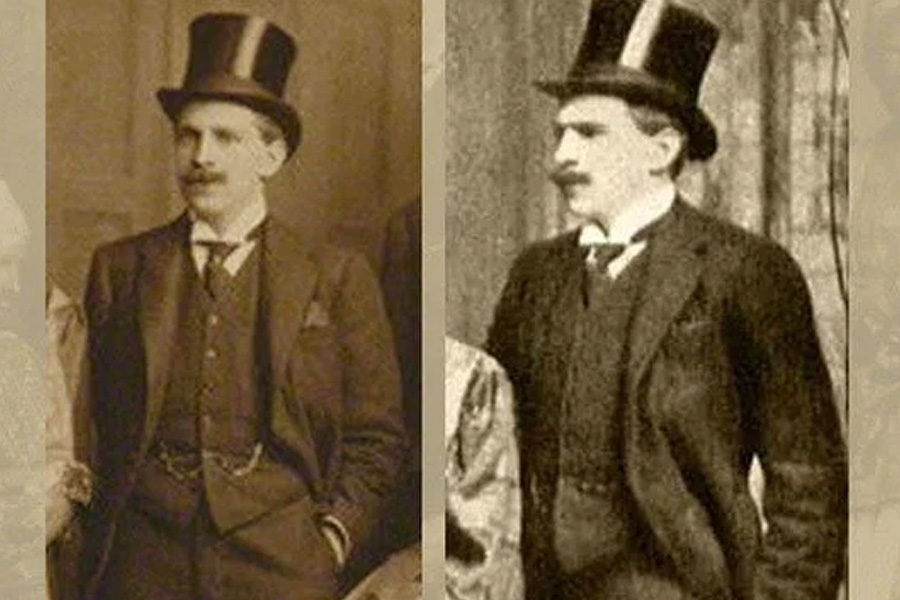
Who I am writing about: a single line on a singular troublemaker
A joker who liked concealment, protocol, and the gentle cruelty of theatrical discomfort, he worked the Edwardian world like a stage. The 1881-born individual at the heart of this article created headlines with displays that resembled performance art and mischief. After graduating from elite schools and serving in the cavalry, he spent his adult life creating ingenious and caustic practical jokes. His 1910 stunt of posing as foreign dignitaries and convincing navy commanders to give them the red carpet on a flagship typified his arrogance. The event left a fissure in popular memory.
Family origins: blood, name, and the weight of pedigree
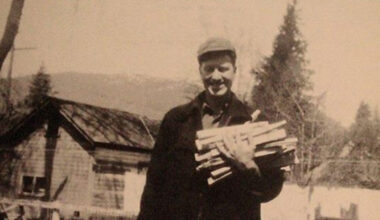
William Utting Cole
His father was a career officer. The household had money and a military habitus. The early death of the father meant that expectations and the family name became a currency as much as an anchor. I imagine the empty uniform in a hall where childhood laughter once echoed.
Mary de Vere
His mother came from the de Vere line, a family whose name carries literary and aristocratic echoes. That lineage gave him social leverage and the air of belonging to a tradition that valued wit, lineage, and the right to make mischief at high table.
Aubrey de Vere
A poetic relative appears in the background as a kind of genealogical ghost. The presence of a poet in the family ledger suggests that verbal daring was almost hereditary. I like to think the trickster absorbed more than a surname from that side of the tree.
Partners, children, and domestic complication
Denise Ann Marie Jose Lynch Daly
He married in 1918. The bride was young, legally complex as a ward of court, and the marriage brought a daughter some years after they wed. The union lasted roughly a decade before dissolving amid the brittle strains of money, personality, and the small dramas that make up public divorces.
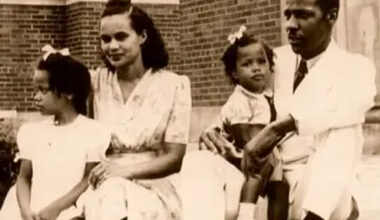
Valerie Cole
A child resulted from that marriage. She is recorded in family trees and passed through records and the quiet registers of ordinary life. A daughter is a living ledger entry; she becomes a conduit for names and the occasional story told at family tables.
Mabel Winifred Mary Wright
Later, the household changed shape. A second partner, a model turned socialite, entered the scene and brought glamour and volatility. Her presence attracted artists and archaeologists. The household became a stage for passion, rivalry, and rumor.
Tristan de Vere Cole
A child born into that later relationship grew up to work in the world of television and narrative. He carried a family name and a complicated paternity story that reads like a subplot in a novel about artists and paramours. He turned the inherited drama into a life of creative work.
The artistic, the romantic, and the other men who hovered
Augustus John
An eminent artist moved through the household like a weather system. He fathered rumors, and perhaps a child attributed legally to another man. I think of him as the brush that smeared color across a life already predisposed to spectacle.
Mortimer Wheeler
An archaeologist later married into the tangle of relationships. He excavated artifacts and later found himself implicated in the living archaeology of scandal and partnership. The household was a fossil bed of stories.
Virginia Woolf
Writers and artists were not mere background figures; they were active participants in the pranks and the social experiments. A famous novelist and her circle once joined in the masquerade that became legendary. I see them as collaborators in a kind of social theater.
The hoax that became a headline and a cultural mirror
HMS Dreadnought
In February of 1910 the prank reached its peak: a group masqueraded as exotic dignitaries and were granted formal courtesies aboard a symbolic vessel of national strength. The event exposed the rituals of deference and the gap between theatrical costume and official ceremony. It also revealed how power is sometimes staged and sometimes only a performance of belief.
A compact timeline – numbers and moments
| Year | Event |
|---|---|
| 1881 | Birth |
| 1890s | Education at elite schools |
| 1899-1902 | Military service in cavalry units |
| 1905 | Early public impersonations |
| 1910 | Major hoax aboard a flagship |
| 1918 | First marriage |
| 1928 | Divorce recorded |
| 1931 | Second marriage or partnership consolidates |
| 1935 | Birth of a child under complicated circumstances |
| 1936 | Death |
I put the dates side by side like stepping stones. Each number carries an atmosphere.
Money, reputation, and the commodity of eccentricity
He inherited capital, lost some of it, and then treated reputation as a different form of currency. Early family wealth paid for a life lived on the edge of social experiment. Later speculation and mismanagement reduced accounts. Yet even diminished, he retained the more obstinate asset: notoriety. I find that more enduring than coin.
Character sketches in miniature
He was at once a showman and a skeptic. He loved the theater of institutions, and he loved to reveal them. His jokes often allowed a mirror to be held up to solemn faces. His family provided both ballast and more material – relations who were poets, soldiers, artists, and archaeologists. The household reads like a cabinet of curiosities where the labels on the boxes were short phrases and long rumors.
FAQ
Who was the central figure and what made him famous?
I am writing about a man born in 1881 who became famous for elaborate public pranks, most famously a 1910 masquerade that duped naval officials and exposed the ritual of state ceremony.
What were his family roots and social background?
He came from a family with military and de Vere lineage. Wealth from previous generations and aristocratic connections allowed a life of privilege and experimentation.
Who were his partners and children?
He had at least two major partnerships. The first marriage in 1918 produced a daughter. Later a socialite partner brought a child whose paternity involved prominent artists. The domestic arrangements echoed the bohemian dramas of the time.
Did he have a regular career and how did he support himself?
Early professional identity included military service. Later he sustained himself with family wealth and by living off his reputation, though speculation and poor investments diminished his estate.
Why does the 1910 event still matter?
Because it was not only a prank: it was a theatrical exposure of how institutions behave when their rituals are tested. It still serves as a neat parable about appearance, authority, and the human appetite for spectacle.
Where did the family go after his death?
Descendants and partners moved through lives of artistic and professional engagement. Children pursued creative careers, and partners married or remarried into academic and artistic circles. I see the family as scattering seeds across several cultural fields.