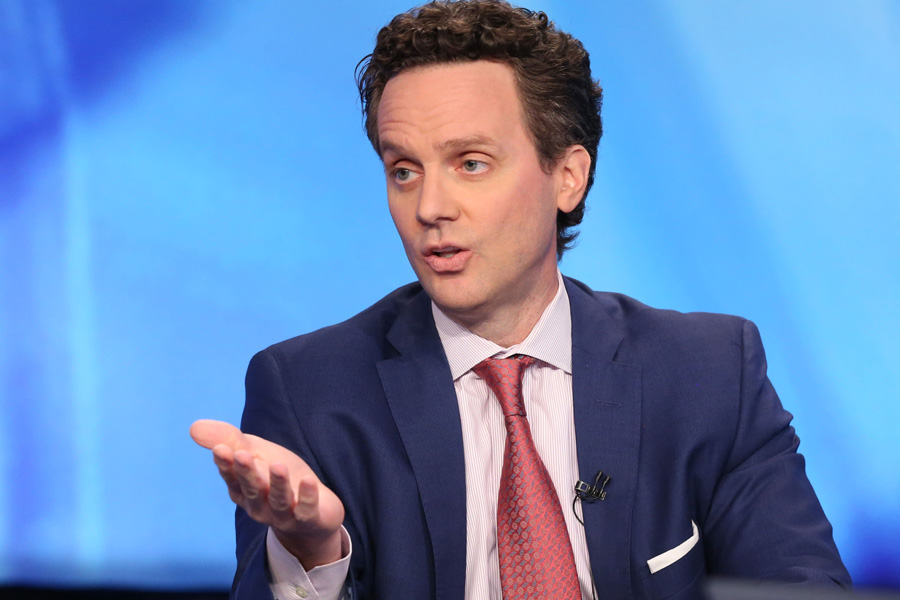
A quick portrait
Joseph A. Lavorgna moves through headlines and cable panels like a lighthouse keeper on a windy night: steady, visible, and guiding conversations about markets and policy. At the same time, a name almost identical — Joseph LaVorgna — appears in a different orbit: local education and family life, most often identified as the father of actor Adam LaVorgna. This article untangles those threads, following careers, dates, and the quiet human details that sit behind public titles.
Basic information — Joseph A. Lavorgna (economist)
| Field | Information |
|---|---|
| Full name (public) | Joseph A. Lavorgna (commonly “Joe Lavorgna”) |
| Common media name | Joe Lavorgna |
| Early career start | 1992 — Federal Reserve Bank of New York, Monetary Analysis & Projections staff |
| Major Wall Street tenure | 1997–2017+ — Deutsche Bank (senior/Chief U.S. Economist; two-decade presence on Wall Street) |
| Later private roles | Natixis (Chief Economist for the Americas); SMBC Nikko Securities America (Managing Director & Chief Economist, Americas — appointed Sept 2022) |
| Government service | Special Assistant to the President; Chief Economist, National Economic Council (one-year leave from private sector at one point) |
| Recent public appointment | June 6, 2025 — Counselor to the Secretary, U.S. Department of the Treasury |
| Public presence | Frequent media appearances (television, podcasts), YouTube clips, active on X under @Lavorgnanomics |
| Notable beats | U.S. macroeconomics, interest rates, policy commentary, markets analysis |
Family snapshot — Joseph LaVorgna (education / family)
| Field | Information |
|---|---|
| Name variant | Joseph LaVorgna (spelling variant often appears with capital V) |
| Public association | Identified in actor biographies as the father of Adam LaVorgna |
| Profession (as reported in actor bios) | High-school assistant principal / school administrator (Connecticut; local education roles referenced in press) |
| Family | Married to Sandra (née Schnepf) LaVorgna (described in actor bios as a college professor); father of actor Adam LaVorgna (b. March 1, 1981) and reportedly three siblings for Adam |
The economist’s arc — dates, numbers, and the shape of a career
Joseph A. Lavorgna’s professional life can be read as a sequence of platforms: central bank staff, hedge/fixed-income desks, long institutional stewardship, boutique and regional economist leadership, and then a return to public service at the Treasury. The timeline reads like a compact ledger of market seasons:
- 1992: Entry to the Federal Reserve Bank of New York, Monetary Analysis & Projections staff — the close-up school of macro modeling and monetary mechanics.
- Mid-1990s: Transition to Wall Street: roles at UBS and Lehman Brothers, where macro meets markets and economic forecasts meet trading desks.
- 1997: Joins Deutsche Bank. Over the next roughly 20 years he becomes a visible, often-cited senior economist covering U.S. macro from inside a global bank.
- 2017: Marked public shift away from the Deutsche Bank chief economist title; media coverage notes his stepping down from that specific role.
- (Undated): One-year public service leave to serve as Special Assistant to the President and Chief Economist of the National Economic Council — a direct bridge between markets and policy circles.
- Pre-2022: Chief Economist for the Americas at Natixis.
- September 2022: Named Managing Director & Chief Economist (Americas), SMBC Nikko Securities America.
- June 6, 2025: Appointed Counselor to the Secretary, U.S. Department of the Treasury — a senior advisory role inside Treasury during a period when macro policy and markets remain in flux.
Years add texture: two decades at Deutsche Bank; a string of senior roles across at least four major financial institutions; and a recent pivot back to the halls of government. Numbers like “1992,” “1997,” “2017,” “2022,” and “2025” form anchors in that arc.
Public voice and media footprint
Joe Lavorgna is not an economist who works only in journals and internal notes. He is a television and podcast presence, a columnist-in-quote, and the sort of market commentator whose lines get clipped for YouTube. Key beats in his public commentary focus on policy stance (rates, Fed actions), cyclical outlooks, and structural topics like regulatory or monetary reform. He is known to speak plainly — short declarative sentences that cut through model-speak — and to engage the camera like a trader who learned to explain risk in plain English.
On social platforms he posts economic commentary and policy reactions; his feed functions as a daily docket of market-minded observations. That public voice reinforces his movement between the private and public sectors: a professional who can shift from client memos to policy memos.
The family thread — two names, two lives
Names act like mirrors; sometimes the reflection belongs to another person down the block. Joseph LaVorgna (with the V-capitalization variant often used in entertainment bios) is primarily visible in the context of family — as the father of actor Adam LaVorgna (born March 1, 1981). In actor biographies, parental details are concise: Joseph (father) worked in school administration, Sandra (mother) is identified as a college professor, and Adam is noted as one of four children. Those entries do not devolve into exhaustive family trees; they serve as context — the background that shaped an actor’s early life.
Where one Joseph navigates macro forecasts and policy memos, the other appears in school newsletters and local press items: assistant principal, administrator, community figure. Their worlds are different in scale but similar in that both names surface in public records and stories.
A timeline table for clarity
| Year | Economist Joseph A. Lavorgna | Joseph LaVorgna (family context) |
|---|---|---|
| 1992 | Fed NY — Monetary Analysis & Projections staff | — |
| 1997 | Joins Deutsche Bank | — |
| 2017 | Steps down as chief U.S. economist role at Deutsche Bank | — |
| Sept 2022 | SMBC Nikko: Managing Director & Chief Economist, Americas | — |
| March 1, 1981 | — | Birth of Adam LaVorgna (son) |
| June 6, 2025 | Appointed Counselor to the Secretary, U.S. Treasury | — |
How to read the overlap
When the same or similar name surfaces in news feeds and family pages, the reader needs to separate context from coincidence. One Joseph is a public economist whose beat is the country’s macro pulse; the other is a local educator whose presence is felt in school corridors and the family biographies of a performer. Both are public in different senses: one through national economic policy and media visibility, the other through familial ties and local records. Together they demonstrate how a single name can belong to two very different stories — twin threads in the larger weave of public life.