Theresa Fuavai-fatu at the Center of a Private Public Life
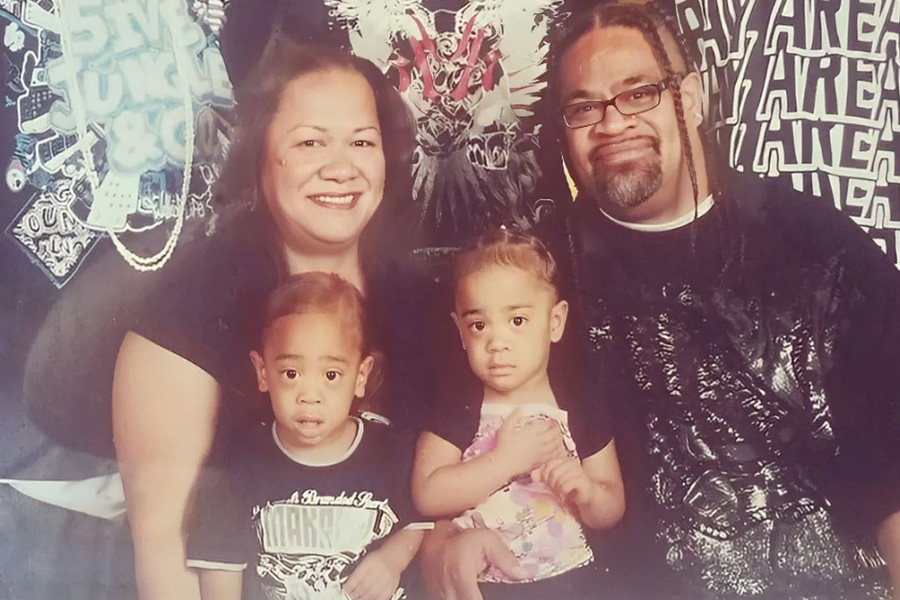
When I look at Theresa Fuavai-fatu, I see a person whose public footprint is small, but whose family story is large enough to cast a long shadow. She is not widely known for a public career, a flashy media persona, or a trail of interviews. Instead, her name appears most clearly through family, through marriage, through children, and through one unforgettable health crisis that turned into a survival story.
Theresa Fuavai-fatu is best known as the spouse of Sam Fatu, the retired professional wrestler also known by names such as The Tonga Kid, Tama, and Samoan Savage. In the wrestling world, that alone places her near a powerful lineage. The Fatu and Anoa’i family tree is like an old and deeply rooted banyan, with branches spread across generations of wrestling fame. Theresa stands close to the trunk of that tree, and her role has been central even though she has kept herself far from the spotlight.
Public reporting suggests that Theresa has lived much of her life outside celebrity culture. That makes her interesting in a different way. She is not a headline-chaser. She seems to belong to the category of people whose importance is felt most strongly inside the home, not on a stage. And yet her name continues to surface because her family belongs to one of the most recognized wrestling families in the world.
Marriage to Sam Fatu and a Family Built in Public View
Theresa Fuavai-fatu is publicly identified as the wife of Sam Fatu, and their marriage is repeatedly tied to the year 2008 in public profiles. I treat that date as the clearest public marker available, even though Theresa herself has not been a high-profile media subject. What matters most is that the marriage sits inside a wider family narrative that has been carried forward by their children and by the wrestling fame surrounding Sam Fatu.
Sam Fatu is part of the famous Anoa’i wrestling dynasty, a family name that has become almost legendary. Through that marriage, Theresa became connected to a network of relatives whose names are familiar to wrestling fans across generations. That network includes wrestlers who helped define eras of professional wrestling, and it gives Theresa a place in a family story that is both personal and public.
What strikes me most is the contrast. Sam Fatu’s professional identity has been built in arenas, under lights, in front of crowds. Theresa’s identity appears to have been built at home, in the private rhythm of family life. Those two worlds do not always mix gently. Here, though, they seem to have formed a single narrative: the wrestler and the spouse, the public figure and the private anchor.
The Children: Jacob, Journey, Marley, and Myracle
Theresa Fuavai-fatu’s children are most visible. Jacob, Journey, Marley, and Myracle Fatu are the most famous children of Theresa and Sam.
Jacob Fatu is the most famous of the four. Theresa is his mother, and he is a famous wrestler. That alone places Theresa in another wrestling generation. When a child takes a family name into a new period, the parent connects memory and momentum. Thus, Theresa is more than a mother. She maintains continuity.
Public references identify Journey Fatu as Theresa and Sam’s son. Despite being less apparent than Jacob, he is part of Theresa’s family. In 2008, Marley and Myracle Fatu, twins, became famous after a medical incident. They are mentioned in coverage of that event, which is unforgettable: a mother in distress, a premature delivery, and a miracle survival story.
Public sources spell Myracle differently, sometimes mentioning Miracle. Because Myracle is one of the family’s public forms and names in public documents often change, I maintain it here. The family bond endures.
The 2008 Medical Crisis and the Story That Followed
One of the most important public chapters in Theresa Fuavai-fatu’s life came in November 2008. At 29 weeks pregnant, she experienced severe breathing trouble, suffered cardiac arrest, and required an emergency C-section. The details are stark. The kind of crisis that can freeze a room in a single heartbeat became a story of survival for Theresa and her newborn twins, Marley and Myracle.
This event matters because it is the main reason Theresa’s name appears in news coverage at all. It is also the clearest window into the strength of her family story. In the middle of a frightening medical emergency, the family did not fracture. It held together. The twins survived. Theresa survived. The story was later described in public reporting as a Christmas miracle, and that phrase feels fitting. The family stood at the edge of a cliff and somehow made it back.
I think this moment reveals more than a headline can say. It shows Theresa not as a celebrity figure, but as a mother at the center of a survival narrative. That is a different kind of public identity. It is quieter, but it carries more weight than fame.
Public Image, Privacy, and the Absence of a Career Trail
Theresa Fuavai-fatu’s public career is somewhat unknown. Few details regarding her education, career, business, or finances are available. Absence says something. In a world that brands everyone, Theresa has stayed unbranded.
I saw that as privacy, not invisibility. Some people live like candles in windows, visible only when the light is appropriate. That seems to include Theresa. She comes when needed for the family story and then disappears.
No reliable public record exists of personal finances, financial worth, or business or entertainment achievements. Instead, family milestones like the 2008 health crisis and Jacob Fatu’s achievement affect the public record. Theresa considers her family her biography.
Family Legacy and the Wrestling Connection
The Fatu family is part of a larger wrestling dynasty that includes some of the most recognizable names in the sport. Through her marriage to Sam Fatu and her role as mother to children connected to wrestling, Theresa is part of that wider legacy. The family resembles a relay race in slow motion, each generation carrying the torch a little farther down the track.
Jacob Fatu’s rise has brought renewed attention to the family name. That attention reflects back on Theresa, even if she remains off-camera. Journey, Marley, and Myracle add depth to that picture, showing that the family is not defined by one public figure alone. It is a household with many moving parts, and Theresa sits at the center of it.
In public memory, families like this often get flattened into easy labels. I find it more accurate to see Theresa as a mother, spouse, and quiet stabilizing force within a family that lives partly in the world of wrestling and partly in the world of ordinary private life. That balance is not simple. It takes patience, and probably a lot of invisible labor.
FAQ
Who is Theresa Fuavai-fatu?
Theresa Fuavai-fatu is best known as the wife of retired wrestler Sam Fatu and the mother of several children connected to the Fatu family name. Her public profile is small, but her family ties place her inside a major wrestling dynasty.
Who is Theresa Fuavai-fatu married to?
She is publicly identified as the spouse of Sam Fatu, also known by wrestling names such as The Tonga Kid, Tama, and Samoan Savage.
How many children does Theresa Fuavai-fatu have?
Public material most commonly identifies four children: Jacob Fatu, Journey Fatu, Marley Fatu, and Myracle Fatu. Some public references vary in how they describe the number of children, but these four names appear most often.
What happened in Theresa Fuavai-fatu’s major public life event?
In November 2008, Theresa suffered cardiac arrest while pregnant and underwent an emergency C-section at 29 weeks. She and the twins, Marley and Myracle, survived the crisis.
Why is Theresa Fuavai-fatu discussed in wrestling circles?
She is discussed because of her marriage to Sam Fatu and because her son Jacob Fatu has become a major wrestling figure. Her place in the Fatu family connects her to one of the most famous wrestling lineages.
Is there much public information about Theresa Fuavai-fatu’s career?
No. Publicly available information about her own career, finances, and professional work is very limited. Most references focus on her family life and the 2008 medical emergency.
Why does Theresa Fuavai-fatu remain notable even with a low profile?
She remains notable because her life intersects with a famous wrestling family and because her personal survival story in 2008 became publicly remembered. Her quiet presence gives the family history emotional depth.