A Roosevelt born into a long shadow
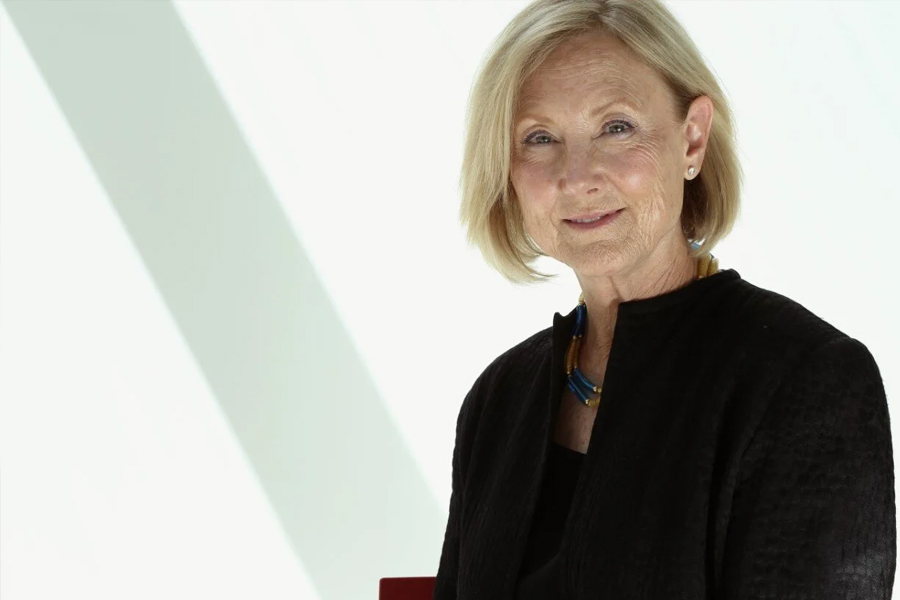
Julianna E. Roosevelt is a woman whose name matters before she speaks. She comes from a famous American family, yet her story is not headline-grabbing. Quieter than that. It feels like a thoughtful garden path in the morning light, with family history on both sides.
Julianna E. Roosevelt was born March 15, 1952. Public family records list her as Curtis Roosevelt and Robin H. Edwards’ daughter. She is directly related to the Roosevelt family of Franklin D. Roosevelt and Eleanor Roosevelt, who have shaped American public life for centuries. In one family caption, she is called Eleanor Roosevelt’s first great granddaughter, cementing her in the Roosevelt legacy.
I notice how this legacy is layered. Julianna has political ancestry. Her life seems distinct, practical, and artistic, with work in landscape design, mindfulness, child psychology, and activism. Their mix gives her profile texture. It is not a marble portrait. It is woven from inheritance and own effort.
Her parents and the household that shaped her
Julianna’s father, Curtis Roosevelt, was the grandson of Eleanor Roosevelt and Franklin D. Roosevelt. That makes him a bridge between the famous past and the more private present. In public references, Curtis appears not only as a descendant of the First Family, but as a father who remained connected to his children in the Roosevelt line. Julianna is one of the people through whom that branch continues.
Her mother, Robin H. Edwards, appears in the public family tree as Curtis Roosevelt’s first wife and Julianna’s mother. Less is publicly written about Robin herself, but her place in Julianna’s life is clear. She is part of the foundation, one of the two people from whom Julianna’s earliest identity emerged.
Family origin stories are often treated like formal biographies, but I think they are closer to weather. They shape the ground before a person can choose a path. Julianna’s family background placed her at the edge of American history from the start. Even so, the later evidence suggests she did not remain only a family name. She became a working person with her own voice.
The Roosevelt line behind her
The most famous names in Julianna’s ancestry are Franklin D. Roosevelt and Eleanor Roosevelt, her great grandparents. Their names are so well known that they can make a family tree feel like a monument. Yet for Julianna, they are not museum labels. They are relatives, part of the living architecture of her identity.
Her grandmother was Anna Eleanor Roosevelt, better known as Eleanor Roosevelt, and her grandfather was Curtis Bean Dall. Dall adds another dimension to the story. He was not only part of the Roosevelt circle, but also a public figure in his own right, remembered as a stockbroker, author, and political candidate. That means Julianna’s ancestry is not a single straight line of presidential history. It is a branching river with political, personal, and literary currents.
Her great grandparents on the Dall side were Charles Austin Dall and Mary Bean Dall. They are less famous, but in family history, the less famous names matter just as much. They are the roots under the visible trunk. Julianna’s family tree is a reminder that public history rests on private lives.
Her siblings, cousins, and wider family circle
The public material I reviewed most strongly confirms Julianna’s immediate and direct lineage, but it also places her inside a wider Roosevelt network. Her aunt is Anna Eleanor Seagraves, Curtis Roosevelt’s sister, which further connects Julianna to the broader Roosevelt family circle.
Other family names appear in genealogical references as cousins and related relatives, including Anna Fierst, Adam Boettiger, Sara Boettiger, Nicholas Delano Seagraves, and David Delano Seagraves. The broader family web is wide, and like many old American family lines, it branches into several generations and connected households. In this sort of lineage, cousins are not just side notes. They are the echo chambers of a family’s history. They show how one name can spread into many households and lives.
I think that matters because Julianna does not seem to have lived only as an isolated heir to a famous surname. She belonged to a dense family field, where names recur, overlap, and carry memory forward. In a family like this, identity can feel like a room with many doors open at once.
Marriage, children, and the next generation
Public genealogy records connect Julianna to two marriages: Stephen MacDonnell Hargrove and Irving Bass. Through her relationship with Irving Bass, she is identified as the mother of Nicholas Bass Roosevelt, also listed in some public records as Nicholas Derby Roosevelt.
That matters because it shows where the family line moves next. Julianna is not only a descendant. She is also a parent, which means she helped carry the Roosevelt story into another generation. Nicholas appears in public records as an adult in his own right, and his name preserves the Roosevelt line while also showing how family identity can shift slightly over time, like a melody played in a new key.
Family history is often told from the top down, as if ancestry matters more than motherhood or parenthood. I do not see it that way. In Julianna’s case, the roles run both directions. She is the child of Curtis Roosevelt and Robin H. Edwards, and she is also the mother of Nicholas. That dual position gives her biography depth. She is both inherited and inheritor.
Career, work, and the shape of her public life
Julianna E. Roosevelt evidently has a creative and service-oriented career. Public profiles list her as a landscape designer, mindfulness teacher, child psychotherapist, and human rights activist. That wide spectrum fits together more naturally than it looks. All such roles require focus. All ask people to observe what’s living and needs care.
She considers structure, climate, and form in her landscapes. Landscape designers consider live materials. Soil moves. Lighting changes. Trees grow. No garden is still. That job requires patience. Her public design concept suggests that landscape should belong to a home like a shadow to a tree.
Her mindfulness adds another depth. People say she teaches and conducts meditation in groups and privately. The design is different, yet it has the same calm wisdom. Outdoor area is shaped. Another shapes inside space. Both require hearing.
Her activism and child psychology background complete the picture. They indicate a person who values beauty, caring, dignity, and human flourishing. Her career is more compass than list.
Public appearances, recent mentions, and modern visibility
Julianna’s public footprint is modest, but it is not absent. More recent mentions connect her to civic and cultural life in Southern California, including support for equity focused events and public references to her work in landscape design and mindfulness. She appears as the sort of person who moves through community life with purpose rather than performance.
That restraint gives her biography an interesting shape. She belongs to a historically loud family, but her own public presence is quieter. It feels intentional. She is visible enough to be found, yet not so exposed that the details become flattened into spectacle.
FAQ
Who is Julianna E. Roosevelt?
Julianna E. Roosevelt is a member of the Roosevelt family born on 15 March 1952. She is the daughter of Curtis Roosevelt and Robin H. Edwards, and she is part of the direct Roosevelt line descending from Franklin D. Roosevelt and Eleanor Roosevelt.
Who are Julianna E. Roosevelt’s closest family members?
Her closest publicly identified family members include her father Curtis Roosevelt, her mother Robin H. Edwards, her grandmother Eleanor Roosevelt, her grandfather Curtis Bean Dall, her great grandparents Franklin D. Roosevelt and Eleanor Roosevelt, her aunt Anna Eleanor Seagraves, and her son Nicholas Bass Roosevelt, also listed as Nicholas Derby Roosevelt.
Was Julianna E. Roosevelt connected to public life outside family history?
Yes. Public references describe her as a landscape designer, mindfulness teacher, child psychologist, and human rights activist. That combination suggests a working life centered on care, design, and human well being.
Did Julianna E. Roosevelt have children?
Yes. Public genealogy sources identify her son as Nicholas Bass Roosevelt, also referred to in some records as Nicholas Derby Roosevelt.
Why does Julianna E. Roosevelt matter?
She matters because she represents the meeting point of legacy and individual effort. Her name links her to one of America’s most famous families, but her public work suggests a separate identity built around practice, service, and attention to living things.