Most people picture a printer as something that sits on a desk and spits out paper. A benchtop UV printer breaks that picture completely. It prints on wood, glass, metal, leather, phone cases, almost anything flat or slightly curved that fits under the print head.
The machine uses ultraviolet light to harden ink the instant it hits the surface, which is why colours come out bright and the print survives scratching far better than an inkjet ever could. Anyone comparing a benchtop uv printer to older printing methods usually notices the same thing first: there is no drying rack, no waiting, no smell of solvent hanging around the workshop.
How a Benchtop UV Printer Actually Works
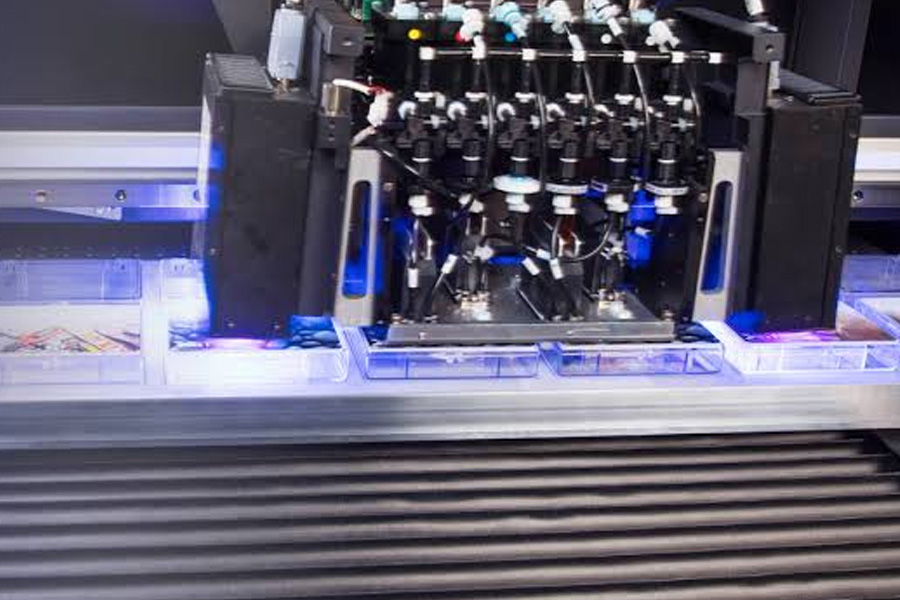
Ink comes out of the print head in tiny droplets, and a UV lamp built into the machine follows right behind it, curing the ink in a fraction of a second. There is no chemical drying, no evaporation, nothing soaking into the material. This matters because it means the printer can put ink on surfaces that a normal inkjet would just make a mess of, like glass or bare metal, where regular ink would smear or never dry at all.
Real Benefits Businesses Report
Setup time drops to almost nothing compared with screen printing. A screen print job needs a screen made for every design, which costs money and takes time even before the first item is printed. A benchtop UV printer skips that step entirely. Send the file, print it, done. That is why so many small operators can now say yes to a single custom mug order without losing money on it.
- Zero setup cost per design, so short runs and one-off items stay profitable.
- Prints on wood, acrylic, metal, glass, leather and most plastics without extra coatings.
- Instant curing means a finished piece can be handled and packed within minutes.
- White ink layers let you print on dark or clear materials without the colour disappearing.
- Lower running cost per job than outsourcing to a specialist print shop.
Where Australian Businesses Are Using Them
Sign shops, engravers, promotional product resellers and gift stores make up most of the buyer base. A trophy engraver who used to laser-etch wood now prints full colour photos onto the same trophy base. A promotional products reseller who used to outsource everything can now sample and produce in-house. Even hardware and homewares shops have started offering personalised items as an extra revenue line, something that was not realistic before benchtop machines came down in price.
Materials Compared: What Prints Well and What Does Not
Not every surface behaves the same way under UV ink. Here is a straight comparison.
| Material | Print Quality | Notes |
| Wood | Excellent | May need a primer on very porous or oily timber |
| Acrylic | Excellent | One of the most popular substrates, holds colour well |
| Glass | Very good | Smooth glass may need light sanding or a bonding agent |
| Metal (anodised) | Very good | Bonds cleanly, common for nameplates and tags |
| Untreated Plastic (PP, PE) | Poor without prep | Low surface energy plastics need an adhesion promoter |
| Fabric | Not recommended | UV ink sits on top and cracks when the fabric flexes |
What to Check Before Buying One
Print bed size is the first thing to get right. A machine with a small bed cannot print an A3 sign, no matter how good the ink is. Height clearance matters just as much, since a lot of promotional items like drink bottles and tumblers are tall, and a printer with only 5 centimetres of clearance simply cannot reach them.
Ink cost per millilitre varies a lot between brands, and this adds up fast if a business is running the machine daily. White ink in particular clogs more easily than colour ink and needs regular agitation, so ask any supplier how the white ink circulation system works before signing anything. A machine that needs the white ink manually shaken every morning is a lot more hassle than one with a built-in stirring system.
Ongoing Costs Nobody Mentions Upfront
The print head is the part that eventually wears out, and replacing one is not cheap. Ask directly what a replacement head costs and how long one typically lasts under regular use. UV lamps also degrade over time and need swapping every so often. None of this makes a benchtop UV printer a bad investment, but going in with the full cost picture avoids an unpleasant surprise eighteen months down the track.
A benchtop UV printer earns its price back fastest for businesses doing lots of small, varied jobs rather than one huge repeat order. If that sounds like most weeks in your shop, it is worth a serious look.