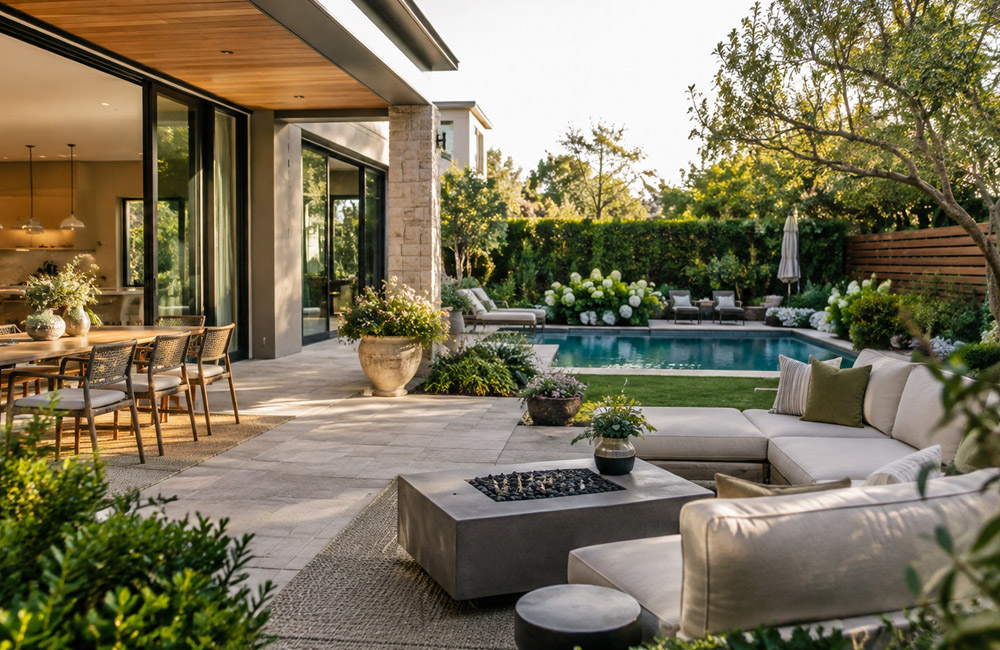
An outdoor space feels truly valuable when it functions as an effortless extension of the interior home rather than an isolated plot of grass. Value in landscape design is driven by a combination of visual cohesion, durable materials, spatial functionality, and low maintenance overhead.
When homeowners or prospective buyers evaluate a yard, they respond to how the space makes them feel. A yard that promises endless weeding feels like a burden, while a space thoughtfully arranged for relaxation, entertainment, and privacy feels like a luxury resort.
1. Creating a Seamless Indoor-Outdoor Flow
Quick Answer: Aligning exterior patio levels, floor tones, and doorway openings with interior living areas doubles perceived usable square footage.
The most valuable outdoor spaces blur the boundary between inside and outside. When stepping onto a patio feels like walking into another room of the house, the entire property instantly feels larger.
Architects achieve this by matching interior flooring materials with exterior pavers in tone and texture. Installing multi-slide glass doors, flush threshold tracks, and continuous ceiling lines creates a visual runway that draws the eye outdoors. When the patio mirrors the comfort of the living room, it adds functional square footage without the expense of a traditional home addition.
2. Integrating Low-Maintenance Luxury Water Features
Quick Answer: Permanent, clean-lined water elements add visual elegance, acoustic tranquility, and high perceived property value when engineered for easy upkeep.
Water elements serve as natural focal points that instantly elevate a landscape’s aesthetic tier. The soothing sound of moving water masks surrounding neighborhood noise, turning a suburban yard into a private sanctuary.
However, the key to value lies in low-maintenance design. Modern homeowners favor clean, durable installations that require minimal chemical balancing and scrubbing. For instance, those investing in low-maintenance luxury backyard features like fiberglass pools in Salt Lake City benefit from non-porous gel-coat surfaces that resist algae growth, cutting maintenance time in half compared to traditional concrete pools while delivering a sleek, high-end look.
3. Designing Multi-Functional Spatial Zones
Quick Answer: Dividing a yard into distinct operational “rooms”—such as dining, lounging, and cooking zones—maximizes utility and prevents awkward dead space.
An open expanse of lawn often feels unfinished and underutilized. Transforming a yard into a high-value asset requires defining specific zones tailored to different daily activities.
| Outdoor Living Zone | Core Design Elements | Primary Lifestyle Value |
| Culinary Station | Built-in grill, stone counter, fridge | Eliminates indoor-outdoor trips |
| Fire Lounge | Gas fire pit, cushioned seating | Extends usability into cold months |
| Covered Dining Area | Pergola or porch roof, task lighting | Comfortable shade during peak sun |
| Sun & Water Zone | Pool deck, loungers, water features | Resort-style leisure & recreation |
Using contrasting paver patterns, low retaining walls, or garden beds to separate these zones creates spatial harmony, making the backyard feel purposefully designed and expansive.
4. Prioritizing Hardscaping Quality Over Temporary Decor
Quick Answer: Built-in stone features, permanent seating, and premium pavers convey long-term durability and structural value far better than freestanding patio furniture.
One of the key outdoor space value drivers is permanent structural integrity. Freestanding furniture degrades over time under sun and rain, whereas stone, brick, and high-grade timber age gracefully and signal quality craftsmanship.
Investing in permanent hardscaping—such as built-in stone benches, paver patios, timber pergolas, and retaining walls—anchors the yard visually. These permanent architectural structures communicate to buyers that the outdoor area is a permanent upgrade rather than a temporary setup.
5. Layering Architectural and Landscape Lighting
Quick Answer: Layering warm LED pathway, accent, and ambient lights dramatically boosts nighttime appeal and extends usability past sunset.
Illumination transforms a yard from a daytime amenity into a round-the-clock venue. A single glaring floodlight makes a yard feel like an industrial parking lot, whereas strategic, layered lighting adds depth, mystery, and luxury.
To achieve a high-end feel in high-end outdoor living design:
- Up-Lighting: Position spotlights at the base of mature trees or stone columns to cast dramatic shadows.
- Path Lighting: Use subtle downward-facing fixtures along walkways to guide foot traffic safely.
- Under-Cap Lighting: Install hidden LED strips beneath retaining wall caps and stair risers for a soft, modern glow.
6. Ensuring Complete Privacy and Climate Control
Quick Answer: Enclosing outdoor areas with living green walls, solid fencing, and shade structures creates a comfortable, protected microclimate.
No matter how beautiful an outdoor kitchen or pool is, if neighbors have a direct line of sight into the patio, the space loses its intimate appeal. Privacy is essential for making an outdoor area feel truly luxurious.
Incorporate natural privacy barriers like tall ornamental grasses, fast-growing cedar hedges, or horizontal wood slats. Pair these barriers with climate solutions like louvered pergolas, infrared patio heaters, and ceiling fans to keep the space usable through scorching summers and chilly autumn evenings.
7. Common Mistakes That Reduce Outdoor Value
- Ignoring Site Drainage: Water pooling on patios or near the house foundation ruins hardscaping investment and creates structural risks.
- Over-Planting High-Maintenance Vegetation: Exotic plants that require constant pruning, fertilizing, and heavy watering quickly turn a dream yard into a weekend chore.
- Disregarding Scale and Proportion: Oversized furniture or massive structures packed into a compact lot make the space feel cramped rather than cozy.
Frequently Asked Questions
What outdoor upgrade yields the highest return on investment?
High-quality paver patios, built-in outdoor kitchens, and low-maintenance pools consistently yield strong financial and lifestyle returns by expanding functional living space.
How do I make a small backyard feel more expensive?
Focus on large-format pavers, clean vertical green walls, built-in perimeter seating, and warm accent lighting to maximize floor space and minimize visual clutter.
Making an outdoor space feel genuinely valuable requires a thoughtful balance of architectural structure, low-maintenance materials, smart spatial planning, and physical comfort. By prioritizing seamless indoor-outdoor transitions, durable hardscaping, layered lighting, and private, functional zones, you turn an ordinary yard into a captivating living environment. Focus on quality elements that simplify maintenance and enhance daily living, ensuring your outdoor sanctuary offers lasting pleasure and strong property value for years to come.