Two names. Two very different houses. And most people looking for a place to land after treatment find out the hard way that the labels on the door tell them almost nothing about what happens inside.
That confusion sends people into the wrong building all the time. A guy leaves a thirty-day program, gets handed a list of “sober houses,” picks one that sounds official, and finds out on move-in day that the house comes with curfews, sign-out sheets, and a house manager who reports back to a treatment provider. Fine if that is what he needed. Rough if he was looking for something with more breathing room. The people who actually sort families through this maze, like the team at Bold Steps Behavioral Health, spend a lot of their intake conversations just untangling the vocabulary before anyone talks about furniture.
So here is the plain version. Sober living is usually less clinical and more self-directed. A halfway house typically carries more structure, supervision, or oversight. Both are alcohol and drug free. Both sit somewhere between treatment and your own apartment. Everything past that is detail, and the detail is where your decision actually lives.
Why the same words mean different things on different streets
Neither term has one legal definition that every state enforces the same way. That is the single biggest reason your search results read like they contradict each other. A facility in one county calls itself a halfway house and offers evening groups and random testing. A house two blocks over uses the same phrase and asks only that you pay rent, keep the place clean, and hold a job.
Take my honest view on it: treat the label as a starting question, never as a description. You want to know who runs the building, who can enter your room, what gets reported to whom, and what happens if you relapse. Ask those four things and the terminology stops mattering.
There is one fixed point worth knowing about. Recovery housing that receives federal assistance has to follow certain anti-discrimination protections, which is laid out at the federal housing agency, HUD, in its guidance on recovery housing. That matters if you are worried about being turned away for using prescribed medication or for a disability. Ask a house directly whether those protections apply to them. The ones that hesitate are telling you something.
What sober living usually looks like in practice
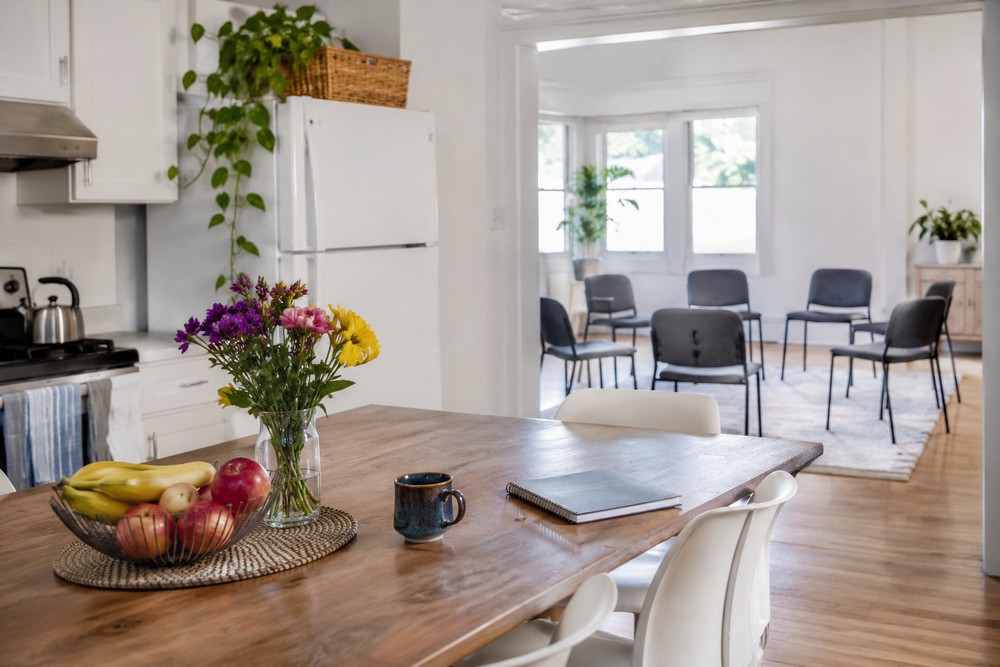
Picture a leased four-bedroom with a shared kitchen, a chore rotation taped to the fridge, and a house meeting on Sunday nights. You pay weekly rent, you sign a basic agreement about substances, and you come and go around your work schedule. Some houses require attendance at outside meetings. Many do not.
Here is what a resident actually notices in week one: nobody asks for your laundry list of triggers, but the house lead will notice if you vanish for two days. That middle ground, less clinical than a program and more accountable than a solo apartment, is the whole point. You get a roommate who expects dinner and a landlord who expects rent, and those two small obligations do a lot of quiet work.
Great fit if you have already done primary treatment, you have a job or a job lead, and you want four walls plus people who get it. Poor fit if you are still shaky on day three and need eyes on you.
Where a halfway house pulls ahead
More oversight, more often. Expect defined curfews, sign-out procedures, scheduled groups, and drug testing that is not optional. Some halfway houses are licensed residential programs. Others are run by nonprofits with their own house rules. The variability is real, so the intake meeting is your best source of truth.
This structure earns its keep for people leaving inpatient care with no stable income, no reliable transportation, and a home environment that would undercut every good intention they walked out with. If your first thirty days sober happen in a house that checks on you at ten at night, that is a feature and not a nuisance.
According to the federal substance abuse agency, SAMHSA, stable housing is one of the most consistent factors tied to sustained recovery. Housing stability is the ingredient, not the amenity. Which house you pick matters less than whether it stays stable for longer than a few weeks.
The five-question walkthrough I would use
Show up in person if you can. Phone calls get polished answers. Walking the hallway gets you the truth.
- Who holds the lease and who holds your feet to the fire? A single landlord, a nonprofit board, or a clinical provider. Each one changes who you can call when something breaks, including you.
- What happens the night someone relapses? You want a stated procedure. A blank stare means they have not thought it through, and it will be thought through on your worst night if they never did it beforehand.
- Are prescribed medications allowed? Ask plainly. Recovery housing rules on this vary widely, and the answer should come quickly.
- What does a normal Tuesday look like? Meals, meetings, work hours, quiet hours. If the answer sounds like a brochure, ask two current residents instead.
- What is the exit plan and the rent after month one? Good houses want you to leave eventually. Houses that make leaving hard are running a business, not a program.
Write the answers down. Compare them side by side at a kitchen table. The house that wins on paper frequently loses once you see how the hallway smells and how the residents talk to each other.
One scenario that shows the difference
A woman finishes a residential program in her thirties, keeps her job at a distribution center, and has a car. She picks sober living, works second shift, pays rent, and checks in with a house lead by text twice a week. Two months later she moves into her own studio. Nothing dramatic. It worked because the level of structure matched the level of support she needed.
Now flip it. Same woman, no job, no car, family in the picture and not in a helpful way. Sober living would leave her isolated and under-supervised. A halfway house with case management and a ride to interviews is the better call. Same person, different month, different answer.
This is the part people skip: the house is a tool, and tools are matched to a job. If you feel pressure to choose a category before you have met a single house lead, slow down.
What the research keeps saying
Recovery housing does not work by geography. It works through supervision, accountability, and the presence of other people trying to stay sober at the same time. The national institute on drug abuse, NIDA, has long documented that recovery is a long-term process with relapse risk that does not end at discharge. That single finding reshapes how you should pick a house. You are not selecting a reward for finishing treatment. You are selecting a place to live through the messy middle.
So ask yourself what your messiest middle looks like. A Friday night with nothing scheduled and no one expecting you home until Monday? Then a house with a curfew and a house meeting is not a punishment. It is the scaffolding you will be glad to lean on.
Before you sign anything
Visit twice, at different hours. Talk to someone who already lives there without the house manager in the room. Read the agreement line by line, especially the parts about visitors, vehicles, and removal. Confirm the rent in writing and confirm what services come with it versus what costs extra. Then sleep on it, even if the bed is the last one available in town.
The label on the door does not decide whether you stay sober. The people inside it, and the honesty you bring through the front door, do. Visit both kinds of house before you decide, and ask each of them one blunt question: what happens to me here if I slip? Their answer, more than any nameplate, will tell you where you belong. If you are helping someone else choose, ask it for them and listen to the pause before the reply.