Older heavy-duty diesel engines remain valuable because they are durable, familiar to many technicians, and often practical to repair. From farm tractors and construction equipment to generators and vocational trucks, well-maintained Cummins 855 engines and similar diesel platforms can continue to deliver dependable service for years.
The right approach is not to keep every old engine running at any cost. Owners should weigh the duty cycle, repair history, parts availability, fuel consumption, downtime risk, and the condition of the machine. A sound engine in a useful machine may justify careful maintenance or rebuilding, while repeated failures can signal that replacement is the more economical choice.
Why Legacy Diesel Engines Still Have A Place In 2026
Many legacy diesels have simple mechanical fuel systems, durable parts, and repairable internal components, making troubleshooting easier with proper manuals and test tools. Age alone shouldn’t dictate retirement; instead, consider if the engine can reliably operate without costly downtime or repeated failures, especially if it has a solid frame, transmission, hydraulics, and a good maintenance record.
Know The Engine Before Starting Repairs
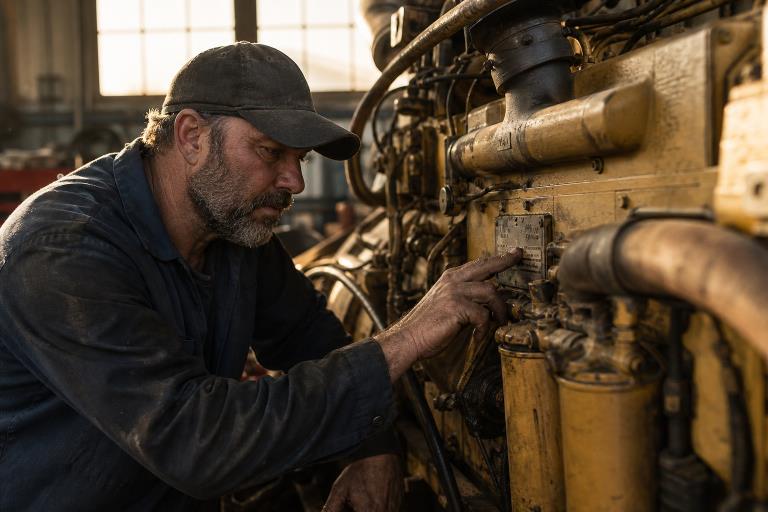
Start repairs by recording model, serial number, horsepower, application, and operating hours or mileage. The serial number is crucial because engines in the same family can have different injectors, pistons, gaskets, turbochargers, flywheels, timing, and cooling. Confirm fuel-system type, turbo configuration, cooling, voltage, flywheel, transmission compatibility, and engine use (on-road, industrial, agricultural, marine). Ordering parts by appearance or engine family alone often leads to costly mistakes.
Build A Reliable Preventive Maintenance Routine
Maintenance intervals should follow the engine manufacturer’s instructions and reflect actual working conditions. Dusty sites, long idle periods, extreme heat, heavy loads, and questionable fuel storage can all justify closer inspection.
- Before each shift: Check oil and coolant levels, leaks, belts, hoses, warning lights, and unusual sounds.
- Weekly: Inspect battery connections, fuel lines, air-filter restriction, drain points, and engine mounts.
- At scheduled service: Replace filters, inspect fluids, check valve settings where applicable, and examine the cooling system.
- During heavy use: Track oil consumption, coolant loss, smoke changes, fuel economy, and operating temperature.
- After repairs: Record parts installed, measurements, torque checks, test results, and engine hours.
Attention to filters, injectors, turbochargers, coolant condition, and lubricant control can reduce soot-related problems and avoidable repair costs. The California Air Resources Board’s heavy-duty diesel maintenance guidance is a useful reference for practices that support cleaner, more reliable operation.
Common Warning Signs And What They May Mean
Symptoms are clues, not guaranteed diagnoses. Test before replacing expensive components.
- Hard starting: Check battery condition, cranking voltage, fuel supply, air leaks, timing, and cold-start equipment.
- White smoke: Consider incomplete combustion, low cylinder temperature, injector problems, or possible coolant entry.
- Black smoke: Inspect the air filter, intake plumbing, turbocharger, injectors, and fuel settings.
- Blue smoke: Investigate oil consumption from cylinder wear, valve guides, or turbocharger seals.
- Low oil pressure: Stop operation until oil level, gauge accuracy, filters, pump condition, and bearing health are checked.
- Coolant in oil: Promptly inspect liners, seals, gaskets, cylinder heads, and the cooling circuit.
- New knock or tapping: Check injectors, valve train, accessory drives, pistons, and bearings.
How To Check The Fuel, Air, Oil, And Cooling Systems
Fuel And Air Checks
Begin with fuel quality, water contamination, filter condition, and possible air entry on the supply side. Replace restricted filters before blaming the injection pump or injectors. Inspect intake piping for split hoses, loose clamps, and restrictions. On turbocharged engines, check housing condition, oil leaks, shaft movement, and boost against the correct service specification.
Lubrication And Cooling Checks
Use the oil grade specified for the engine, climate, and workload. Track how much oil is added between services, and inspect drained oil or filters for metal, sludge, or coolant contamination. When dash readings seem doubtful, verify pressure with a known-good mechanical gauge.
For overheating or unexplained coolant loss, pressure-test the cooling system and inspect the radiator core, hoses, thermostat, water pump, fan drive, belts, and airflow path. Keep debris out of the radiator and confirm that the coolant has appropriate freeze protection and corrosion control.
When A Repair Makes More Sense Than Replacement
A rebuild decision should consider more than the engine estimate, including the condition of transmission, driveline, hydraulics, chassis, wiring, cooling system, and accessories, as well as freight, labor, fluids, calibration, testing, and downtime costs. A cheap replacement may become costly if it needs parts like a turbocharger or radiator. Before modifying fuel or emissions equipment, check local rules and EPA standards, as they help distinguish on-road and nonroad engine categories, but local rules may also apply.
Long Block, Extended Long Block, Or Complete Engine?
- Long block: Usually includes the core engine assembly and requires reuse or transfer of compatible external parts. It is often best when accessories are known to be good.
- Extended long block: May include additional major components, such as fuel system or turbocharger parts. Confirm exactly what is included before ordering.
- Complete engine: Is the closest to a ready-to-install package, although wiring, controls, starters, alternators, flywheels, and mounts can still vary.
The main risk with any option is assuming that every reused part will fit and perform properly. Match part numbers, inspect reusable accessories, and clarify warranty coverage before installation begins.
How To Plan A Safe Engine Rebuild
Document engine condition before teardown by recording parameters like compression, oil pressure, coolant temperature, blow-by, smoke, and fluid findings. During disassembly, measure the crankshaft, liners, pistons, camshaft, cylinder head, gear train, and critical clearances instead of relying solely on visual inspection. Check for cracks, corrosion, damaged threads, warping, and overheating. Use the correct service manual, tools, torque values, sealants, and lubricants. Prime the oil system before starting, then run the engine under controlled conditions, monitoring for leaks, pressure, smoke, and noise.
Cold-Weather Operation, Storage, And Records
Cold starts become harder when oil thickens, batteries weaken, fuel flow slows, or cranking speed drops. Keep terminals clean, use approved winter oil and fuel practices, and verify that block heaters or intake heaters work. Avoid starting the fluid unless the engine manufacturer specifically permits it. For seasonal storage, change contaminated oil, treat or stabilize fuel as appropriate, protect intake and exhaust openings, maintain battery charge, and inspect for moisture, rodents, and corrosion. Keep a service log with dates, hours, fluid use, repairs, and test results. Good records reveal slow changes before they become major failures.
Final Checklist For 2026
- Identify the engine by its exact serial number and application.
- Use a written maintenance schedule and record every service.
- Track oil, coolant, smoke, fuel use, and temperature trends.
- Test the fuel, air, lubrication, and cooling systems before replacing major parts.
- Inspect all accessories during a major repair or engine swap.
- Compare rebuild, replacement, and machine-trade costs honestly.
- Use qualified technicians for internal engine, fuel-system, and crankshaft work.
Legacy heavy-duty diesel engines can remain productive in 2026 when maintenance is planned rather than delayed. Accurate identification, regular inspections, disciplined testing, and realistic cost comparisons give owners the best chance of turning an older engine into a reliable working asset.