A family portrait shaped by grit and grace
I don’t see a spotlight-seeker in Henrietta Radner. I envision a woman keeping together a family that would become American pop culture in a windstorm like a sturdy house. She was most known as Gilda and Michael Radner’s mother and Herman Radner’s wife, although that name doesn’t capture her life. Although Henrietta lived in the background, her legacy endured. The generation she came from carried aspiration lightly, like a lantern held in one hand.
In 1904, Henrietta was born to the Dworkin family. Her life began before Gilda Radner and television. That matters. This implies Henrietta was influenced by an older America of hard edges, family responsibility, and social restriction. She joined a wealthy and well-connected Detroit family. It appeared polished. Home emotional weather was more challenging.
The Dworkin family roots
Henrietta’s parents were Alfred Froiem Dworkin and Goldie Hyman Dworkin. I think of them as the first frame around her life, the family line that fed into the Radner story. She also had sisters, including Freida Dworkin Math and Elsie Dworkin Rhineston. These are the quieter branches of the tree, but they matter because they place Henrietta in a larger family network rather than treating her as a side note in someone else’s biography.
Here is a simple family map:
| Family member | Relationship to Henrietta Radner | Notes |
|---|---|---|
| Alfred Froiem Dworkin | Father | Part of her paternal family line |
| Goldie Hyman Dworkin | Mother | Died in 1942 |
| Freida Dworkin Math | Sister | Mentioned in family records |
| Elsie Dworkin Rhineston | Sister | Mentioned in family records |
| Herman Radner | Husband | Married in 1937 |
| Michael Radner | Son | Born in 1941 |
| Gilda Radner | Daughter | Born in 1946 |
This family structure is the skeleton of Henrietta’s story. Around it, the living tissue of personality, memory, and conflict was built.
Marriage, home life, and Detroit life
Henrietta married Herman Radner in 1937. That date matters because it places her adult life in the center of a changing American era. The late 1930s were years of uncertainty, but the Radner household appears to have occupied a more prosperous world, tied to Herman’s business interests in Detroit. He was a businessman and hotel owner, and the family’s lifestyle reflected that stability. Henrietta was not simply someone who lived beside wealth. She helped shape the domestic rhythm of that world.
She worked as a legal secretary, and some accounts describe her as an aspiring ballet dancer. That detail gives me a vivid picture. I imagine a woman with discipline in her posture, precision in her habits, and a private hunger for movement and artistry. A ballet dancer’s discipline does not vanish just because the stage changes. It can become domestic, internal, even silent. In Henrietta’s case, the dance may have been translated into the choreography of family life.
Her home seems to have been both protective and demanding. Public biographies of Gilda often describe Henrietta as critical, emotionally complex, and difficult to please. That does not reduce her to a stereotype. It makes her human. Many mothers of her generation carried love in a firm grip, not a soft one. They built character through pressure, even when pressure left marks.
Henrietta and her children
Henrietta had two children: Michael Radner and Gilda Radner.
Michael, born in 1941, was the older child. He later became an important figure in preserving family memory and supporting efforts connected to Gilda’s legacy. In family photographs, he appears as part of the small constellation that orbited Henrietta. He is the son who connected the Radner name to continuity, documentation, and remembrance.
Gilda, born in 1946, became the family’s brightest public flame. She rose to fame as a comedian and one of the original stars of Saturday Night Live. But before the stage lights and applause, there was Henrietta. That relationship mattered deeply. Gilda’s later work often carried traces of family tension, emotional hunger, and the need for approval. I read that not as gossip, but as biography. Families shape the shape of a person. Henrietta’s influence on Gilda seems to have been one of the defining forces in her life.
Here is the family in a more compact view:
| Year | Event |
|---|---|
| 1904 or 1905 | Henrietta Radner is born |
| 1937 | She marries Herman Radner |
| 1941 | Michael Radner is born |
| 1946 | Gilda Radner is born |
| 1960 | Herman Radner dies |
| 1998 | Henrietta Radner dies |
Career and financial standing
Henrietta’s own career was not public-facing in the way her daughter’s later career would be. She is identified primarily as a legal secretary. That may sound modest, but it suggests a woman who knew how to work with structure, confidentiality, and detail. Those are not small skills. They are the hidden beams of a life.
Her finances appear to have been tied mainly to the family household and Herman’s business success. The Radners were comfortable, and that comfort gave the family a distinct place in Detroit society. Still, wealth does not always buy ease. Sometimes it only changes the furniture around the same old tensions. The public record does not show Henrietta as a financier or entrepreneur in her own right. Her achievement was more intimate than that. She maintained a family identity that would later become historically visible through Gilda’s fame.
Henrietta’s personal image
The juxtaposition between Henrietta’s solitude and lasting visibility hits me most. She is remembered because of a famous family story, although she is not a household name. Endurance like that is rare. Some leave monuments. Others leave behind incomprehensible people.
How Henrietta is remembered in connection to Gilda complicates her image. Sometimes called strict or emotionally demanding. She is part of a loving, funny, and touching family. That contradiction seems real. Someone can be tough and kind, demanding and loyal, powerful and influential. Perhaps Henrietta held all that at once.
Legacy through memory and photographs
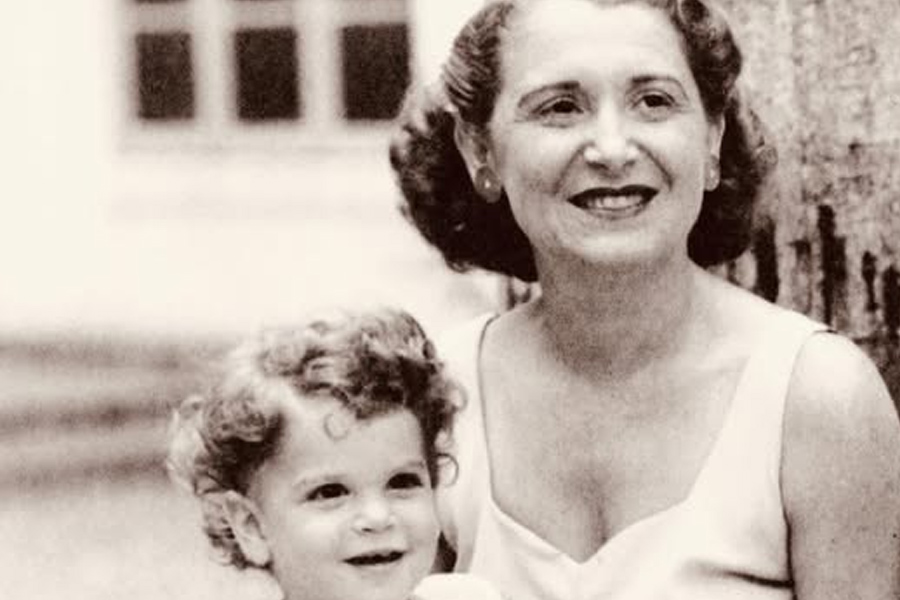
The most vivid traces of Henrietta come through family memory, archival photographs, and biographical retellings. These images show a mother standing beside her children, especially Gilda and Michael. They freeze a private world that later became public property. In those pictures, Henrietta looks less like a footnote and more like the axis around which family life moved.
Her death in 1998 closed a long life that had begun before radio became universal and ended in the age of late 20th century media memory. That is a span of nearly a century of transformation. She lived through wars, economic shifts, cultural upheaval, and the rise of her daughter’s celebrity. That alone makes her story worth telling. Quiet lives often carry the weight of louder ones.
FAQ
Who was Henrietta Radner?
Henrietta Radner was the mother of Gilda Radner and Michael Radner, and the wife of Herman Radner. She is remembered as part of the family background that shaped Gilda’s life and later public identity.
What did Henrietta Radner do for a living?
She is described as a legal secretary. Some accounts also say she had an interest in ballet and may have aspired to be a dancer.
Who were Henrietta Radner’s children?
Her children were Michael Radner, born in 1941, and Gilda Radner, born in 1946.
Who was Henrietta Radner married to?
She was married to Herman Radner. Their marriage began in 1937.
What is Henrietta Radner best known for?
She is best known as Gilda Radner’s mother and as a central figure in the family story that influenced Gilda’s life, personality, and creative work.
What is known about Henrietta Radner’s parents?
Her parents were Alfred Froiem Dworkin and Goldie Hyman Dworkin.
Did Henrietta Radner have siblings?
Yes. Family records identify sisters including Freida Dworkin Math and Elsie Dworkin Rhineston.
When did Henrietta Radner die?
She died on 19 February 1998.