A Chicago Beginning With Heat and Motion
I read Marsha Smulevitz Emanuel as a woman who moved through life like a live wire wrapped in velvet. She was born around 1933 in Chicago, raised in a Jewish household shaped by work, pressure, and affection. Her family roots reached back to Herman Chaim Smulevitz and Sophie Smulevitz, and she grew up with siblings who helped form the early texture of her world: Shirley, Esther, and Shelden. The city around her was loud, restless, and always in a hurry, and she seemed to match it beat for beat.
Her early life was not built for display. It was built for endurance. She studied, worked, adjusted, and kept going. She earned a GED, later studied social work, and eventually became a psychotherapist. That path matters because it shows a pattern that would define her for decades: she was never content to stay in one narrow lane. She worked in health care, served as a social worker and counselor, and kept expanding the shape of her contribution.
Meeting Benjamin Emanuel and Building a Family
Benjamin M. Emanuel, a pediatrician, and Marsha met at Mount Sinai Hospital, where she worked in health care. Their meeting felt cinematic, but their marriage was practical and ambitious. They married young, lived in Israel, and started a family in Chicago and Wilmette. Their home boiled over with energy, debate, caring, and expectation.
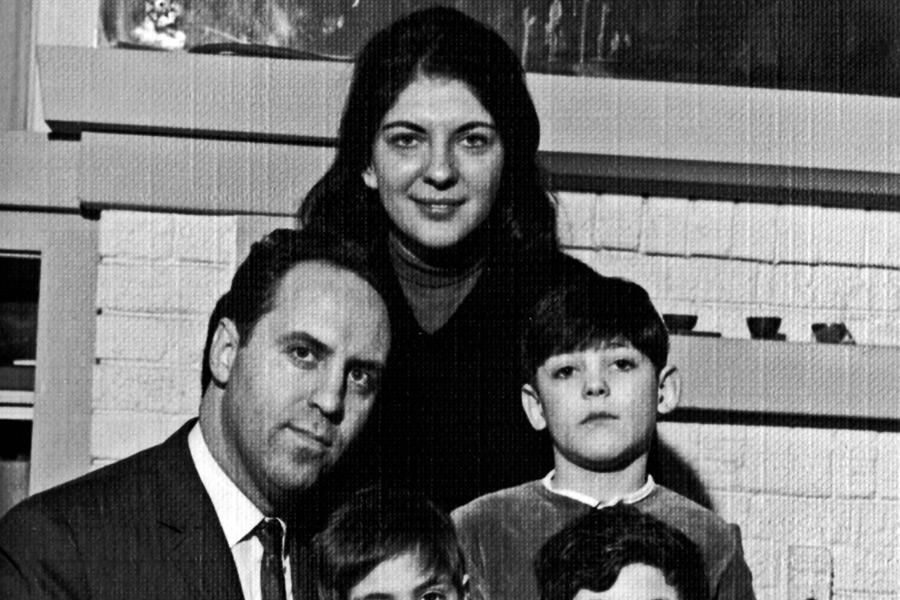
They had four children: Rahm, Ezekiel, Ari, and Shoshana. In many families, one child represents them. Each family member became distinct and conspicuous in different ways. Rahm entered politics and government. Ezekiel practiced medicine, bioethics, and policy. Ari became an entertainment and representation powerhouse. Shoshana was part of the brothers’ family story, the kind that anchors a house even when it’s not in the news.
Marsha had accomplished children, but that’s not what stands out. She and Benjamin established a household where achievement was normal, debate was expected, and excellence was real without applause. Their kids were not raised quietly. Growing up in a forge.
The Mother at the Center
Marsha was more than a mother in the ordinary sense. She was a catalyst. She helped guide Ari through childhood dyslexia with persistence and practical support, including tutoring and repeated efforts to help him read. That kind of labor can vanish in family myths, but it is often the work that changes the trajectory of a life. A child who cannot read easily can feel the world closing in. A mother who keeps opening the door can change everything.
She is also remembered as direct, unsentimental, and deeply protective. She and Benjamin did not try to raise children in a sterile bubble. They brought them into the world as it was, and taught them how to stand in it. She believed in strong language, strong opinions, and strong limits. There was room for debate, but not for cruelty. That line, drawn clearly, feels like one of her defining acts.
The image that comes to me is of a woman standing in the center of a noisy room, holding the whole scene together without ever pretending the noise was not there. That is a rare kind of authority. It does not need softness to be loving, and it does not need distance to be powerful.
Work, Activism, and a Life Beyond the Home
Marsha’s public life was substantial. She worked in health care, then as a counselor and social worker, and later as a psychotherapist. She was also active in civil rights work and is described as having led the North Side chapter of CORE. That work connected her to some of the most important social struggles of her era, including efforts toward integration and broader equality in Chicago.
She was not passive about the world outside her front door. She participated in demonstrations and helped shape the atmosphere around her children with a steady ethic of action. In the early 1970s, she also opened the Daisy Patch rock club on Chicago’s North Side, adding yet another layer to her life. That detail fascinates me. It suggests a woman who was not only a caregiver and activist, but also someone with a taste for the public pulse of culture, music, and movement.
Her life was never flat. It had different rooms. One room held medicine and care. Another held activism. Another held family, music, and business. She did not live in one identity. She lived in several, overlapping like transparent sheets of colored glass.
The Emanuel Family Web
The Emanuel family is generally discussed through their boys’ accomplishments, but Marsha is the core. Her Jerusalem-born pediatrician husband Benjamin was the family’s medical and intellectual partner. Their decades-long marriage created an extraordinarily influential home.
Their children went their own ways, but the family resemblance is clear. Rahm became a national politician. Ezekiel had incisive, sometimes controversial views on medicine, ethics, and public politics. Ari created a successful talent representation profession with a drumline-like approach. Shoshana remained part of the close family that held everything together.
Grandchildren spread the family line. Rahm’s kids are Zachariah, Ilana, and Leah. Noah, Ezra, Leo, and Ashlee are Ari’s known children. Benjamin Emanuel’s obituary lists Rebekah Schafir, Gabriella Armstrong, Natalia Emanuel, and Tuvia Emanuel as grandkids. Each generation expands the family tree, which feels like an archive.
A Timeline That Reads Like a Life in Motion
1933, or thereabouts: Marsha is born in Chicago.
1950s: She works in health care, meets Benjamin Emanuel, and marries him.
1950s to early 1960s: The family spends time in Israel before returning to Chicago.
1960s: She becomes more involved in civil rights work and family life in Chicago and Wilmette.
Early 1970s: She opens the Daisy Patch rock club.
2003: Her 70th birthday is publicly honored.
2005: A 50th wedding anniversary tribute recognizes both her marriage and her professional work.
2008: Her family is profiled publicly, showing the intensity and closeness of the household.
2011: She appears publicly at Rahm Emanuel’s mayoral inauguration.
2012: She is described as still practicing psychotherapy.
2019: Benjamin Emanuel dies, and the family record around Marsha becomes even more visible.
2024 and beyond: Her influence still appears in public remarks from her children, who continue to speak of the lessons she gave them.
FAQ
Who is Marsha Smulevitz Emanuel?
Marsha Smulevitz Emanuel is a Chicago-born woman known as a mother, wife, activist, counselor, psychotherapist, and community-minded figure. She is most widely recognized as the mother of Rahm, Ezekiel, Ari, and Shoshana Emanuel, but that shorthand does not capture the full scale of her life.
What kind of work did she do?
She worked in health care, social work, counseling, psychotherapy, and civic activism. She also opened the Daisy Patch rock club, which shows that her working life had both service and entrepreneurial energy.
Who was her husband?
Her husband was Benjamin M. Emanuel, a pediatrician born in Jerusalem. Together they built a family in Chicago and Wilmette and raised four children who each went on to notable careers.
How many children did she have?
She had four children: Rahm Emanuel, Ezekiel Emanuel, Ari Emanuel, and Shoshana Emanuel.
What is she remembered for most?
I think she is remembered for two things above all: the force of her character and the way she shaped a remarkable family. She combined activism, care, discipline, and warmth in a way that left a deep imprint on her children and grandchildren.
Did she have grandchildren?
Yes. Her family includes grandchildren such as Zachariah, Ilana, Leah, Noah, Ezra, Leo, Ashlee, Rebekah Schafir, Gabriella Armstrong, Natalia Emanuel, and Tuvia Emanuel, among others named in family records.
Why does her story matter?
Her story matters because it shows how a life can be influential without being confined to fame. She helped raise a family that moved through politics, medicine, entertainment, and public life, but her own work, convictions, and habits shaped the foundation underneath all of it.