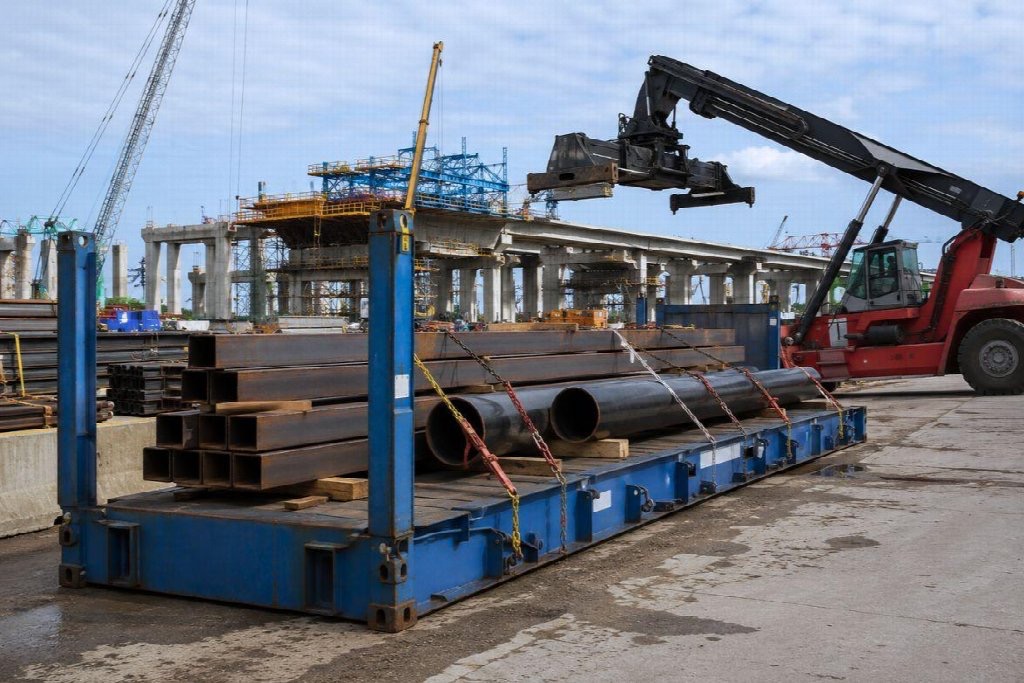
Construction and infrastructure projects often involve materials and equipment that simply do not fit inside a standard shipping container, explains Blue Chip Property Managers solutions. Steel beams, heavy machinery, concrete components, oversized pipes, and prefabricated structures can be too wide, too tall, or too irregular for enclosed container transport.
Flat rack containers provide a practical solution for these difficult loads. Their open design allows construction companies, contractors, engineering firms, and logistics providers to move large cargo while still benefiting from standardized container dimensions and handling systems.
What Is a Flat Rack Container?
A flat rack container is a specialized shipping container built with a strong steel floor and end walls but no permanent side walls or roof. This open configuration allows cargo to extend beyond the sides or above the normal height of a container.
Most flat racks are available in 20-foot and 40-foot lengths. Some models have fixed end walls, while others use collapsible ends that can fold down when the container is empty.
The reinforced frame is designed to support heavy loads that would be difficult to transport in a standard dry container. Cargo is normally secured using chains, straps, cables, or other heavy-duty tie-down systems connected to built-in lashing points.
Moving Heavy Construction Equipment
One of the most common uses for flat racks is transporting construction machinery. Excavators, loaders, compactors, generators, drilling equipment, and other machines may be too large or awkwardly shaped to load through the doors of a standard container.
A flat rack allows machinery to be loaded from the top or sides using a crane or forklift. This makes loading easier at equipment yards, ports, construction sites, and remote project locations.
Contractors searching for flat rack containers for sale may use them repeatedly to move equipment between jobs rather than arranging specialized transportation every time a project changes locations. For companies managing several active sites, owning the right transport equipment can simplify logistics and improve scheduling.
Transporting Structural Steel
Structural steel is another natural fit for flat rack transportation. Beams, columns, trusses, frames, and fabricated steel assemblies can be much longer or wider than standard container cargo.
Because the sides of a flat rack are open, steel members can be positioned according to their shape instead of being limited by container walls. Heavy bundles can also be lifted directly onto the platform by crane.
This can be especially useful during commercial building projects, bridge construction, industrial expansions, and large public works projects. Steel can arrive organized by project phase, helping crews unload the materials they need without sorting through enclosed cargo.
Supporting Bridge and Highway Projects
Large infrastructure projects frequently involve oversized components that need to travel long distances before reaching the jobsite. Flat racks can transport barriers, structural sections, machinery, drainage systems, fabricated assemblies, and specialized road construction equipment.
For major transportation projects, a 40ft flat rack container provides a long loading platform that can accommodate many types of large materials. The open sides can also make it easier for crews to load and unload long components using cranes.
Using standardized container equipment can simplify transfers between ships, trucks, rail systems, and storage yards. This flexibility can be valuable when infrastructure materials need to travel through several transportation networks before reaching their final destination.
Moving Large Pipes and Utility Materials
Water systems, sewer projects, energy facilities, and industrial plants often require large pipes and related equipment. Some pipes have diameters that make enclosed container shipping impractical.
Flat racks allow pipes to be stacked and secured directly to the container platform. Proper blocking and restraints help prevent movement while the cargo is transported.
Valves, fittings, pumps, and other utility components can sometimes be shipped alongside the main materials if weight and space allow. This can help project managers organize deliveries so related components arrive together.
Transporting Precast Concrete Components
Precast construction has become an important part of many commercial and infrastructure projects. Concrete panels, beams, barriers, utility structures, and other precast components may be manufactured far from the location where they will eventually be installed.
Flat racks provide a strong base for transporting many of these heavy pieces. Since the cargo is accessible from multiple directions, cranes can often lift components directly from the rack and place them near their installation area.
This can reduce unnecessary material handling on busy jobsites. Instead of unloading materials into temporary storage and moving them again later, contractors may be able to position certain components closer to where they will be used.
Helping With Modular and Prefabricated Construction
Modern construction increasingly relies on components that are built off-site and transported to the final project location. Prefabricated wall sections, structural frames, mechanical assemblies, stair systems, and equipment skids can all create transportation challenges.
Flat racks work well for many prefabricated items because the cargo does not need to fit inside a rectangular enclosure. Manufacturers can design components around the needs of the building instead of designing everything around the dimensions of a standard shipping container.
The open platform also makes crane loading easier at fabrication facilities. Once the rack reaches the construction site, the same component may be lifted directly into position.
Serving Energy and Industrial Projects
Energy and industrial construction frequently involves extremely heavy and unusually shaped equipment. Transformers, pressure vessels, pumps, compressors, generators, processing equipment, and large electrical systems may require specialized transportation.
Flat racks can become part of a larger project logistics strategy for moving these items between manufacturers, ports, staging yards, and job locations. Their standardized corner castings allow compatible handling equipment to move the rack efficiently.
This is particularly helpful on projects where equipment is sourced internationally. A component can travel by ocean freight and then continue by rail or truck as part of a coordinated transportation plan.
Providing Temporary Jobsite Storage
Although transportation is their primary purpose, flat racks can also provide temporary organization on construction sites. Materials that need to remain accessible can be placed on the platform instead of directly on dirt, mud, or uneven ground.
Steel sections, lumber, pipe, scaffolding, forms, and other materials can be grouped together for easier handling. Crews can access items from either side, which may be more convenient than working inside an enclosed container.
Flat racks can also be relocated as the jobsite changes. A forklift, crane, or suitable container handling system may move the entire platform instead of requiring workers to unload each item individually.
Making Loading and Unloading More Efficient
Access is one of the biggest advantages of flat rack containers. Standard containers generally require cargo to enter through doors at one end, which can make loading long or heavy objects difficult.
With a flat rack, crews can approach the cargo from the side or above. Cranes can lower heavy items directly onto the platform, while forklifts may be able to position materials from several directions.
This flexibility can reduce handling time and make complex loads easier to manage. On large construction projects, saving time during each delivery can have a meaningful effect on overall jobsite efficiency.
Important Considerations Before Using Flat Racks
Flat rack transportation requires careful planning. Project teams must consider cargo dimensions, total weight, weight distribution, lifting points, route restrictions, and the equipment available at both the origin and destination.
Oversized loads may also require permits, escorts, special routing, or additional transportation arrangements depending on the location. Cargo that extends beyond the normal container dimensions can create different requirements than standard freight.
Proper securement is especially important. Heavy materials must be blocked, braced, and tied down correctly so they remain stable throughout transportation and handling.
A Flexible Tool for Complex Construction Logistics
Construction and infrastructure projects rarely involve perfectly sized materials. The equipment and components needed to build roads, bridges, utilities, factories, commercial buildings, and energy facilities are often heavy, oversized, and difficult to transport.
Flat rack containers provide a practical bridge between specialized cargo and standardized shipping systems. Their strong platforms, open sides, and compatibility with common container handling equipment make them useful across many stages of a project.
For contractors and project managers dealing with complex logistics, flat racks can provide greater flexibility from the fabrication yard to the final jobsite. When properly selected, loaded, and secured, they can help keep important materials moving and construction schedules on track.