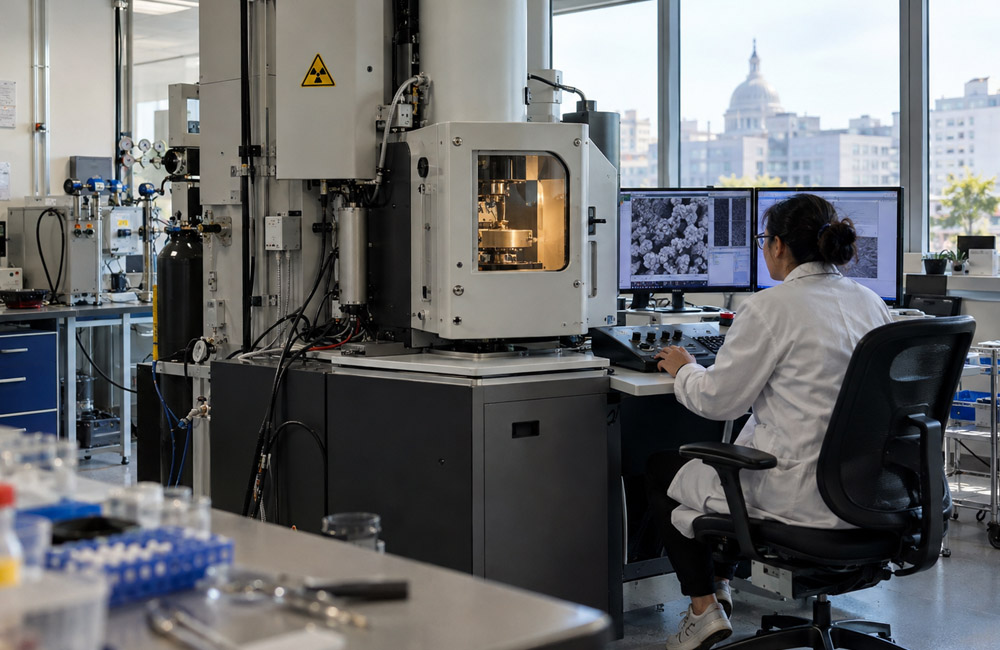
An electron microscope reveals structures far too small for any conventional instrument to capture, but that same high-voltage electron beam responsible for its imaging power also produces a byproduct that has nothing to do with the science being studied — X-radiation that requires deliberate, engineered containment to keep everyone in a shared lab space genuinely safe.
Why This Equipment Produces Radiation at All
Electron microscopes accelerate electrons to high energy levels and direct them at a sample to generate the detailed imaging these instruments are known for. When these high-energy electrons strike the sample, the internal chamber, or other components within the instrument, they can generate X-rays as a byproduct of that interaction — an unavoidable consequence of the physics involved in producing the imaging results the instrument was designed to deliver. Without adequate containment, this radiation could pose a genuine health risk to researchers and staff working in or near the same lab space.
Why Lead Serves as the Standard Containment Material
Lead’s high density and atomic number make it exceptionally effective at attenuating X-radiation, absorbing and blocking radiation that would otherwise pass through lighter materials with far less resistance. This effectiveness, combined with lead’s practical workability for casting and machining into precise custom shapes, has made it the standard material choice for radiation containment applications across scientific and medical equipment for decades, including the specialized instrumentation used in electron microscopy work.
Why Standard Lead Isn’t Always Sufficient
Certain sensitive applications require low background lead — lead specifically processed or sourced to minimize its own natural radioactive contamination, which exists in ordinary lead due to trace radioactive isotopes present from the original ore. For most containment applications, this trace radioactivity is negligible and irrelevant. For extremely sensitive detection equipment or research requiring minimal background radiation interference, however, even lead’s own minor radioactive signature can measurably affect results, making low background lead a genuine necessity rather than an unnecessary premium option.
Why Custom Design Matters More Than Standard Parts
Electron microscopes vary considerably in configuration, chamber geometry, and specific radiation emission characteristics depending on manufacturer, model, and intended application. Generic, standardized shielding components rarely fit these varied configurations precisely, which can leave gaps or inadequately protected areas that compromise the containment’s actual effectiveness. Custom electron microscope lead shielding, engineered around a specific instrument’s exact geometry and emission characteristics, provides considerably more reliable, comprehensive protection than an ill-fitting generic solution ever could.
The Casting and Machining Process for Custom Components
Producing precisely fitted shielding components typically begins with casting lead into a rough form matching the general geometry required, followed by precision machining to achieve the exact final dimensions and fit a specific application demands. This combination of casting and machining allows for both the material efficiency casting provides for larger, bulkier shapes and the dimensional precision machining delivers for critical fit points where accuracy genuinely matters most.
Balancing Protection With Practical Equipment Access
Effective shielding design has to balance thorough radiation containment against the practical reality that researchers still need reasonable physical and visual access to operate the equipment and observe samples during actual use. Overly bulky, poorly integrated shielding can interfere with equipment operation or make routine maintenance access unnecessarily difficult, while shielding that sacrifices coverage for the sake of easier access risks leaving genuine gaps in protection. Thoughtful design accounts for both dimensions simultaneously, rather than treating protection and usability as if they were fundamentally at odds with each other.
Regulatory and Safety Standards Involved
Radiation safety in laboratory and research settings typically falls under specific regulatory guidelines governing acceptable exposure limits and appropriate containment standards for equipment producing ionizing radiation. Shielding designed and verified to meet these applicable standards provides documented assurance that a facility’s safety protocols genuinely satisfy regulatory requirements, rather than relying on an informal, unverified assumption that existing containment happens to be adequate for the specific equipment in use.
What Facilities Should Look for in a Shielding Provider
Selecting a provider for this kind of custom work benefits from confirming genuine experience specifically with electron microscopy or comparable high-voltage research equipment, not just general radiation shielding work broadly applied across unrelated applications. Requesting examples of similar past projects, understanding how a provider verifies shielding effectiveness once installed, and confirming access to low background lead when a specific application genuinely requires it all help identify a provider capable of delivering shielding that actually performs as intended in practice.
Verification and Testing Considerations
Once shielding is fabricated and installed, verifying that it actually achieves adequate radiation containment matters just as much as the initial design and fabrication work itself. Radiation surveys conducted after installation confirm whether containment performs as intended under real operating conditions, catching any gaps or weaknesses in the shielding design before they become an ongoing safety concern rather than after an issue has already had the chance to develop.
Planning for Future Equipment Changes
Research facilities periodically upgrade or replace instrumentation, and shielding designed with some flexibility in mind can often accommodate minor equipment changes without requiring a complete redesign from scratch. Discussing anticipated future equipment plans during the initial design phase, rather than treating shielding as a fixed, one-time solution locked to a single instrument’s exact current configuration, can save meaningful time and cost if a facility later swaps in a newer or different model sharing similar general specifications.
Conclusion
Radiation containment for sensitive laboratory instruments demands custom-engineered solutions built around a specific piece of equipment’s exact configuration, not generic, one-size-fits-all components. Working with a provider experienced in both the material science and the precision fabrication this application genuinely requires helps ensure researchers and lab staff remain properly protected throughout everyday equipment operation.