Why Furnace Direction Is a Big Deal
Most people shopping for a new furnace care about two things right away: staying warm and not getting financially body slammed. Fair enough. But there is another detail hiding in plain sight, and it matters more than many homeowners realize, says 3 Keys Property Management. That detail is airflow direction.
A furnace is more than a metal box that magically heats air. The arrangement of your home, ductwork, and equipment space determine its role in a broader system. If your duct system expects air to travel one way and the furnace moves air another, the whole arrangement becomes a costly jigsaw with the wrong pieces.
This tool belt-wearing differential between upflow and downflow models demands your attention. The distinction is obvious, yet doing it wrong may have serious implications. Installation issues, duct changes, greater labor expenses, and contractor conversations that make homeowners gaze into the middle distance.
How Airflow Direction Actually Works
Think of a furnace as a very determined traffic cop for indoor air. It pulls in cooler return air, heats it, and pushes it back into the home through supply ducts. The important part is the path that air takes through the cabinet.
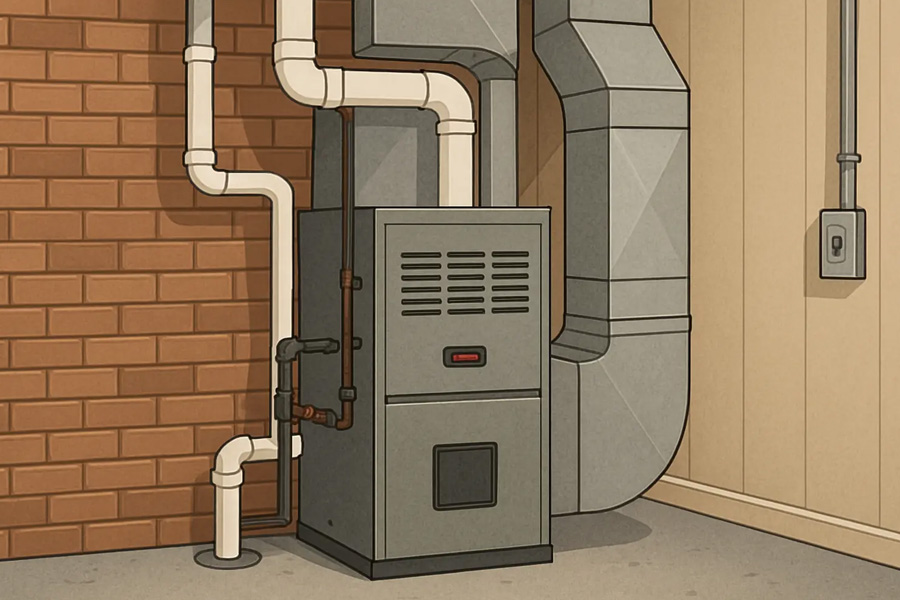
Upflow furnaces draw air from the bottom and release it from the top. The device works well in a basement, crawl-access mechanical room, or lower closet with ducting that rises into the home. Air rising through the system makes the installation layout neat and sensible.
In a downflow furnace, the pattern flips. Air enters from the top and exits from the bottom. This setup is commonly used when the furnace is in an upper-level closet or an attic and the ducts run downward into the rooms below. Instead of sending air north, the furnace sends it south.
That one orientation shift changes everything about the unit-house connection. The furnace may seem comparable on a sales sheet, but the cabinet orientation must match the ducts. Otherwise, the installer must make square metal act like a circle.
Why the House Usually Makes the Decision
Homeowners often approach furnace shopping like they are comparing phones, mattresses, or coffee makers. Which one is better? Which one is more efficient? Which one has the nicer brochure?
With airflow direction, the house is usually the one making the decision. The duct system, not personal preference, calls the shots.
The existing furnace in the basement and the ducts rising into the home almost invariably indicate upflow. Downflow models are needed if the furnace is in an attic or high closet and the ducts feed downward. The home built the roadmap. Your new furnace should follow it, not play jazz.
This is why airflow direction is not really a style choice. It is more like buying shoes in the correct size. You can admire the wrong pair all day, but if they do not fit, your feet are going to file a complaint.
What Happens If the Wrong Furnace Is Ordered
Here is where things get spicy.
Incorrect furnace orientation on installation day is not cosmetic. The issue is systemic. The return and supply plenums have unique airflow patterns. If the furnace connections are reversed from the duct system, the unit cannot be dropped in and activated.
Air distribution throughout the entire heating and cooling system also depends heavily on the physical condition of the connecting channels. When worn or aging ductwork begins to restrict airflow or leak conditioned air into unheated spaces, replacing deteriorated sections can restore overall system balance. Homeowners evaluating their layout before an installation can continue reading about duct assessment to ensure proper airflow support for their new furnace setup.
At that point, the installer has two options. One is to get the correct furnace. The other is to rebuild or significantly modify the nearby ductwork so the wrong furnace can function in that location. That second option is where costs can start climbing like a squirrel on espresso.
Time is another factor with work. Because the existing furnace has failed or is dying, it is typically replaced. Nobody wants to wait for duct adjustments, new fittings, or a new unit when the living room feels like a parking garage in January.
Basement Installations and Why They Tend to Be Easier
A basement furnace installation is often the least dramatic version of the whole event. The equipment is usually easier to access, technicians have room to work, and nearby drains are often available for high-efficiency units that produce condensate.
That ease matters. Service calls are simpler. Maintenance is less of a circus act. Replacing filters is usually a walk downstairs, not a sweaty expedition involving a flashlight, a ladder, and questionable life choices.
Regular tune-ups help keep the blower motor running smoothly regardless of whether the system operates in an upflow or downflow configuration. Property owners investing in routine heating and cooling maintenance for Foley homes can catch minor airflow restrictions early, helping preserve equipment durability and maintaining comfortable indoor temperatures throughout the changing seasons.
When the furnace is placed low in the home and air needs to be delivered upward, an upflow arrangement fits naturally. The system lines up with gravity, the duct design, and common sense. It is the practical workhorse setup in many homes.
Attic and Upper Closet Installations Have Their Own Personality
A furnace in an attic or upper closet can work perfectly well, but it comes with a different set of realities. Access is often tighter. Summer service calls can feel like appliance repair inside a toaster oven. Platforms, drainage planning, and careful installation become more important.
In these spaces, downflow systems often make sense because the heated air needs to travel downward into the rooms below. The unit is placed high, the ductwork branches out and descends, and the whole system is designed around that path.
Attic installations might raise issues regarding moisture drainage, freezing, and upkeep. None of these issues make downflow furnaces inferior. It merely means its surroundings require greater preparation. Similar to a treehouse deck office, an attic furnace. It can work, but every task demands more effort and less moaning.
The Sneaky Appeal of Multi Position Furnaces
Some furnaces are built with more flexibility and can be installed in multiple approved orientations. This kind of model can be a useful option for contractors and homeowners who want more installation freedom.
Why does that matter? Because life changes. Renovations happen. Mechanical rooms get reworked. Additions are built. Closets become laundry spaces. A furnace that can serve in different positions gives the system more adaptability if the home layout evolves later.
For homeowners, this kind of flexibility may also reduce the risk of ordering mistakes. If the equipment is approved for several positions, there is a wider safety margin during planning. It is not permission to ignore the duct layout, but it does offer practical breathing room.
Planning a heating upgrade often involves evaluating various equipment models to ensure proper system performance and indoor comfort. To explore options for keeping your home warm and efficient throughout the season, click more about heating solutions that align with your specific layout needs.
Installation Cost Is More About Location Than Label
People often assume one airflow type must cost more than the other, as if downflow furnaces wear tiny tuxedos and demand a premium. In reality, the bigger cost driver is usually where the furnace is installed.
Technicians have space, lights, and easier access to build basements faster. Installation in an attic may require carrying equipment through narrower spaces, working awkwardly, creating service platforms, or fixing drainage difficulties. The furnace does not charge more for downward airflow. Installation is harder, hence labor is greater.
That distinction matters when comparing quotes. A more expensive attic replacement is not automatically proof that one furnace type is better or worse. It often just means the installer has to earn every dollar with sweat, patience, and occasional muttering.
Whole-home heating and cooling systems often share connected ducting and electrical components, meaning overall climate management relies on multiple parts working together. Homeowners managing year-round indoor comfort along coastal regions may need a reliable Air conditioning repair service in Wilmington, NC to keep cooling systems operating efficiently alongside heating units during warmer months.
Beyond installation geography, proper sizing and balanced airflow are essential for maintaining stable temperatures and preventing unexpected wear on internal parts. Homeowners evaluating different options can consult a local hvac technician to verify that the system operates within its recommended parameters. Taking time to review these details ensures the setup supports consistent indoor comfort and consistent performance through every season.
What Homeowners Should Check Before Replacement Day
The safest move is to confirm what orientation your current setup uses before the replacement process gets rolling. Do not assume every furnace can go anywhere. They cannot.
Look at where the existing unit sits in the home. Check how the ducts attach. Is return air coming from below or above? Does heated air leave upward into the house or downward into the ceiling structure below? These clues tell the story.
Not all homeowners need to be HVAC experts, but understanding helps. Review a plan to ensure the replacement equipment complements the home’s layout. Any doubts should be resolved before delivery, not while a crew is at your house with a dolly and bad news.
Taking time to consult with an HVAC professional can prevent missteps during the replacement process. Homeowners looking to clarify system specifications or evaluate airflow direction before purchasing new equipment can get in touch with a local technician to ensure the chosen unit aligns properly with their existing ductwork and layout.
FAQ
Can an upflow furnace be installed where a downflow furnace used to be
Not without major changes to the surrounding duct system. The airflow path has to match the way the supply and return ducts connect to the cabinet. If the orientation does not match, the installation becomes a duct modification project instead of a straightforward furnace replacement.
Is one type more efficient than the other
Not airflow direction, but furnace model determines efficiency. Even if one furnace is upflow and the other downflow, two with the same performance characteristics may heat a home equally. Installation compatibility, not efficiency, depends on direction.
Why are attic furnace installations often more expensive
The extra cost usually comes from labor conditions and supporting requirements. Attics can be harder to access and may need platforms, drainage planning, and more effort for safe service access. The challenge is the location, not some secret luxury tax attached to the furnace.
Can I choose whichever type is cheaper at the store
That is a risky move. A furnace has to work with the existing duct design and installation space. Buying the cheaper unit without checking orientation can create bigger costs later if it does not fit the system properly.
Are multi position furnaces always the best choice
They are useful when flexibility matters, but not every home needs one. If the installation layout is straightforward and unlikely to change, a properly matched single orientation furnace may be perfectly suitable. The best choice depends on compatibility first and flexibility second.
Does furnace direction affect maintenance
It can affect access more than the actual maintenance tasks. A basement upflow setup is often easier to reach, inspect, and service. A downflow furnace in an attic may require more effort simply because the technician has to work in a tighter, hotter, or less convenient space.
How can I tell what kind of furnace my house needs
The answer usually comes from the current installation and the duct layout. The location of the furnace and the direction of the return and supply connections reveal what orientation is required. If there is any doubt, the installer should verify this before ordering the replacement equipment.