Opening your monthly electric bill shouldn’t feel like a jumpscare. Yet for millions of homeowners, utility costs seem to creep higher every season, even when daily routines haven’t changed. If you find yourself double-checking your thermostat or wondering if someone in your house is running a secret data center, you are not alone.
High electricity bills are rarely caused by a single glaring issue. Instead, they are usually the cumulative result of smaller energy drains scattered throughout your living space. By understanding where your energy actually goes, you can pinpoint the major culprits, restore efficiency, and keep more money in your bank account. Here is a breakdown of the primary reasons your home might be consuming excess electricity.
1. Aging or Struggling Household Appliances
Your major household appliances—like the refrigerator, clothes dryer, dishwasher, and washing machine—are among the heaviest power consumers in your home. When these units are brand new and operating efficiently, their power consumption is predictable. However, as mechanical parts wear down, motors strain, and rubber door seals degrade, appliances must draw significantly more electricity to perform the exact same tasks.
For instance, a refrigerator with a worn door seal lets cold air constantly leak out. As a result, the compressor runs almost continuously to maintain temperature. Similarly, a clogged dryer vent forces the heating element to work twice as long per load. If your appliances are making unusual noises, taking longer to complete cycles, or running hotter than usual, it may be time to seek professional maintenance. Investing in reliable home appliance repair in Kaysville, UT, or scheduling routine servicing in your local area, can quickly restore peak efficiency and eliminate hidden power drains before they ruin your utility budget.
2. Inefficient Heating and Cooling Systems
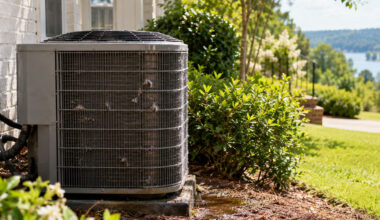
Heating and cooling typically account for over half of an average home’s energy consumption. If your HVAC system is struggling due to poor maintenance or age, your monthly power bill will reflect it immediately.
Common HVAC efficiency traps include:
- Clogged Air Filters: Dirty filters restrict airflow, forcing your blower motor to work significantly harder to circulate air throughout your home.
- Leaking Ductwork: Cracks or loose connections in air ducts allow conditioned air to escape into attics or crawlspaces rather than warming or cooling your living quarters.
- Outdated Thermostat Settings: Older manual thermostats fail to adjust temperatures based on occupancy, wasting massive amounts of energy while you sleep or work.
Replacing filters every one to three months and upgrading to a smart programmable thermostat can yield immediate savings on your monthly electric bill.
3. The Silent Drain: Phantom Power Loads
Even when turned off, many modern electronics draw electricity simply by remaining plugged into the wall outlet. Known as “vampire draw” or phantom power, this continuous pull supports standby modes, digital clock displays, remote sensors, and internal Wi-Fi receivers.
Common phantom power sources include desktop computers, gaming consoles, smart televisions, microwave clocks, and phone chargers left plugged in continuously. While a single device’s standby power may seem negligible, dozens of plugged-in items across a home can easily account for up to ten percent of your total residential energy footprint. Using smart power strips that completely cut power when electronics are inactive is an easy way to eliminate this waste.
4. Water Heater Overwork and Mineral Buildup
Water heaters run continuously to ensure hot water is available on demand. If your water heater temperature is set too high (above 120°F or 49°C), it wastes substantial power maintaining unnecessary heat levels.
Furthermore, over time, mineral sediment builds up at the bottom of tank water heaters, creating an insulating barrier between the heating element and the water. This forces the unit to burn far more energy just to heat the same volume of water. Flushing your water heater tank annually helps maintain proper heat transfer and reduces electrical demand.
5. Poor Home Insulation and Drafty Seals
If your home lacks adequate insulation or has unsealed air gaps around doors and windows, conditioned air constantly escapes outside. Your HVAC system is forced into continuous operation to replace lost air, dramatically driving up electrical usage during extreme summer and winter months. Simple weatherstripping, recaulking window frames, and adding attic insulation can stabilize indoor temperatures naturally.
Take Control of Your Energy Costs
Uncovering why your home consumes excess electricity is the first step toward lower utility bills. By addressing appliance inefficiencies, maintaining your HVAC system, unplugging standby electronics, and sealing drafty openings, you can build an energy-efficient home that stays comfortable year-round. Small adjustments made today lead to substantial financial savings tomorrow.