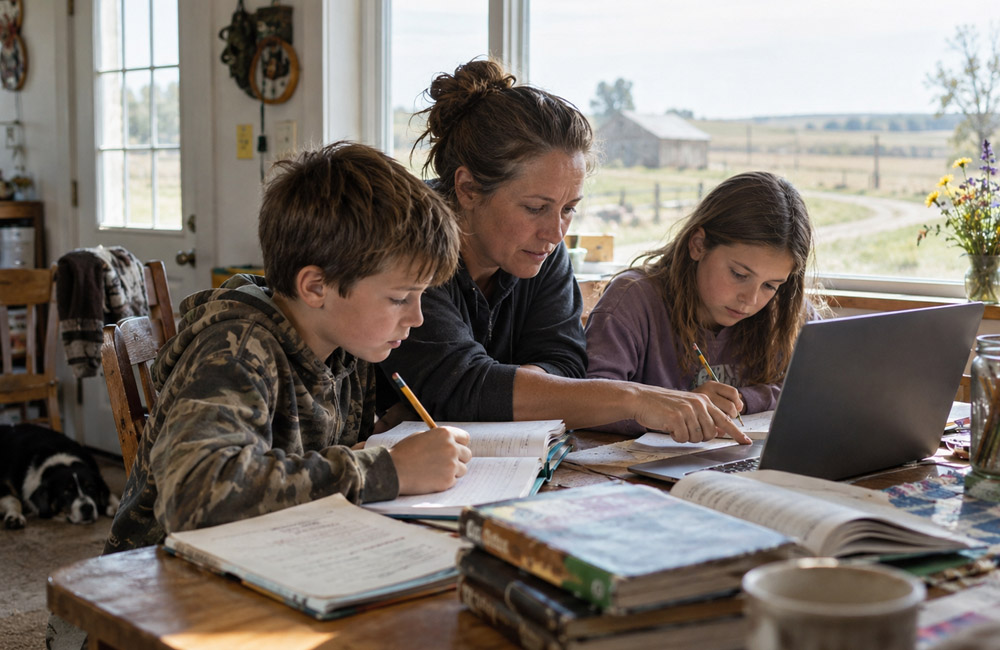
For millions of families living in rural communities, securing a high-quality, comprehensive education presents unique obstacles that urban and suburban households rarely encounter. While small-town schools often boast tight-knit community support, strong local pride, and smaller class sizes, geographic isolation and systemic underfunding continue to create significant learning barriers.
Understanding rural education access disparities requires looking beyond classroom walls. From daily travel logistics to limited access to advanced coursework, rural families navigate a distinct set of educational hurdles that impact student achievement and long-term career readiness.
1. Geographic Isolation and Exhausting Daily Commutes
Quick Answer: Long bus rides over remote roads reduce students’ available time for sleep, homework, and extracurricular activities while placing significant financial stress on rural school district transport budgets.
In sparsely populated areas, school district boundaries can span hundreds of square miles. For many K-12 students, the school day begins long before sunrise with bus rides that last anywhere from 40 to 90 minutes each way.
These lengthy commutes take a physical and academic toll on young learners:
- Restricted Extracurricular Access: Students who rely on district busing often cannot participate in after-school sports, band, or tutoring because no secondary transport exists.
- Chronic Fatigue: Early morning departures and late afternoon returns leave students with less time for rest, family interaction, and homework completion.
- Weather Disruptions: Unpaved roads, severe winter weather, and seasonal flooding frequently cause road closures, leading to missed school days and instructional gaps.
2. The Digital Divide in Rural Schooling and Broadband Deficits
Quick Answer: Unreliable or non-existent high-speed internet access leaves rural students unable to complete online homework, conduct research, or participate in modern digital learning platforms.
While technology has revolutionized modern education, the digital divide in rural schooling remains a persistent structural bottleneck. Many rural households still rely on slow satellite connections or spotty cellular data, making video lectures and cloud-based assignments difficult to access.
This “homework gap” forces students to seek creative, often stressful workarounds. It is not uncommon for rural teenagers to sit in fast-food or library parking lots after hours just to access public Wi-Fi to submit their assignments. As educational curricula increasingly rely on digital textbooks and online portals, students without reliable home internet fall further behind their peers.
3. Persistent Teacher Shortages and Restricted Course Offerings
Quick Answer: Rural districts frequently struggle to recruit and retain specialized teachers, leading to a shortage of Advanced Placement (AP), STEM, foreign language, and vocational electives.
Small districts operate on tighter operational budgets and often cannot offer competitive salaries or housing incentives to attract educators from urban centers. Consequently, a single high school teacher might be asked to instruct four different science disciplines across multiple grade levels.
This staffing challenge directly impacts curriculum depth. Rural high schools are far less likely to offer advanced math classes (such as calculus), computer science, or specialized foreign languages. Without access to college-preparatory coursework, rural applicants often find themselves at a competitive disadvantage when applying to selective universities or STEM-focused career pathways.
4. Funding Disparities and Aging Infrastructure
Quick Answer: School funding models reliant on local property taxes disadvantage low-density rural regions with smaller tax bases, limiting facilities maintenance and classroom technology upgrades.
Public school funding structures rely heavily on local property tax revenue. In rural areas dominated by agricultural land, national parks, or timber reserves, taxable property values are often substantially lower than in suburban commercial hubs.
As a result, rural districts frequently struggle with deferred facility maintenance, outdated science laboratories, aging textbook inventories, and slow heating or cooling system upgrades.
5. Sparse Access to Special Education and Mental Health Support
Quick Answer: Geographic distance makes it difficult for rural districts to employ dedicated speech therapists, educational psychologists, and mental health counselors.
Students with specialized learning needs face compounded difficulties in rural environments. School districts often lack the funding to employ full-time pediatric therapists or diagnostic specialists on site.
Instead, districts rely on itinerant specialists who travel between multiple schools spread across several counties. This arrangement often results in:
- Delayed Evaluations: Longer wait times for students to receive formal Individualized Education Program (IEP) testing and accommodations.
- Reduced Therapy Frequency: Fewer weekly sessions for speech, occupational, or physical therapy due to provider travel constraints.
- Strained Parent Logistics: Families often have to drive several hours to urban medical centers to access private therapy or diagnostic services.
6. Expanding Horizons Through Alternative Rural Learning Models
Quick Answer: Asynchronous online programs and virtual charter schools allow rural students to access advanced coursework, flexible scheduling, and specialized instruction from home.
To overcome local resource limitations, rural families are increasingly turning to alternative rural learning models to customize their children’s educational experience. Distance education removes geographic boundaries, allowing students to access high-level academic content regardless of their physical location.
For example, families looking to supplement or replace local course offerings frequently leverage accredited online Utah schools or state-sponsored virtual programs. These flexible online platforms allow rural students to take advanced mathematics, specialized electives, and college-preparatory classes that their local brick-and-mortar facilities cannot staff. Furthermore, online models eliminate long daily bus commutes, giving students back valuable hours for study and family life.
7. Myth vs. Fact: Understanding Rural Education
- Myth: Rural schools provide an inferior educational foundation compared to suburban schools.
- Fact: Rural schools often excel in student-teacher relationships, low discipline rates, and strong community mentorship; their main hurdles are structural resource limits and course variety, not teaching quality.
- Myth: Expanding fiber-optic internet has completely solved the rural educational divide.
- Fact: While broadband infrastructure has improved, internet affordability, service reliability, and hardware access remain significant daily hurdles for low-income rural households.
8. Frequently Asked Questions
How can rural schools retain qualified teachers despite lower salaries?
Districts use creative incentives such as student loan forgiveness programs, subsidized local housing, four-day school week schedules, and collaborative regional teaching networks to attract and keep talented educators.
How do rural families handle school work during internet outages?
Many families rely on offline digital kits provided by schools, download learning materials onto mobile devices at local community centers, or utilize offline educational software that syncs once a connection is re-established.
Addressing the education challenges facing rural families requires a combination of targeted infrastructure investment, policy reform, and flexible learning options. While systemic funding and broadband gaps persist, the growth of high-quality distance education and virtual learning platforms provides rural students with unprecedented access to advanced academics. Ensuring every child receives an exceptional education—regardless of their zip code—empowers rural youth to achieve their highest academic and professional aspirations.