Before a young child learns to write their name, zip up a jacket, or turn a key in a lock, they must first develop strength, precision, and control in the small muscles of their hands and fingers. These fine-motor abilities form the vital foundation for academic readiness, self-care independence, and creative expression.
The great news is that building hand strength does not require tedious drills or rigid worksheets. Children build motor pathways best when engaged in playful, hands-on exploration. By turning muscle-building into interactive play, you can enhance hand-eye coordination, finger grasp stability, and dexterity naturally.
Here are five highly effective, play-based activities that will help your child build stronger hands while having fun.
1. Squish, Roll, and Pinch with Playdough
Modeling dough and clay are incredible powerhouses for developing intrinsic hand strength. Squeezing, flattening, rolling, and pulling dough engages every tiny muscle group from the wrist to the fingertips.
To maximize fine-motor engagement during dough play, try these creative variations:
- Hidden Treasure Hunt: Press small plastic beads, buttons, or coins into a ball of dough and ask your child to dig them out using only their thumb and index finger (the pincer grasp).
- Snake Snapping: Have your child roll long dough “snakes” and pinch them into small segments using their fingers, or cut them into pieces using safety scissors.
- Sculpting Structures: Combine dough with wooden toothpicks or dry spaghetti to construct 3D towers, building delicate pinch precision and steady hand control.
2. Master Precision with Tongs and Tweezers
Using tools like kitchen tongs, plastic tweezers, or wooden clothespins requires children to exert controlled force—an essential skill for holding crayons, pencils, and eating utensils correctly.
- Pom-Pom Sorting: Place a bowl of colorful craft pom-poms next to a muffin tin. Provide your child with mini tongs or tweezers to pick up each pom-pom and sort it into designated cups by color or size.
- Clothespin Challenges: Squeezing clothespins onto the edge of a paper plate or cardboard box builds thumb and finger power rapidly. You can turn this into an educational game by placing letters or numbers on the pins to match corresponding marks on the plate.
3. Snipping and Cutting Adventures
Learning to use scissors is one of the most rewarding fine-motor milestones for young children. Cutting requires dual-handed coordination, where one hand stabilizes the paper while the other controls the cutting tool.
If your child is just beginning with scissors:
- Start with Dough: Cutting rolled strands of playdough gives excellent resistance while being much easier to control than floppy paper.
- Fringe Cutting: Draw thick lines along the edge of cardstock and let your child snip along the marks to create “fringe” or paper grass.
- Paper Chains: Provide strips of paper for your child to cut and glue into interlocking loops for festive party decorations.
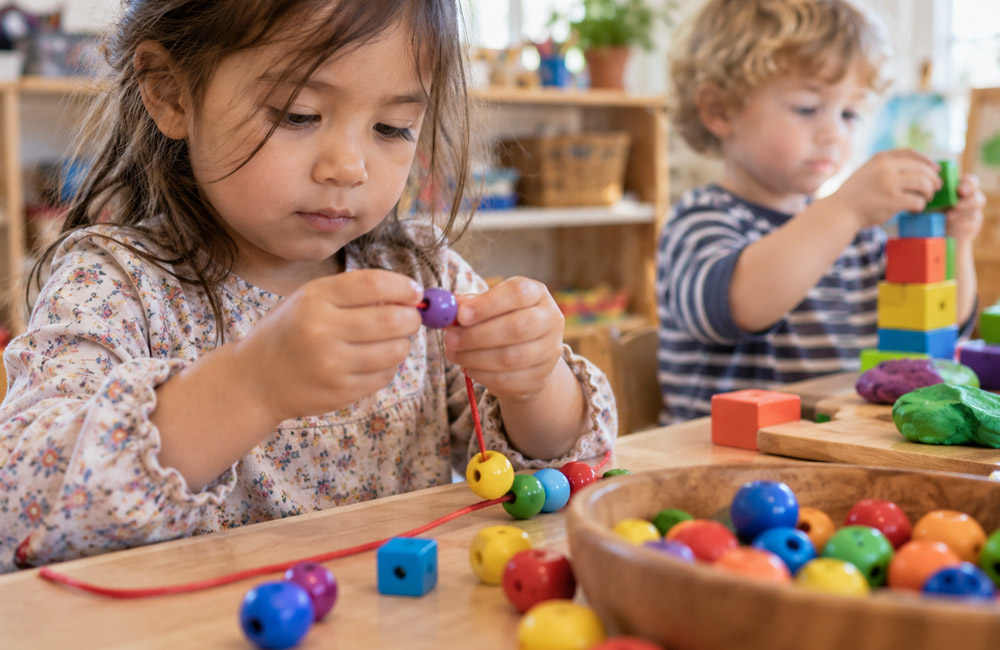
4. Threading, Lacing, and Building
Threading activities require close attention to detail and two-handed coordination, encouraging both hands to work together smoothly.
- Pasta and Straw Lacing: Threading tube pasta or cut-up plastic straws onto stiff pipe cleaners is an ideal beginner task. As accuracy improves, transition to yarn or laces.
- Interlocking Bricks: Building with small interlocking blocks or Legos requires kids to push pieces together firmly and pull them apart with strength. This constant push-pull movement develops finger resistance and wrist stability.
5. Integrating Fine-Motor Play into Daily Routines
Everyday chores and home routines offer continuous opportunities to strengthen small hands. Encourage your child to peel their own bananas, unscrew jar lids, button their shirts, squeeze water out of sponges during bath time, or help mix heavy batter in the kitchen.
For parents looking to support their child’s growth with dedicated guidance, partnering with an exceptional early learning environment makes a meaningful difference. Enrolling your child in a supportive preschool in Eastside Tucson provides daily access to structured play stations, hands-on crafting, and peer-to-peer modeling that build motor confidence alongside essential social skills.
Play Your Way to Success
Building fine-motor strength is a gradual journey that thrives on variety and encouragement. By celebrating every accomplishment—whether it’s opening a container independently or cutting along a straight line—you build both physical strength and lasting self-confidence. Keep the activities lighthearted, stay patient, and let play lead the way!