Owning a recreational vehicle offers an incredible sense of freedom, allowing you to explore the open road while enjoying all the comforts of home. However, an RV is a significant financial investment, and keeping it looking pristine requires consistent care and attention. Over time, relentless exposure to harsh sunlight, rain, road grime, interior humidity, and general wear and tear can take a heavy toll on both the inside and outside of your rig.
Whether you are a seasoned full-timer or a weekend road-tripper, establishing a proactive maintenance routine will preserve your vehicle's resale value, extend its operational lifespan, and ensure it always looks ready for your next big journey.
Essential Exterior Maintenance
The exterior of your RV takes the brunt of nature's harsher elements. Maintaining the body, roof, and undercarriage is your primary line of defense against costly repairs.
Wash and Wax Regularly
Grime, highway oil, bug splatter, and bird droppings can permanently etch into your vehicle’s finish if left untreated. Wash your RV thoroughly using a specialized, RV-safe soap at least once a month or after returning from every major trip. Following up with a high-quality UV-resistant wax twice a year seals the clear coat, prevents fiberglass oxidation, and makes subsequent washings much easier.
Inspect Roof Seams and Body Seals
Water intrusion is arguably the single most destructive threat to any recreational vehicle. Inspect your roof membrane, window frames, slide-out seals, and corner moldings every three to six months. Look closely for cracked, peeling, or missing sealant, and apply high-grade RV lap sealant immediately to any compromised areas before moisture creates interior rot or dangerous mold growth.
Maintain Tires and Wheels
Tires degrade not only through road wear, but also from standing idle under heavy loads and continuous UV exposure. Clean your wheels regularly, apply a protective tire dress that guards against dry rot, and maintain precise inflation pressures based on your loaded weight. When parked for long periods, consider using heavy-duty wheel covers to block direct sun.
Keeping the Interior Fresh and Comfortable
A clean and well-maintained interior ensures your living quarters remain comfortable, healthy, and inviting for family and guests.
Control Humidity and Prevent Mold
Because RV interiors feature compact living spaces that are tightly sealed, everyday moisture from cooking, hot showers, and breathing can build up rapidly. Excess humidity causes condensation, which quickly leads to stubborn mold and mildew on walls and cushions. Use a portable dehumidifier, run roof exhaust fans during meal prep and bathing, and place moisture-absorbing packets in closets during periods of storage.
Deep Clean Upholstery and Hard Surfaces
Regularly vacuum carpets, area rugs, and seat cushions to remove abrasive dirt that breaks down fabric fibers over time. Wipe down vinyl, solid wood cabinetry, and laminate countertops with gentle, non-abrasive cleaners to prevent permanent staining. For leather or faux-leather driver seats and sofas, apply a dedicated conditioner to keep the material soft and prevent cracking.
Storage Preparation and Pest Control
Before putting your RV into storage between adventures, remove all food items from cupboards and thoroughly defrost and clean out the refrigerator. Small pests like mice and insects are drawn to microscopic crumbs and food odors. Place natural repellents such as peppermint oil or cedar blocks inside cabinets, and seal potential entry points underneath the chassis.
Protecting Your RV with Proper Shelter
While regular cleaning routines keep your RV looking sharp, long-term preservation depends heavily on how you store your vehicle when it is not on the road. Leaving a camper continuously exposed to intense summer heat, severe storms, and falling debris can rapidly fade decals, crack rubber seals, and cause roof degradation.
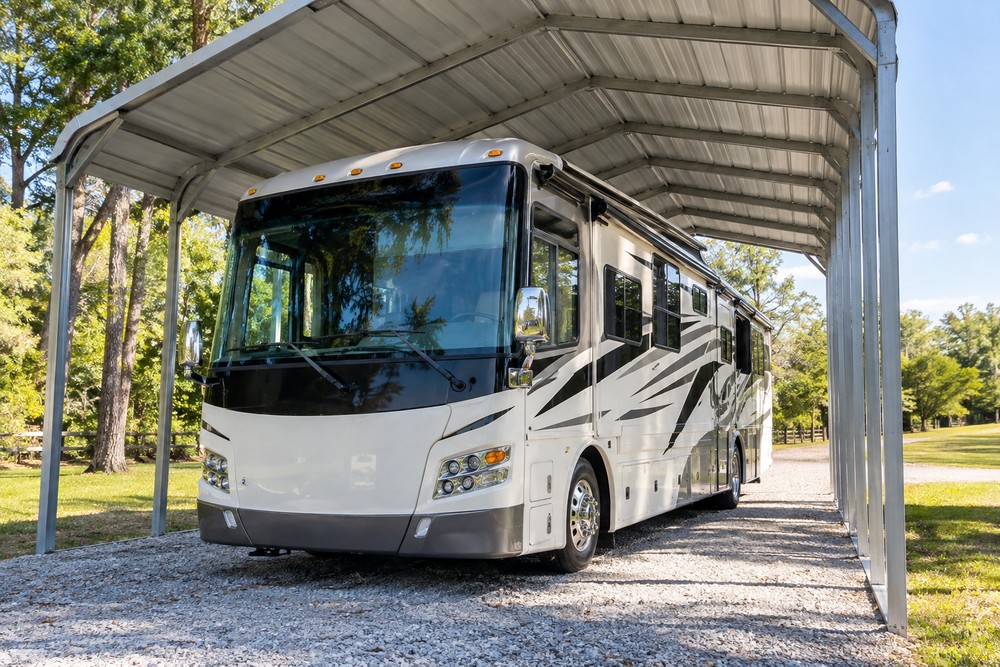
Although fabric covers provide basic dust protection, they can trap moisture against the finish or chafe against the paint during high wind conditions. A far more effective and durable alternative is dedicated overhead shelter. Installing a portable metal carport in Lafayette, LA gives your motorhome or camper reliable, heavy-duty protection against UV damage, hail, and torrential downpours while encouraging continuous air circulation around the rig. Unlike temporary canvas tarps, metal structures offer permanent durability, hassle-free access, and superior peace of mind year after year.
Enjoy the Journey Ahead
Keeping your RV in pristine condition does not have to feel like a daunting chore. By breaking tasks into simple monthly cleaning habits, seasonal inspections, and providing robust physical shelter during the off-season, you can safeguard your investment for years to come. Taking these protective measures ensures your home-on-wheels stays beautiful, functional, and ready to create unforgettable memories whenever inspiration strikes.