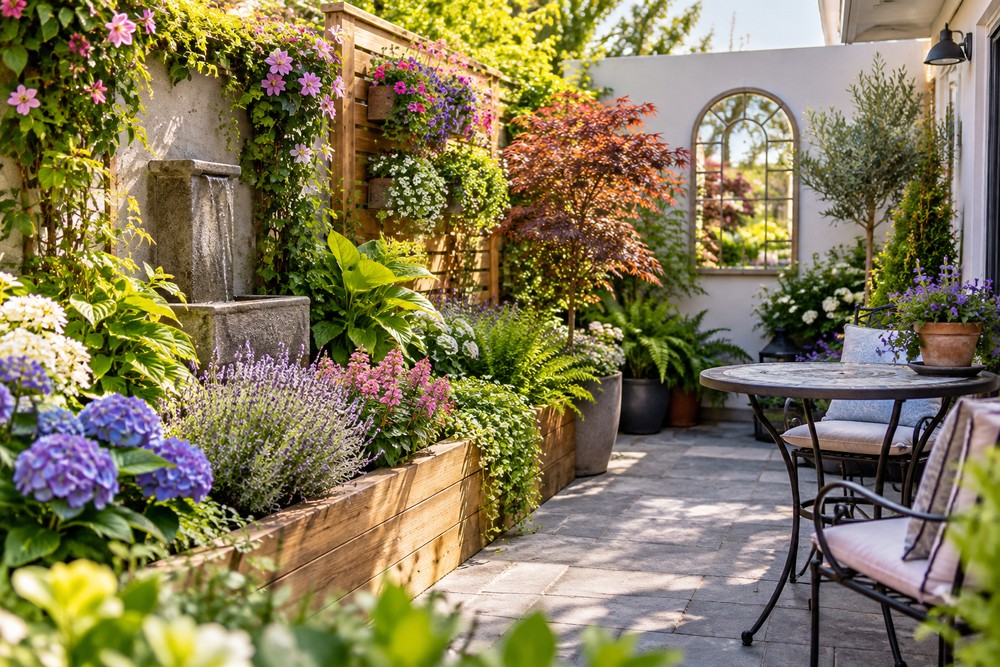
Having a small backyard, compact patio, or narrow urban courtyard does not mean you have to compromise on lush beauty or vibrant color. In fact, limited space often encourages the most creative and impactful garden designs. By utilizing smart spatial techniques, vertical planting solutions, intentional color palettes, and multi-functional features, you can transform a tiny footprint into a thriving outdoor sanctuary. Thoughtful planning allows you to maximize every square inch, creating an expansive, colorful haven that feels open, inviting, and full of life.
Utilize Vertical Space with Hanging and Wall-Mounted Planters
When ground acreage is limited, the most effective direction to expand your garden is upward. Utilizing blank fences, exterior walls, and balcony railings for vertical planting instantly multiplies your available growing space without cluttering foot traffic corridors.
Install wall-mounted tiered planters, trellises, or hanging pocket gardens to cultivate cascading flowers, fresh kitchen herbs, and trailing vines. Climbing species such as clematis, climbing roses, or honeysuckle draw the eye upward, creating a lush wall of living green and colorful blooms that makes small yards feel cozy rather than cramped.
Hanging baskets suspended from porch overhangs, pergolas, or wall brackets add vibrant splashes of eye-level color. Vertical gardens turn bare vertical structures into living art features, doubling your planting capacity while preserving precious patio floor space for outdoor seating.
Choose an Intentional and Cohesive Color Palette
In a compact garden space, throwing together too many chaotic, competing colors can quickly make the yard feel cluttered, disjointed, and visually overwhelming. Selecting a cohesive, intentional color scheme creates visual harmony and tricks the eye into perceiving the space as larger than it actually is.
Cool color palettes featuring shades of blue, purple, soft pink, and silver tend to recede visually, creating an illusion of depth and distance that expands small footprints. Conversely, warm accent colors like bright yellow, fiery orange, and vibrant magenta can be placed strategically at the furthest point of the garden to draw attention and create an engaging focal point.
Sourcing compact, vibrant plant varieties from a reliable garden center in Ogden ensures you select healthy species tailored to your specific sun exposure and soil conditions. Sticking to two or three complementary main colors creates a polished, high-end landscape feel that maximizes visual impact.
Expanding Space with Cool Blue and Purple Tones
Planting lavender, salvia, catmint, and blue hydrangeas creates a serene atmosphere while making garden borders appear further away than they are.
Cool tones soften garden edges, creating a spacious, relaxed environment perfect for small urban patios. Strategic cool colors maximize perceived yard depth.
Creating Focal Points with Warm Accent Blooms
Placing bright yellow black-eyed Susans or vibrant red dahlias at the back of a narrow garden bed draws the eye across the entire space.
Warm accent blooms establish clear visual destinations that make small gardens feel purposeful and dynamic. Intentional warm focal points enhance spatial flow.
Create Distinct Zones with Multi-Tiered Raised Beds
A flat, open small yard can often feel dull and smaller than its actual dimensions. Introducing varying elevation levels through raised garden beds, terraced planters, and sunken seating areas adds architectural interest and defines distinct functional zones within a compact footprint.
Constructing terraced or tiered raised beds along property walls creates multiple planting shelves, allowing you to stack flowers, herbs, and compact vegetables vertically. The elevated soil beds also improve drainage and soil quality while making planting and weeding far easier on your back and knees.
Utilize built-in stone or timber retaining walls that double as extra seating ledges when entertaining guests. Multi-tiered bed designs introduce rich structural dimension, separating dining areas from lush garden zones without requiring physical partition walls that block light.
Building Tiered Raised Timber Beds
Stacking rot-resistant cedar or stone planter boxes creates multiple planting levels, allowing compact yards to house twice as many plant species.
Tiered planters organize flowers neatly, preventing fast-growing species from crowding smaller plants. Structural tiers bring clean architectural order to small yards.
Integrating Built-In Wall Seating
Designing raised garden bed borders at comfortable sitting heights provides built-in bench seating for outdoor gatherings without taking up patio floor space.
Dual-purpose retaining walls eliminate the need for bulky patio furniture sets in tiny yards. Integrated seating maximizes functional outdoor living space.
Incorporate Multi-Functional Furniture and Clever Storage
Every item placed in a small garden must earn its spot, and choosing multi-functional furniture is essential for maintaining an open, uncluttered atmosphere. Bulky, single-purpose tables and large lounge chairs can quickly overwhelm a small patio, making movement awkward.
Opt for space-saving bistro sets, folding chairs, or slender bench seats that can be tucked away easily when not in use. Furniture crafted from lightweight materials or transparent designs—such as wrought iron or slender metal frames—allows light and sightlines to pass through, keeping the patio feeling open and airy.
Invest in storage benches, ottomans with hidden compartments, or wall-mounted drop-leaf tables that serve multiple daily functions. Keeping garden tools, watering cans, and seat cushions neatly stowed away maintains clean lines and preserves an orderly, spacious atmosphere.
Selecting Transparent and Lightweight Furniture
Choosing slender metal bistro chairs and glass-topped tables prevents visual blockages, allowing eyes to travel freely across the entire patio surface.
Open-frame furniture styles maintain sightlines, making compact paved patios feel surprisingly spacious and lightweight. Minimalist furniture preserves visual spatial openness.
Utilizing Hidden Storage Benches
Installing outdoor seating benches with lift-up tops provides ample hidden storage for potting soil, hand trowels, and seasonal cushions out of sight.
Concealed storage eliminates outdoor clutter, maintaining clean architectural lines across compact outdoor living zones. Multi-functional furniture maximizes patio utility.
Utilize Reflective Surfaces and Strategic Focal Features
One of the oldest tricks in interior design translates brilliantly into small garden landscapes: using reflective surfaces and strategic focal points to create spatial depth and capture ambient natural light. Placing decorative elements thoughtfully redirects attention and opens up tight outdoor spaces.
Mount a weather-resistant outdoor mirror on a dark garden fence or back wall behind lush foliage. The mirror reflects light into dim corners and creates a convincing optical illusion of an opening leading into a hidden garden room beyond, instantly doubling perceived depth.
Incorporate small, high-impact focal features—such as a compact wall-mounted water fountain, a decorative ceramic urn, or an elegant garden sculpture—at the end of a short pathway. A single striking focal point anchored by surrounding flowers anchors the space, providing a captivating visual destination.
Bouncing Light with Weatherproof Mirrors
Securing an arched decorative mirror framed by climbing ivy reflects natural sunlight while creating an enticing illusion of an adjoining garden passage.
Reflective surfaces brighten shady patio corners, making tight courtyards feel airy and expansive. Strategic mirror placement multiplies visual garden depth.
Installing Compact Wall-Mounted Water Features
Adding a slim, recirculating wall fountain introduces soothing water sounds that mask urban noise without occupying valuable floor space.
Gentle water features create a tranquil sanctuary ambiance while acting as a sophisticated focal centerpiece. Compact water features elevate small garden luxury.
Layer Plants with Varied Textures and Heights
Creating a lush, abundant feel in a small garden depends on strategic plant layering rather than sheer plant volume. Packing a tiny space with identical low-growing plants feels flat, whereas layering contrasting textures, heights, and foliage shapes creates a rich, three-dimensional tapestry.
Combine broad-leaf hostas, feathery ferns, fine-textured ornamental grasses, and glossy-leafed evergreen shrubs to build rich textural contrast. Position taller, airy perennials like verbena or feather reed grass toward the front or middle of beds; their see-through stems allow light to pass through while adding graceful height.
Incorporate dwarf tree varieties—such as Japanese maples, dwarf conifers, or patio fruit trees—in large containers to introduce magnificent canopy structure without overpowering the space. Layering varied textures and heights produces a dense, vibrant garden that feels endlessly fascinating to explore.
Layering Fine and Broad Foliage Textures
Pairing large, velvety silver lamb's ear with delicate, wispy maidenhair ferns creates continuous visual contrast even when plants are between bloom cycles.
Textural interplay adds artistic depth and complexity to small garden beds, making plantings look professional. Varied foliage textures enrich garden composition.
Planting Airy, Transparent Perennials
Utilizing tall yet delicate plants like Verbena bonariensis creates a soft, see-through screen that sways in the breeze without blocking garden views.
Transparent blooms add height and movement while allowing light and sightlines to penetrate through to background plants. Transparent layering builds spatial depth naturally.
Conclusion
Designing a small garden that bursts with vibrant color and maximizes space is an exciting, deeply rewarding creative endeavor. By taking advantage of vertical walls, establishing a cohesive cool color palette, building multi-tiered raised beds, selecting multi-functional furniture, incorporating reflective mirrors, and layering contrasting plant textures, you turn spatial limitations into design triumphs. Compact outdoor spaces offer the unique opportunity to create intimate, highly detailed sanctuaries where every plant and feature shines. With thoughtful planning and smart design techniques, your small garden will become a captivating, colorful haven you cherish every single day.