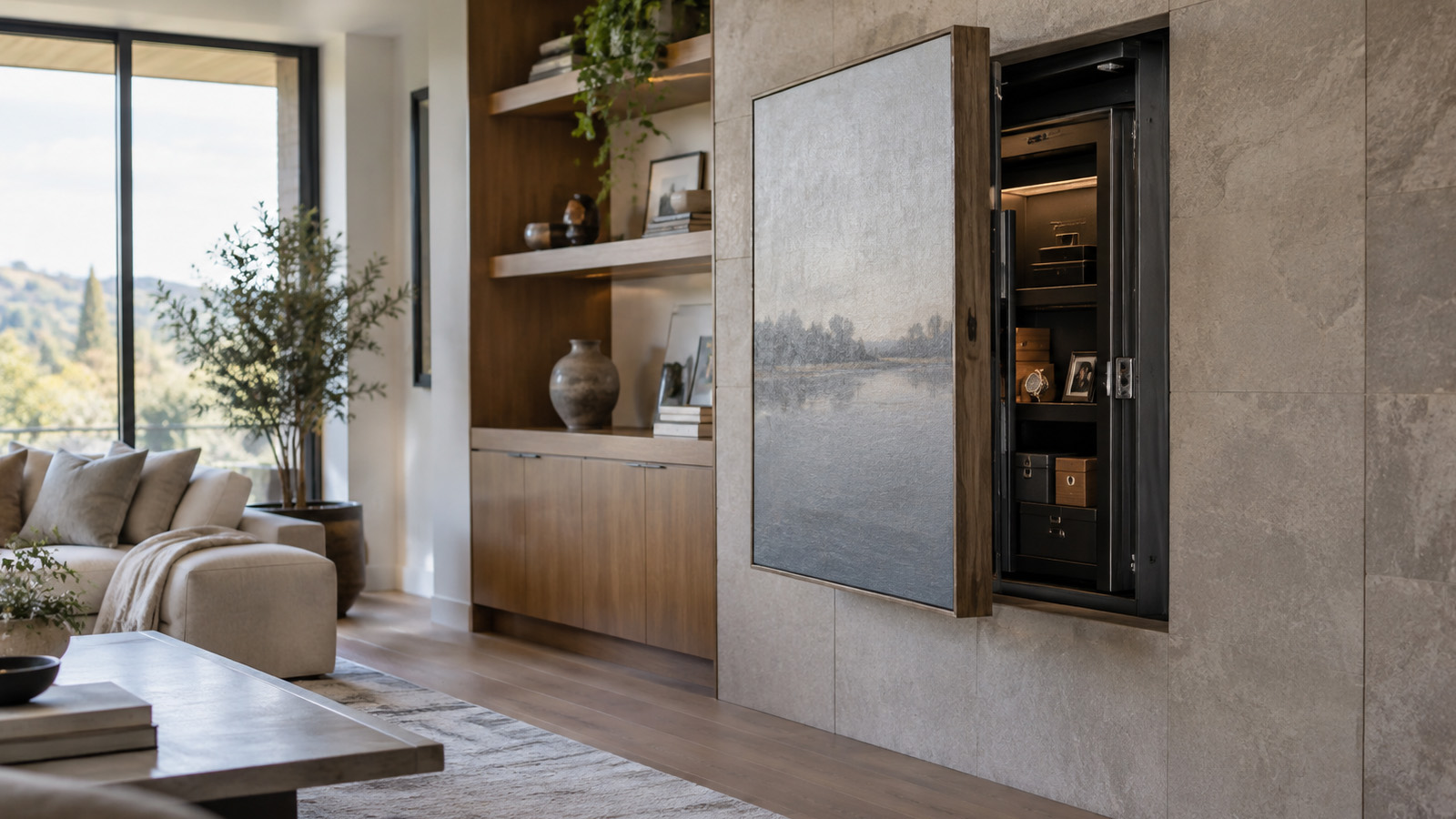
Burglars head straight for the master bedroom closet. It is the undeniable first stop. They look for a heavy steel box bolted to the floor, pry it open, and walk away. Modern home security requires a completely different approach. The best safe is the one nobody knows exists. Architects and builders are seeing a massive spike in requests for integrated, invisible storage. Not clunky panic rooms. Smart, seamless architectural deception.
Rethinking the Kitchen Pantry
Kitchens are loud, busy, and full of clutter. That makes them the perfect camouflage. Forget the old hollowed-out soup can trick. Today’s hidden storage involves false backing in custom cabinetry and high-tech hardware.
Contractors often install toe-kick drawers under the base cabinets. These are spring-loaded compartments right at floor level. Want something larger? A walk-in pantry can feature a motorized shelving unit. A small RFID chip embedded in a totally ordinary object, like a heavy wooden spice grinder, acts as the key. Wave the grinder over a specific spot on the quartz counter, and a silent hydraulic hinge activates. The entire shelf swings outward to reveal a reinforced wall vault.
This setup costs a bit more upfront. Expect to pay around $4,500 to $7,000 for custom hydraulic shelving. But the sheer utility is unmatched. A kitchen is the last place anyone looks for valuables. Intruders are too busy looking for the good snacks or expensive electronics to inspect the pantry trim.
The Return of the Floor Cache
Under-floor storage sounds incredibly old school. It brings up images of loose floorboards and dusty crawlspaces. Modern engineering changes that narrative entirely.
Homes built with raised foundations or custom sub-flooring offer prime real estate for drop safes. A flush-mounted steel vault is installed directly into the concrete foundation during a new build or a major remodel. The magic is in the covering. A section of high-end hardwood or luxury vinyl is cut with a precision CNC router so there is zero visible gap. A specialized heavy-duty suction cup tool is required to pull the precise section of flooring free.
This location handles immense weight flawlessly. That makes it the absolute best choice for storing heavy physical assets like gold bullion and silver bullion, along with bulky family heirlooms or thick legal folios. It takes the weight burden off the home’s wooden framing. Plus, gravity works in your favor. Prying a heavy steel door straight up out of the floor is a logistical nightmare for a thief operating in a hurry.
Architectural Millwork and False Columns
Load-bearing columns are a structural necessity in open-concept homes. But not every column actually bears a load. Decorative columns are the ultimate decoy.
Master craftsmen can build a hollow pillar designed to match the exact aesthetic of the surrounding room. Trim, wainscoting, and fresh paint make it indistinguishable from a true structural support. Inside sits a vertical safe. Access requires a hidden biometric scanner located behind a piece of friction-fit molding.
Why does this work so well? People ignore structural elements. The human brain filters them out as part of the background. A safe hidden behind a framed painting screams for attention. A safe hidden inside a craftsman-style pillar sitting in the middle of a brightly lit living room is practically invisible. Data from bespoke security firms shows a 30% increase in requests for these integrated millwork vaults over the past two years alone.
Utility Room Deception
The utility room is dusty, noisy, and boring. It houses the HVAC system, the water heater, and maybe a tangled mess of networking cables. It is completely unglamorous.
That is exactly why it is a genius location for a hidden vault.
Custom metal fabricators can create fake HVAC return ducts. A large metal grille screwed into the drywall looks completely standard. But instead of leading to aluminum ductwork, the grille swings open on a concealed piano hinge to reveal a fireproof wall safe.
Another brilliant tactic involves a faux electrical panel. A standard grey metal breaker box covered in bright warning stickers sits on the wall. Unlatch the heavy door, and instead of circuit breakers, a digital keypad awaits. Intruders simply do not spend time inspecting ductwork or electrical panels. They want in and out fast.
Climate Control and the Retrofit Trap
Putting a metal box inside a wall or under a floor introduces a very real enemy. Moisture.
A perfectly hidden safe is useless if the contents inside turn into a damp, moldy mess. Basements and utility rooms are notorious for humidity fluctuations. Always demand an airtight, waterproof vault if installing near plumbing or below grade. Add renewable desiccant packs to the interior. Better yet, have an HVAC specialist run a micro-climate control tube directly into the compartment. Protecting delicate paper documents or vintage watches requires strict environmental stability.
Avoid retrofitting whenever possible. Chopping into finished drywall or tearing up expensive tile to drop in a safe usually leaves visual clues. Mismatched paint sheen or slightly uneven grout lines are massive red flags to a trained eye. The best time to plan a hidden vault is during the framing stage of a new build or a down-to-the-studs renovation. Builders who understand true security know that silence is the best defense. A vault that blends perfectly into the architecture doesn’t just protect valuables. It provides absolute peace of mind.