Understanding Premises Injury Meaning and Legal Responsibilities
Premises liability is a specialized branch of personal injury law that centers on the legal responsibility of property owners and occupiers to maintain their grounds in a reasonably safe condition. When we discuss the premises injury meaning, we are essentially looking at the intersection of property rights and the duty to prevent foreseeable harm.
Crucially, legal liability is often tied to “possession and control” rather than simple property ownership. This means that a property manager, a commercial tenant, or even an event organizer might be the party held responsible if they have the authority to manage the area where the injury occurred. Understanding how these duties are triggered is vital, as explored in this detailed guide to torts and premises injury meaning, which helps clarify how negligence is established in a courtroom.
Core Elements Required in a Premises Injury Claim
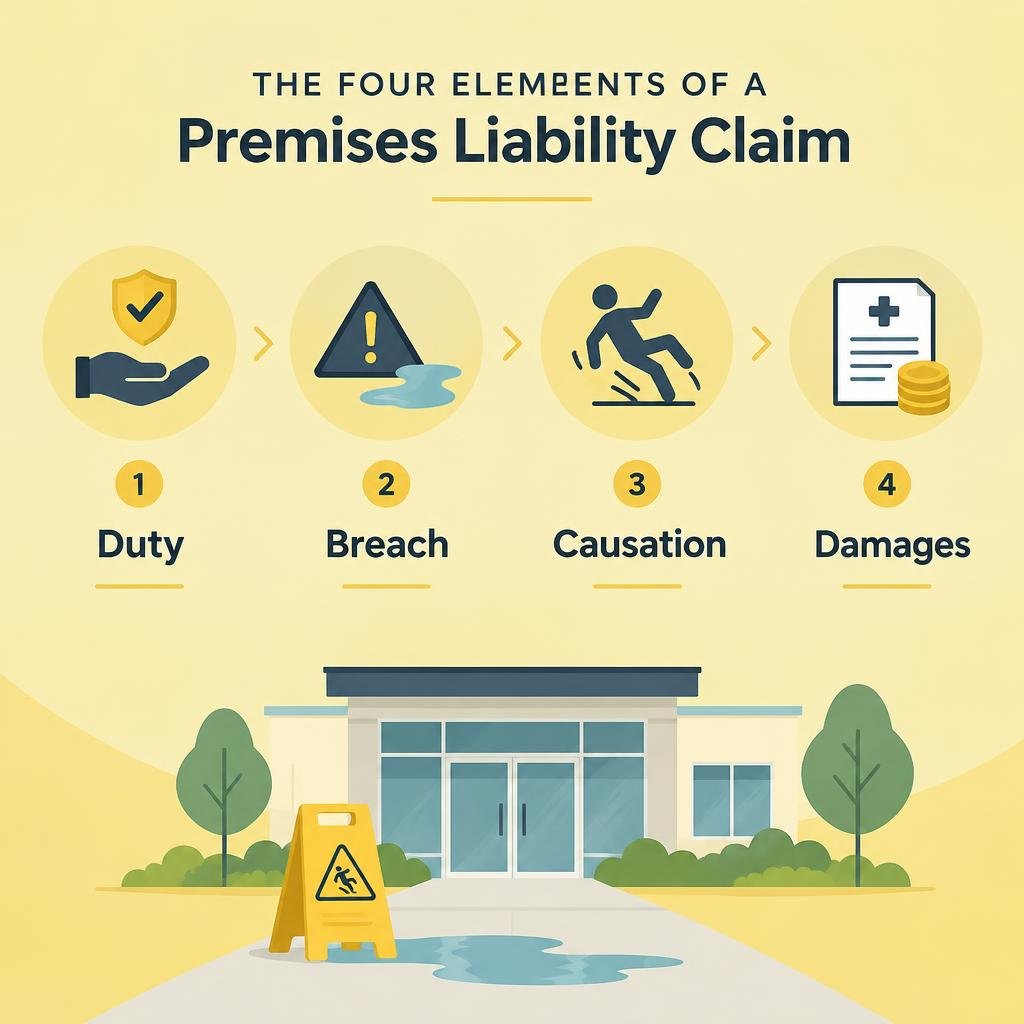
To succeed in a premises liability lawsuit, an injured party must typically prove four foundational elements:
- Duty: You must demonstrate that the defendant owed you a duty of care. This is usually established by your status as a visitor (such as an invitee or licensee).
- Breach: You must show that the property owner or controller failed to exercise reasonable care, such as by ignoring a spill, failing to fix a broken handrail, or neglecting to warn of a hidden danger.
- Causation: It is not enough to be injured; you must prove that the specific hazardous condition on the property was the “proximate cause” of your injury.
- Damages: Finally, you must provide evidence of actual harm, such as medical records, proof of lost wages, or documentation of pain and suffering.
Exploring the True Premises Injury Meaning Across Different Property Controllers
Liability is rarely restricted to the person who holds the deed. In commercial settings, the entity operating the business—such as a retail store leasing a space—is often the party responsible for keeping aisles clear and floors dry. Similarly, property management companies tasked with the upkeep of apartment complexes or office buildings may be held liable if they fail to address maintenance requests that lead to accidents. Independent contractors may also face liability if their work, such as an improperly installed floor or an unfinished repair, creates a hazard for visitors.
Legal Visitor Classifications and Property Owner Duties
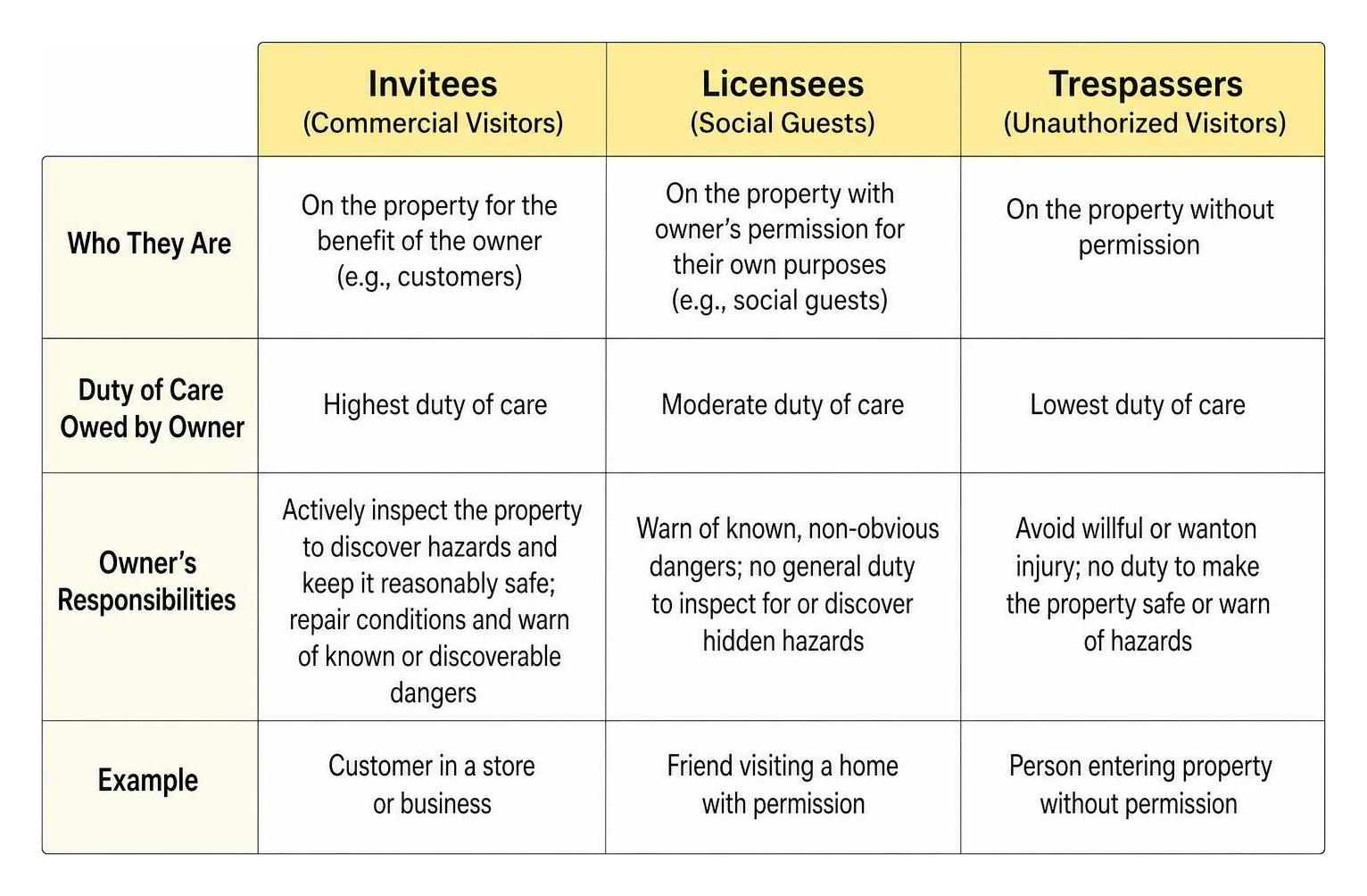
The law historically categorizes visitors into three groups, and your status within these groups significantly influences the duty of care the owner owes you.
Commercial Invitees and Social Licensees
An invitee is someone on the property for the benefit of the owner, such as a customer in a grocery store. Owners owe invitees the highest duty of care, which includes not only warning of known dangers but also actively inspecting the premises to discover and repair hidden hazards.
A licensee is typically a social guest who enters the property with the owner’s permission for their own purposes. The duty here is slightly lower; the owner must warn the guest of known, non-obvious dangers but is generally not required to perform the same level of proactive inspection required for commercial invitees.
Trespassers and the Attractive Nuisance Doctrine
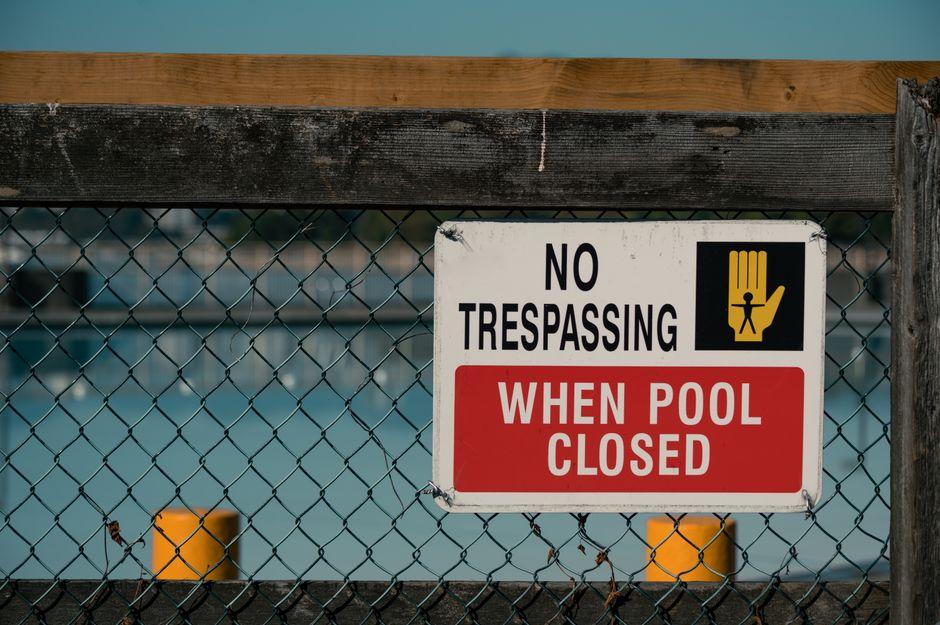
Trespassers are individuals who enter the property without permission. Generally, owners have no duty to make the property safe for them, other than to avoid “willful or wanton” misconduct. However, the attractive nuisance doctrine provides a critical exception for children. If an owner maintains a dangerous condition that is likely to attract children—such as an unfenced swimming pool or a construction site—they may be held liable for injuries, even if the child was technically trespassing.
Common Hazardous Conditions and the Role of Notice
Hazards that lead to claims are as varied as the properties themselves. Common culprits include:
- Slippery Surfaces: Spills, floor wax, or tracked-in rain.
- Structural Defects: Loose floorboards, uneven sidewalks, or broken stairs.
- Inadequate Lighting: Dark parking lots or stairwells that obscure tripping hazards.
- Negligent Security: Failure to provide locks or security in areas where criminal activity is foreseeable.
Actual vs. Constructive Notice of Hazards
To win a case, you must typically prove the owner had “notice” of the danger. Actual notice exists if the owner knew about the hazard, such as if a customer reported a spill to a manager. Constructive notice is more nuanced: it applies if the hazard existed for such a long duration that a reasonable owner, through proper maintenance logs and regular inspections, should have discovered and fixed it.
Applying the Open and Obvious Defense in Modern Case Law
Many states utilize the “open and obvious” defense, arguing that if a hazard is so clear that a reasonable person would avoid it, the owner is not liable. However, this is an evolving area of law. In some jurisdictions, courts are moving away from dismissing these cases outright, instead allowing juries to decide if the hazard was truly avoidable or if the owner still bore a responsibility to mitigate the risk.
Comparative Fault, Available Damages, and Legal Timelines
When an accident occurs, the law often looks at whether the injured person also played a role in the incident.
Navigating Comparative Fault and Contributory Negligence Systems
Most states use a comparative fault system. If you are found to be 20% at fault, your total compensation is reduced by 20%. For example, if you are awarded $10,000, you would receive $8,000. In contrast, a few states follow pure contributory negligence, where being even 1% at fault can completely bar you from recovering any compensation.
Expanding Premises Injury Meaning Through Financial Damages and Filing Deadlines
Damages in these cases fall into three buckets:
- Economic: Medical bills, rehabilitation costs, and lost wages.
- Non-economic: Compensation for pain, suffering, and emotional distress.
- Punitive: Rare awards intended to punish particularly egregious conduct by the property owner.
Be mindful of the statute of limitations, which sets a strict deadline for filing a lawsuit. If you are injured on government-owned property, you may have only a few months to file a formal “notice of claim,” making it essential to act quickly.
Essential Steps to Take Immediately Following a Property Injury
If you are injured, your actions in the immediate aftermath are critical for preserving your claim:
- Report the Incident: Ensure a formal report is filed with the property manager or owner.
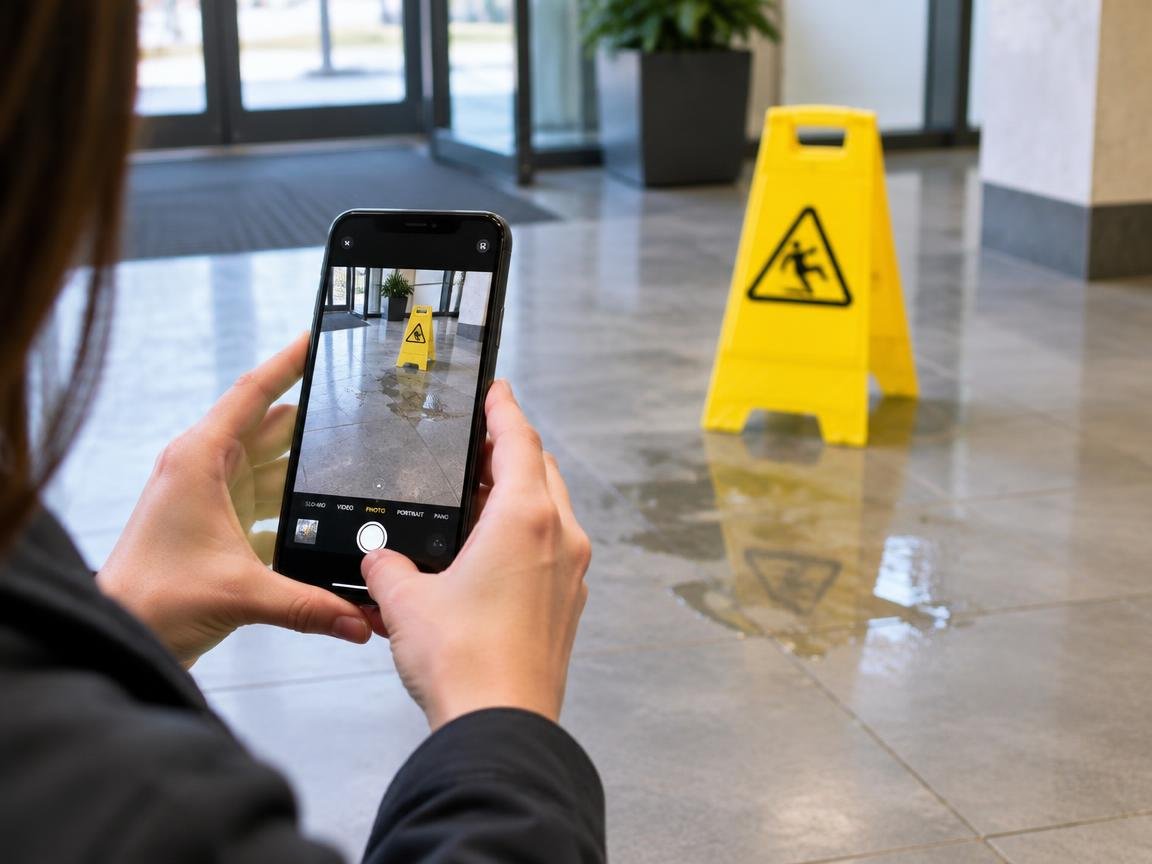
- Document Everything: Use your smartphone to photograph the hazard, the area, and your injuries.
- Gather Information: Collect contact details from any witnesses.
- Seek Medical Attention: Even if you feel fine, a medical evaluation creates a vital record of your condition.
Frequently Asked Questions About Premises Liability
What is the difference between premises liability and general liability insurance?
Premises liability insurance specifically covers injuries that occur on the property due to hazardous conditions. General liability is a broader policy that often includes premises liability but also covers other business risks, such as advertising injuries or property damage caused by the business’s operations.
What duties do landlords owe to residential tenants and their guests?
Landlords must maintain common areas (like hallways and lobbies) in a safe condition, comply with local building and safety codes, and perform necessary repairs. They are also expected to provide adequate security measures if the area is prone to crime.
How long does an injured person have to file a premises liability claim?
This depends entirely on your state’s statute of limitations, which can range from one to four years. Because government entities often have much shorter filing deadlines, it is imperative to consult with an attorney as soon as possible to ensure you do not miss your window for recovery.
Conclusion
Understanding the premises injury meaning is more than just a legal exercise; it is about recognizing that property owners have a fundamental obligation to keep their environments safe. Whether you are a business invitee or a social guest, you have rights when that duty is breached. By documenting hazards, understanding your visitor status, and acting within legal timelines, you can effectively pursue the compensation you deserve and hold negligent parties accountable. If you have been injured, reaching out to a qualified personal injury attorney can provide the clarity needed to navigate these challenging legal waters.