Your face touches dirt and makeup all day long. Washing it wrong can leave skin dry, red, or tight.
Dermatologists tested this stuff and found something interesting: the pH of most bottles sits between 4.25 and 7.87, which is close enough to your skin’s natural range to avoid stripping it bare. If you want to try a proper micellar water that actually does its job, picking the right one matters more than people think. This guide breaks down exactly how to use it, step by step, no guesswork.
What Is Actually Happening When You Wipe Your Face
Micellar water is not just water. It’s water mixed with tiny balls called micelles. Each micelle has two sides. One side loves water. The other side loves oil and dirt. When you swipe a soaked cotton pad across your skin, the oily side grabs grime and pulls it off your face. You don’t need to scrub. The dirt just lifts onto the pad.
This matters because scrubbing is actually bad for your skin barrier. Harsh soap breaks down the natural oils that keep your face soft. A 2024 study in the journal Dermato tested 30 different micellar water samples and found most had skin-friendly pH levels, meaning they won’t wreck your skin’s protective layer the way some soaps do.
The Right Way to Apply It (Most People Get This Wrong)
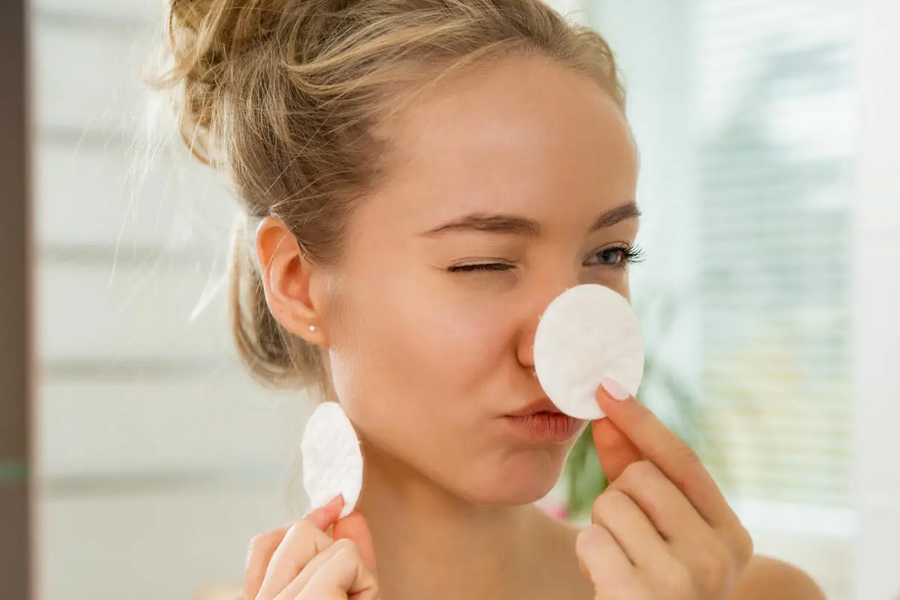
Pour a coin-sized amount onto a cotton pad. Don’t drown it. A soaked pad drips everywhere and wastes product. Press the pad gently on your eyes first if you’re removing makeup, hold for five seconds, then wipe outward. Waterproof mascara needs patience, not pressure. Move to your cheeks, forehead, nose, and chin using light, sweeping strokes. Flip the pad halfway through so you’re not smearing dirt back onto clean skin.
- Use a fresh pad for eyes and another for the rest of your face.
- Hold the pad on closed eyes a few seconds before wiping waterproof makeup.
- Swipe gently one direction, never scrub back and forth.
- Check the pad. If it’s still dirty, do another round.
- Follow with a moisturizer, since micellar water doesn’t always hydrate long-term.
Here’s the part nobody tells you: one swipe is rarely enough with heavy makeup. Dermatologists recommend a double cleanse, using micellar water first, then an oil-based cleanser for stubborn makeup. Skipping this is why some people think it ‘doesn’t work,’ when they just needed a second round.
Does It Replace Rinsing? Sometimes.
Around 70 percent of micellar water products are labeled no-rinse, per the same 2024 study. That’s handy for travel or lazy nights. But convenience isn’t ideal. If your skin is oily or acne-prone, leftover residue can clog pores. Rinsing after isn’t required, but it’s not a bad habit in humid Australian summers.
Comparing Micellar Water to Other Cleansing Methods
| Method | Rinse Needed | Best For | Skin Feel After |
| Micellar Water | No (usually) | Sensitive skin, travel, makeup removal | Soft, no tightness |
| Foaming Face Wash | Yes | Oily skin, deep cleaning | Can feel tight or dry |
| Makeup Wipes | No | Emergency quick fixes | Often leaves residue |
| Bar Soap | Yes | Body, not recommended for face | Dry, stripped |
| Oil Cleanser | Yes (usually) | Heavy or waterproof makeup | Slightly greasy until rinsed |
Notice micellar water sits in a sweet spot. It’s gentler than soap but more targeted than a wipe. Wipes push bacteria around your face because the cloth isn’t changed often enough, while a cotton pad gets tossed after one use.
Common Mistakes That Ruin the Results
Some people rub too hard, thinking harder pressure means cleaner skin. It doesn’t. Micelles work through chemistry, not friction. Using expired product is a real issue too. Once opened, most micellar waters should be used within six to twelve months, since surfactants break down over time. Store the bottle away from sunlight and heat, and keep the cap tightly closed, since dipping pads in and out introduces bacteria.