Choosing a fence in West Virginia is about more than picking a material that looks good from the street. Hillside lots, wooded backyards, changing weather, pets, outdoor gathering spaces, and close property lines can all affect which design will best serve your home. Homeowners considering the installation of fences in West Virginia should begin with how the fence needs to function every day, then narrow the choices by maintenance, privacy, budget, and site conditions. The right fence can define a yard, create a safer play area, contain dogs, protect a garden, or add privacy around a patio. A poor match, however, may leave you with a gate that is too narrow, panels that do not work on a slope, or upkeep that does not fit your schedule. A thoughtful plan helps avoid those problems before posts go into the ground.
Start With the Fence’s Main Job
A fence built for privacy has different requirements than one built to mark a boundary or keep a dog in the yard. Write down the primary purpose before comparing colors, post caps, or decorative details. This simple step makes it easier to rule out options that look appealing but do not meet the practical need.
- Privacy from neighbors, streets, or nearby homes
- Containment for pets and children
- Pool-area separation and controlled access
- Property definition around a home, farm, or business
- Security and visibility around entrances
- Decorative curb appeal without closing off views
For example, a backyard patio in a closely spaced neighborhood may benefit from a solid privacy design. A home overlooking a wooded ridge or rolling pasture may be better served by an open aluminum fence that preserves the view.
Compare Common Fence Materials
There is no universal best material. Wood, vinyl, aluminum, steel, and chain link all involve trade-offs in appearance, maintenance, privacy, and repair options. The comparison below gives a practical starting point.
| Material | Privacy | Upkeep | Common Uses |
| Wood | High with solid panels | Cleaning and refinishing | Privacy, traditional yards |
| Vinyl | High in privacy styles | Periodic washing | Low-upkeep privacy fencing |
| Aluminum | Low | Periodic inspection | Views, pools, decorative borders |
| Steel or chain link | Low without added screening | Inspect coatings and hardware | Pets, security, larger areas |
Wood
Wood brings warmth and flexibility. It can be built in privacy, picket, shadowbox, and board-on-board styles, and individual boards can often be replaced when damaged. Its trade-off is maintenance. Depending on the finish and exposure, wood may need cleaning, staining, sealing, or painting to keep its appearance and protect the surface.
Vinyl
Vinyl is a strong choice for homeowners who prefer not to stain or paint a fence regularly. It is available in solid privacy panels and decorative styles, and routine washing can handle ordinary dirt. If a section is damaged, replacement parts should match the existing system, so it is wise to confirm product availability before buying.
Aluminum, Steel, and Chain Link
Aluminum fencing offers an open, finished appearance that works well around pools, gardens, and view-facing yards. Steel and chain link are practical for containment and security. Chain link allows airflow and visibility, while privacy slats or landscaping can add screening where needed.
Match the Fence to Your Property
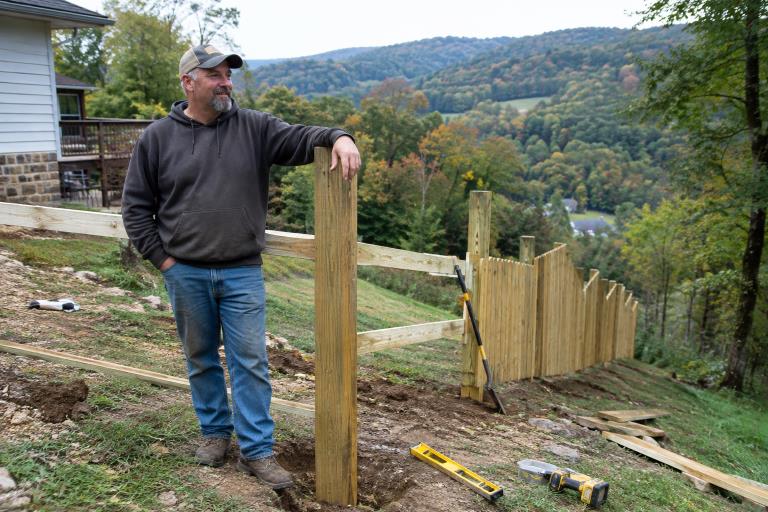
West Virginia properties often include slopes, drainage paths, mature trees, rocky ground, or uneven yard transitions. Walk the entire proposed fence line before requesting estimates. Note low spots that hold water, changes in grade, exposed areas that receive wind, and locations where tree roots may complicate post placement. Sloped ground may call for racked sections that follow the grade or stepped sections that create level runs. Neither approach is automatically better. The right choice depends on the fence style, the yard’s slope, and whether gaps beneath the fence could provide an escape route for pets.
Consider Maintenance and Lifespan
Low maintenance does not mean no maintenance. Every fence benefits from occasional inspection, especially at posts, gates, fasteners, and areas close to soil or standing water. Consider what you are willing to do each season, not only what the fence costs on installation day.
- Will the material need periodic staining, sealing, or painting?
- Can a damaged board, rail, panel, or picket be replaced?
- Will gates need adjustment after regular use?
- Are replacement parts likely to be available in the future?
- Does the site create extra exposure to moisture, sun, or debris?
Balance Privacy, Airflow, and Style
A full privacy fence blocks sightlines but can also create a more enclosed feeling and catch wind. Open fencing lets air move through the yard and keeps views available, but it does little to screen a patio or neighboring windows. Semi-private designs, including shadowbox or lattice-top fencing, can offer a middle ground. Mixed designs are often useful. A homeowner might place taller privacy fencing near a deck or hot tub while using a more open style along a scenic rear boundary. This approach can make the yard feel intentional rather than walled in.
Plan for Gates, Slopes, and Access
Gates deserve as much planning as the fence itself. Decide where people, lawn equipment, trash bins, pets, and vehicles need to pass. Measure the largest item that must fit through each opening, and check the gate swing for clearance from vehicles, retaining walls, trees, and landscaping. A narrow side gate may look adequate until a mower, wheelbarrow, or new outdoor furniture needs to pass through it. Wide or frequently used gates may require stronger support and hardware, so include them clearly in the project scope.
Check Rules Before Digging
Confirm property boundaries and local requirements before ordering materials. Cities, counties, and homeowners associations may address height, setbacks, visibility near corners, pool barriers, or fence placement. Rural and agricultural boundary questions may also involve West Virginia fence statutes, so do not assume a residential rule applies everywhere. Before post holes are dug, contact West Virginia 811 to request utility markings. Utility location requests should be handled before excavation, and private lines or features may require separate planning.
Build a Realistic Fence Budget
Material cost is only one part of the project. Compare quotes by what is included, not simply by the bottom-line price. A complete estimate should identify the fence style and height, posts, gates, hardware, removal of an old fence, site preparation, cleanup, and warranty terms. Costs can also change with total linear footage, difficult access, steep grades, rock, drainage concerns, gate sizes, and decorative additions. Planning these details up front helps prevent surprise changes after work begins.
Questions to Ask Before Buying
- Which material best fits the fence’s main purpose?
- How will the design handle the slope and drainage on this lot?
- What maintenance should be expected over time?
- How will gates be supported and secured?
- What is included in the quote, and what is excluded?
- How are damaged sections repaired or replaced?
- What permits, approvals, or utility steps are still needed?
Final Checklist
The best fence for a West Virginia home is one that fits the property and the way the household uses it, rather than simply following the latest design trends. Start by identifying the main purpose, whether you need added privacy, better security, a safe enclosure for children and pets, or a clear boundary around your yard. Consider the property’s terrain, especially slopes, uneven ground, drainage patterns, wooded areas, and access points that may affect the fence layout and installation process. Compare materials based on their durability, appearance, initial cost, and long-term maintenance requirements, keeping local weather conditions in mind. It is also important to determine how much privacy you want, where to place gates, and how the fence will work with existing landscaping, driveways, and outdoor features. Before construction, verify property boundaries, applicable local requirements, permits, and any neighborhood restrictions. Request detailed estimates that account for materials, labor, site preparation, gate hardware, and cleanup. A fence planned around these fundamentals can provide useful separation, create a safer, more functional outdoor space, and enhance the property’s curb appeal for years.