Why Living Alone Calls for a Clear Plan
Many older adults prefer living independently because their homes offer familiarity, privacy, and control over their everyday routines. A practical safety plan is not about taking away that independence. It is about preparing for common problems before they become emergencies and making it easier to get help when it is needed. The strongest approach uses several layers of support. Clear walkways, reliable contacts, updated medical information, and an emergency response system can each address different situations. No single device, home improvement, or family routine can prevent every emergency.
Start With a Room-by-Room Home Check
Walk through the home in daylight and again after dark. Begin with hazards that are easy to correct, then make a list of repairs or larger updates that may require professional help.
- Remove clutter, loose cords, pet toys, and other obstacles from walking paths.
- Secure loose rugs with appropriate nonslip backing or remove them.
- Improve lighting near entrances, halls, stairs, and the route to the bathroom.
- Repair damaged steps, loose railings, and uneven flooring.
- Store frequently used items between waist and shoulder height.
- Keep a charged phone or other communication tool within easy reach.
Guidance on lighting, grab bars, and nonslip surfaces can help households identify changes that fit the person and the home, rather than relying on a one-size-fits-all checklist.
Give Extra Attention to High-Risk Areas
Bathroom Safety
Bathrooms deserve careful attention because wet floors and tight spaces can make transfers more difficult. Consider properly installed grab bars, a nonslip bathing surface, a shower seat or handheld showerhead when appropriate, and towels or toiletries that can be reached without bending or stretching.
Bedroom Safety
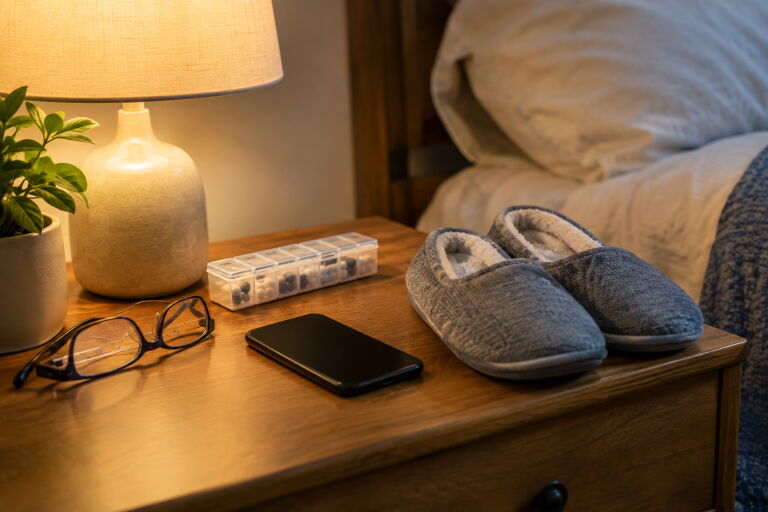
Keep glasses, a lamp, stable footwear, medications, and a phone within reach of the bed. Nighttime trips can be more challenging when someone is tired, unsteady, or moving through a dark room, so a clear path and easy-to-reach light are important.
Kitchen and Stair Safety
Place heavy cookware and everyday dishes where they can be reached without climbing or overreaching. Keep stairs free of objects, make sure handrails are secure, and avoid standing on chairs, boxes, or unstable stools to reach high shelves.
Build a Simple Emergency Information Sheet
Emergency information is most useful when it is available quickly. Keep a printed copy near the main phone or a visible household location, and give another copy to a trusted contact.
- Write the full home address, including apartment or unit number.
- List current medications, allergies, and important health conditions.
- Add primary and backup emergency contacts.
- Include the preferred doctor, pharmacy, and hospital.
- Note mobility equipment, pets, gate codes, and entry instructions.
- Explain how someone can enter if the resident cannot answer the door.
Create a Missed-Check-In Routine
A check-in routine can be as simple as a daily text, a regular phone call, a shared message, or a planned visit. The purpose is consistency, not constant monitoring. Agree in advance on what should happen if a scheduled check-in is missed.
- Try the usual phone number or messaging method again.
- Contact the designated backup person if there is still no response.
- Ask a nearby trusted person to check the home when appropriate.
- Call 911 when there is an immediate reason to believe the person is in danger.
Review Fall Risk With a Health Professional
Repeated falls, near-falls, dizziness, new weakness, or balance changes should be discussed with a qualified health professional. A doctor, pharmacist, physical therapist, or occupational therapist may help identify concerns involving medications, vision, blood pressure, strength, footwear, or mobility. The CDC provides fall-prevention resources for older adults to support conversations about home hazards, mobility, and questions to bring to a health care visit.
Choose Communication Tools That Fit Daily Life
The best communication tool is one that the person can realistically use during pain, fear, confusion, or limited mobility. Consider the person’s comfort with technology, daily habits, and where emergencies are most likely to occur.
- Mobile phones: Useful when charged, nearby, and simple to operate.
- Smartwatches: May work well for people already comfortable wearing and charging them.
- Wearable alert buttons: Can be useful if reaching a phone may be difficult.
- Home-based systems: May suit someone who spends most of the day at home.
- Mobile systems: May suit someone who regularly shops, walks, or travels independently.
Keep Health and Medication Routines Current
Use one current medication list and review it regularly with a doctor or pharmacist. Keep medications in a consistent location and follow prescribed directions. Do not start, stop, or change a medication without guidance from a qualified health professional. Repeated missed doses, missed appointments, poor nutrition, dehydration, or difficulty managing everyday tasks may indicate that additional support would be helpful.
Plan for Outages, Weather, and Changing Needs
Keep flashlights, batteries, drinking water, shelf-stable food, first-aid supplies, and backup charging options in a known location. Anyone who relies on refrigerated medication or electrical medical equipment should have a specific plan for an outage, including transportation, a safe location, and someone to call. More support may be needed when patterns appear, such as repeated falls, new confusion, unsafe cooking, difficulty bathing or using stairs, spoiled food, unpaid bills, or frequent missed check-ins. Possible next steps can include home repairs, meal support, transportation help, therapy, visiting care, or more frequent contact. The older adult should be included in decisions whenever possible.
Review the Plan Regularly
Review the plan at least once a year and after a fall, hospital stay, surgery, medication change, move, or major change in mobility. Test phones, alert tools, smoke alarms, and carbon monoxide alarms. Update contact details and medical information, repair worn or damaged safety items, and ask whether the plan still feels helpful rather than intrusive.
Common Questions
Does Living Alone Mean an Older Adult Needs an Alert Device?
Not necessarily. Health, mobility, home layout, nearby support, phone access, and personal preference all matter. The right choice is the option that the person is willing and able to use consistently.
Can Home Improvements Prevent Every Emergency?
No. Home changes can reduce certain risks, but they cannot prevent every illness, accident, or urgent medical event. A layered plan provides broader support.
When Should Someone Call 911?
Call 911 for serious symptoms or immediate danger, including chest pain, trouble breathing, signs of stroke, severe bleeding, fire, or a situation where someone cannot safely wait for help.
Conclusion
A practical safety plan should support an older adult’s freedom and independence, not replace them. Clear walkways, current health information, trusted contacts, regular check-ins, and accessible communication can help someone living alone feel more prepared and confident in daily life. It may also help to keep emergency numbers visible, arrange reliable transportation, and make sure frequently used items are easy to reach. Family members, caregivers, or trusted neighbors can discuss these arrangements together while respecting the older adult’s preferences and routines. The most effective plan is simple, realistic, and flexible enough to adapt as health needs, mobility, and living circumstances change.