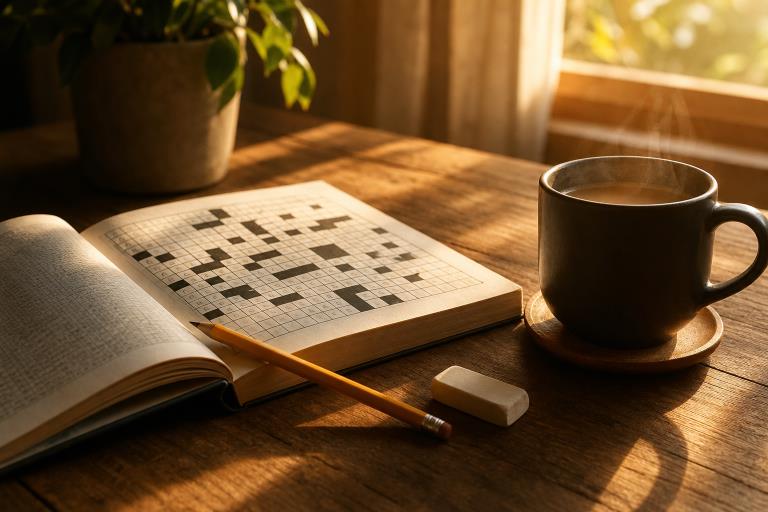
A puzzle routine can give free time a clear purpose without asking you to overhaul your schedule. Instead of treating every quiet moment as time to fill with notifications or errands, set aside a few minutes for a hands-on challenge that feels interesting and manageable. A varied collection from Penny Dell Puzzles can make it easy to keep a few formats on hand for different moods.
The goal is not to finish every puzzle quickly or turn relaxation into another performance metric. It is to create a repeatable pause in the day, whether that means answering one crossword clue with coffee, circling words after dinner, or working through a number grid before bed.
Why Puzzle Routines Work for Busy Schedules
Short activities are often easier to repeat because they fit around the commitments already on your calendar. A puzzle also has a natural starting point and stopping point. You can open a book, focus on one small task, and put it away without needing an entire free evening.
This structure can be especially useful when downtime often turns into passive scrolling. You do not need to complete a full crossword or solve an entire Sudoku in one sitting. One clue, one word list, or one corner of a visual puzzle is enough to keep the habit moving.
How to Choose the Right Puzzle
The best puzzle is the one you will actually want to return to. Consider your available time, preferred level of challenge, reading comfort, and current energy. The most difficult option is not automatically the most rewarding.
Match the Puzzle to Available Time
- Five minutes: Try a single clue, a short word search, or a small number grid.
- Fifteen minutes: Work through several crossword entries, fill-in answers, or logic clues.
- Thirty minutes or more: Choose a larger themed puzzle, a detailed logic challenge, or a cooperative activity.
Match the Puzzle to Your Preferences
- Word puzzles suit people who enjoy language, facts, and associations.
- Number puzzles appeal to solvers who like rules and orderly progress.
- Logic puzzles reward careful reading and step-by-step deduction.
- Visual activities can offer a lower-pressure choice when you would rather scan, color, or spot patterns.
How to Build a Routine That Lasts
- Choose a daily cue. Connect puzzle time to something you already do, such as breakfast, a lunch break, or winding down after dinner.
- Start with ten minutes. A modest commitment is easier to repeat than a promise to solve for an hour.
- Keep supplies nearby. Put a pencil, eraser, and puzzle book in one accessible spot.
- Stop before frustration takes over. Leaving a few clues for tomorrow can make it easier to begin again.
- Track consistency, not scores. A check mark on a calendar is enough to show that the routine is becoming familiar.
How to Create a Screen-Free Puzzle Space
A dedicated puzzle space does not need to be a separate room. A kitchen table, reading chair, or clear corner of a desk can work well. Choose a visible, reasonably quiet spot with a stable writing surface and lighting that makes small print easier to see.
During a short session, place phones, tablets, and remotes out of reach when possible. Keep pencils, erasers, bookmarks, and reading glasses in a small container nearby. Reducing tiny interruptions can help a ten-minute session feel more complete.
Why Puzzle Variety Keeps Things Fresh
Rotating formats prevents a routine from feeling repetitive and gives you choices when your energy changes. Keep one familiar puzzle for easy starts and one less familiar option for novelty.
- Crosswords invite clue reading and word recall.
- Sudoku uses structured number placement and elimination.
- Word searches offer a straightforward visual-scanning activity.
- Logic puzzles can suit longer sessions with fewer distractions.
- Coloring and visual puzzles provide an alternative when solving clues feels too demanding.
Ways to Make Puzzle Time More Social
Puzzles can be solitary, but they can also make an easy conversation starter. Set aside one weekly session with a family member or friend, choose formats that match each person’s comfort level, and share hints without immediately revealing answers. Comparing approaches can be more enjoyable than comparing completion times.
Common Problems and Simple Fixes
“There Is Not Enough Time.”
Make the starting point smaller. One clue or one small section still counts, and it is more realistic than waiting for a perfectly open hour.
“The Puzzle Feels Too Difficult.”
Switch to an easier level, use a pencil, or try another format. A routine built around steady enjoyment is more likely to last than one built around constant struggle.
“The Phone Keeps Interrupting.”
Move it to another room, silence alerts, or set a short timer before you begin. Give the puzzle your attention until the timer ends.
“My Eyes or Hands Feel Tired.”
Try larger print, better lighting, regular breaks, and a more comfortable writing position. Seek appropriate professional advice for ongoing discomfort.
What Research Says About Puzzles and Brain Health
Puzzles can provide mental engagement through activities such as recall, attention, visual scanning, and deduction. They should not be presented as a guaranteed way to prevent memory loss, dementia, or disease. The National Institute on Aging notes that cognitive health is shaped by many factors, including physical health, sleep, social connection, and management of health conditions.
A randomized study of 107 older adults with mild cognitive impairment compared computerized crosswords with computerized cognitive games, but its results do not mean that one puzzle routine will work the same way for everyone. The study’s reported limitations included the lack of a group that received no cognitive training. Enjoyable puzzles can be one part of a balanced routine, not a substitute for medical care.
A Seven-Day Starter Plan
- Day One: Complete an easy puzzle for five minutes.
- Day Two: Repeat at the same time of day.
- Day Three: Try a different puzzle format.
- Day Four: Invite someone to solve alongside you.
- Day Five: Do a puzzle before opening a social media app.
- Day Six: Reserve twenty minutes for a longer challenge.
- Day Seven: Choose the time and format that felt easiest to repeat.
Final Thoughts
A useful puzzle routine can begin with one page and a few quiet minutes. You do not need a perfect schedule, a high score, or a completed book. Choose a puzzle that fits today, return to it when you can, and let those small periods of focused downtime become part of real life.