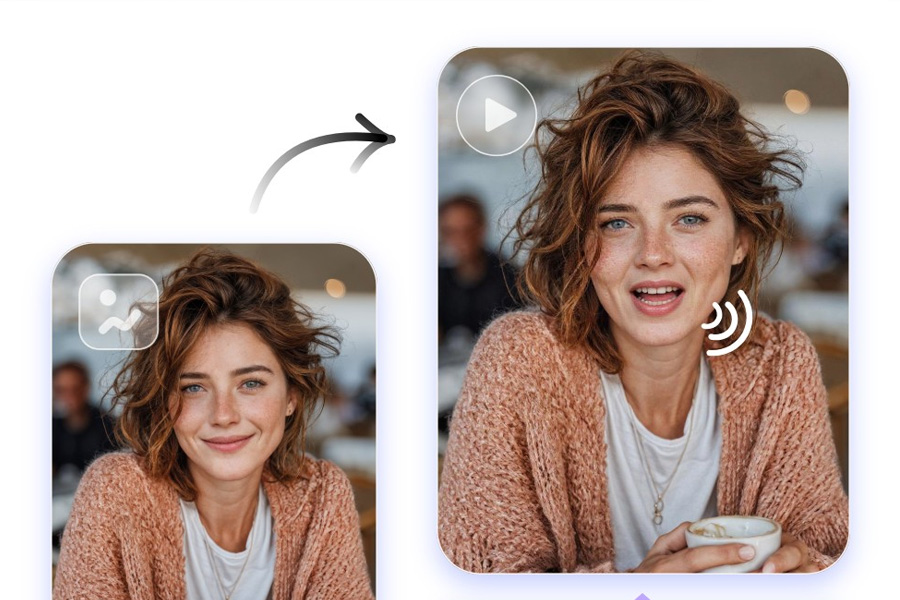
Why AI video suddenly feels like a superpower
A few years ago, producing a polished film was like cooking a five-course dinner with one spoon and a faulty oven. You required design skills, time, editing tools, and perhaps backup coffee. The landscape has changed drastically. Before lunch, AI video tools entered wearing sunglasses, holding templates, and offering to animate your still photographs.
That move significant because current producers don’t make one video for one site. Short-form feeds, product sites, advertisements, training, customer outreach, and presentation decks are routinely clipped in the same week. Speed matters. Repeatability counts. Making something valuable without fighting software for two hours is crucial.
The most intriguing component is no longer text-to-video. Practical creative workflows are rising. One platform that can capture a photo, make it talk, sync voice to a face, transform photos into animation, and output many assets without collapsing is desired. Fancy output is excellent. Reliable production is better.
What people actually need from an AI video platform
The dream is not merely cinematic beauty. The dream is getting from idea to publishable asset with your sanity intact.
Most consumers choose a platform that performs repeated tasks well. A powerful tool should aid avatar clips, talking portraits, rapid edits, social videos, product explainers, and channel-specific material. If every experiment feels like opening a trapdoor into chaos, the instrument becomes a toy.
User-friendliness deserves consideration too. Some systems are so complicated that they seem to require a science fiction trilogy before exporting a 30-second clip. A good AI movie creator should let novices learn and let experts tweak and scale.
Then quality. Quality not abstract. Practicability. Is the lip sync convincing? The face moves like a human or a haunting wax sculpture? Is the produced video consistent between takes? Those features distinguish useful tools from showy demos.
The growing obsession with talking photos
Talking photos have become one of the most popular entry points into AI video, and it is easy to understand why. They are weird, memorable, efficient, and surprisingly versatile.
Brands may animate founder portraits on landing pages. A teacher may make a historical image engaging. A marketer may use a product mascot to communicate without arranging a shoot, lighting a studio, or begging someone to read from a script fifteen times. Small teams may develop individuality at scale.
Talking picture tools require more than motion. They need timing, expressiveness, and realistic mouth movement. Bad lip sync goes beyond appearance. It pulls the spectator out of the moment. The finest systems use pace and face motion to make still images look alive rather than shocked awake.
Magic Hour stands out for creators who need range
One category of platform has become especially attractive: the all in one creative hub. This is where Magic Hour tends to grab attention.
It integrates talking photographs into a process rather than considering them as a curiosity. It important because innovators seldom stop at one result. They may begin with a portrait animation, then lip sync, face switch, and product image with motion. Doing it all at once is more efficient than jumping between tools like a caffeinated frog.
This platform is ideal for startups, social media operators, and agencies who require volume without sacrificing control. When deadlines are around like baseball bats, fast rendering, many generation options, and a creator-friendly interface matter.
A tool that doesn’t hide every function behind a big sign up ritual helps too. People want to try before buying. Fast workflow testing makes adoption easier, especially for customers who want to see if a platform can manage commercial material without causing bizarre eyebrow behavior.
Runway suits people chasing cinematic spectacle
Not every user wants speed first. Some want style first. They want atmosphere, camera motion, dramatic visuals, and clips that feel like fragments from a futuristic film trailer.
That is where a platform like Runway tends to shine. It appeals to creators who care deeply about mood, concept visuals, and experimental storytelling. If you are building ad mockups, visual narratives, or artistic sequences, a more cinema minded tool can be worth the learning curve.
Not all tools in this category are good for everyday publication. They can be more difficult, costly, and inconvenient for repetitive social tasks. That compromise may be acceptable for creators who seek visual flare and advanced motion. A screwdriver is needed sometimes. Sometimes you want a laser-powered idea cannon.
Pika makes quick social content less painful
There is also a strong case for tools that focus on immediacy. Pika fits neatly into that world.
Short-form information moves fast. Many social creators must test a joke, remix a trend, make a teaser, or transform a basic idea into a punchy clip while the issue is hot. A simple tool with a pleasant UI is better than a complicated production suite with twenty serious buttons and the emotional intensity of a tax form.
The attraction is momentum. Create clips fast, brainstorm, and move on. That agility is important for experimenting and quick ideas. However, realism and precise control may not match sophisticated platforms. Not every piece of content needs to look like a spacecraft in price.
Synthesia and HeyGen target different business needs
AI video is not just for creators chasing views. It is also for businesses trying to communicate clearly without filming everything from scratch.
Synthesia suits organized communication. Consider onboarding, training, internal explainers, instructional modules, and multilingual company communications. These applications value stability over creative flare. Clear, professional, repeatable manufacturing are goals.
HeyGen, with its accessible layouts and translation tools, attracts customers who desire spokesperson-style films. Its balance between creative and enterprise technologies appeals to companies who desire presenter-led content without developing a production pipeline.
These platforms are less about visual experimentation and more about dependable delivery. They serve the practical side of AI video, where the primary job is to communicate information without wasting time or budget.
How to choose the right tool without losing your mind
Choosing an AI video tool is less about finding the one true champion and more about matching the platform to the job.
For diversity, creative functions, and great talking photo performance, an all-purpose system may be preferable. A graphically ambitious tool for cinematic, concept-heavy work. A simpler clip generator may save you plenty of frustration if speed and social testing dominate your calendar. Explainer and training content are typically best created on business-oriented avatar platforms.
It helps to evaluate a few basics:
How believable are the people or faces on screen?
How quickly can you move from prompt to export?
Can the platform support repeated production, not just one lucky result?
Does the interface invite action, or does it behave like a suspicious puzzle box?
What happens when you need five versions instead of one?
That last question matters more than many people realize. Scale is where many flashy tools start sweating.
Why workflow matters more than raw novelty
AI video has matured enough that novelty alone is no longer impressive. A tool does not win simply because it can animate a face or generate a clip from text. The real value comes from workflow design.
Can you move through multiple steps without friction? Can you reuse assets? Can you create content for different channels quickly? Can a team member with modest experience produce something useful on a deadline? These are the questions that separate sustainable platforms from temporary curiosities.
Numerous users no longer seek a single miraculous feature. Their ideal system is a helpful assistance rather than a gremlin with rendering powers. This is why integrated platforms are popular. They decrease moving parts, which reduces headaches.
FAQ
What is the easiest type of AI video tool for beginners?
Tools with simple templates, quick generation, and a clear interface are usually the easiest for beginners. Platforms made for social clips or guided avatar videos tend to remove much of the technical friction, which means users can focus on ideas instead of wrestling with controls.
Which AI video tool is best for making a photo talk?
A good talking photo tool has natural emotion, realistic lip movement, and reliable audio sync. Portrait animation platforms with more editing and generating tools allow users to develop comprehensive projects instead of just a gimmick.
Are AI videos good enough for marketing content?
Yes, especially for short form campaigns, product explainers, spokesperson clips, and fast iteration across multiple channels. The key is choosing a tool that produces consistent results and supports commercial workflows without turning every export into a suspense thriller.
What matters most when comparing AI video platforms?
The most important factors are output consistency, rendering speed, ease of use, flexibility, and whether the platform can handle repeated production. Fancy features are welcome, but if a tool breaks your workflow every third attempt, its charm wears off quickly.
Do all creators need cinematic quality?
Not at all. Many creators benefit more from speed, convenience, and reliability than from dramatic visuals. If the job is daily publishing, product communication, or social testing, a practical and efficient tool often beats a more artistic but slower alternative.
Why are all in one AI video platforms becoming so popular?
Because creators and teams are tired of juggling separate apps for every task. A platform that handles talking photos, lip sync, image animation, editing, and production workflows in one place saves time, reduces friction, and keeps the creative process from turning into a scavenger hunt.