Choosing an engagement ring involves viewing the diamond, setting, and overall design as interconnected elements. Different diamond shapes create distinct proportions and visual profiles, while the setting influences how the center stone looks and wears. Here are a few tips for buying engagement rings:
Compare Diamond Shapes
Diamond shape influences the outline and visual character of an engagement ring. Round diamonds have a traditional appearance, while princess diamonds create a defined square profile. Oval and marquise diamonds have elongated outlines, while pear shapes combine rounded and pointed edges.
Shape selection also affects the proportions of the finished ring. An elongated diamond provides different finger coverage than a round diamond of similar carat weight, while cushion and radiant shapes offer broader outline options. Comparing several shapes with different settings provides useful visual context before making a selection.
Loose diamonds provide another way to evaluate shape independently of the finished ring. Individual diamond listings typically include details such as carat weight, cut, color, clarity, polish, and symmetry. Measurements such as table and depth provide additional information for comparing stones.
Explore Ring Settings
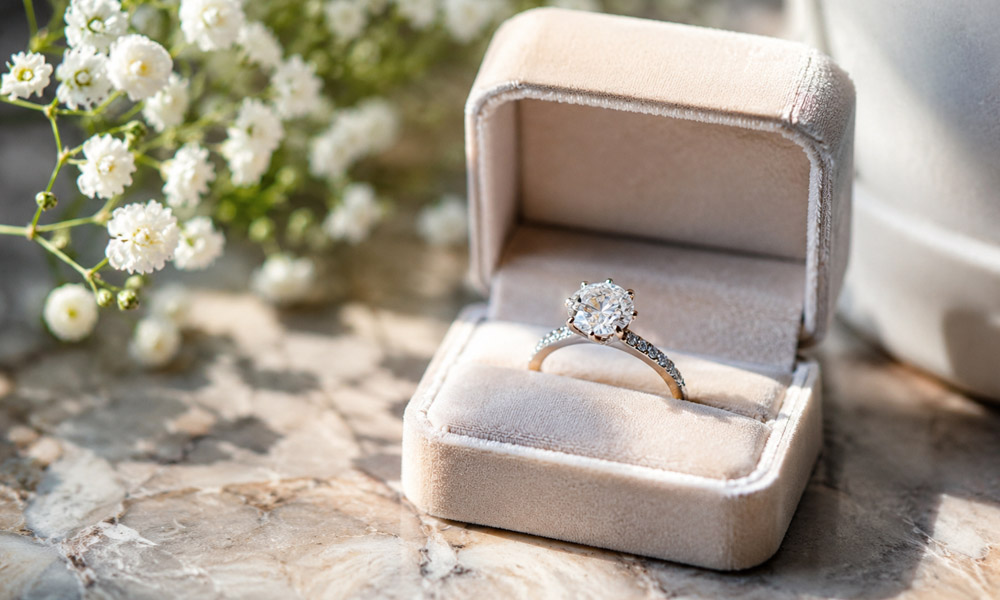
Ring settings determine how the center diamond sits within the finished design. Solitaire settings focus attention on a single center stone, while halo settings surround it with smaller diamonds. Three-stone designs place additional diamonds beside the center stone, and vintage styles incorporate distinctive decorative details. Pave and channel settings provide different approaches by adding smaller diamonds to the ring.
A ring builder offers an alternative to choosing from completed designs alone. Shoppers can begin with a loose diamond or select a ring setting first, then combine the two components into a complete design. Comparing the center stone and setting together provides a clearer view of their proportions and overall appearance.
Match Bridal Styles
Engagement rings should also work with the wedding band they will be worn with. The setting style, band profile, and center stone design affect how the two rings fit and look together. Solitaire and some halo settings often leave more space for a wedding band; designs with prominent side stones or wider bands require closer attention to the ring profiles. Wedding bands come in a range of widths, metals, shapes, and decorative styles, providing different options for pairing with an engagement ring. Viewing both rings together helps identify differences in height and spacing.
Inspect Diamond Details
Diamond evaluation involves more than the shape visible from above. Cut, color, clarity, and carat describe key aspects of a diamond, while polish, symmetry, table, and depth provide additional information for comparing individual stones. When comparing individual stones, focus on:
- Cut grade: Review the grade together with the diamond’s proportions and measurements.
- Clarity grade: Examine the grade and the characteristics identified in the grading report.
- Color grade: Compare the grade with the diamond’s appearance and the metal used for the setting.
- Measurements: Compare length, width, table percentage, and depth percentage to assess the stone’s proportions.
Find High-Quality Engagement Rings
Compare the diamond and setting together, then look at how the engagement ring pairs with a wedding band. A custom design offers another option when existing styles do not fit your preferences. Reviewing loose diamonds and complete ring designs gives you more options when evaluating engagement rings. Schedule a jewelry consultation to compare diamonds, settings, and wedding bands before choosing your ring.