Introduction
In September 2026, a compelling online presence is no longer optional; it’s the bedrock of business success. Many businesses face the challenge of making their mark in a crowded digital world, often struggling to attract and retain customers. A weak online footprint means missed opportunities and a struggle to grow. This is where the synergy of digital presence and web design becomes critical. We understand that effective web design is more than just aesthetics; it’s about building a robust digital foundation that drives visibility and engagement, ensuring your business connects with its target audience.
This guide will explain how to align your digital presence with strategic web design to achieve maximum impact. We will cover the core pillars of an effective online strategy, from UX architecture to domain authority, and explore the business value of high-performance interfaces. Our focus will also extend to the technical engineering needed for speed, accessibility, and AI search optimization, including how data-driven digital marketing can elevate your efforts. Finally, we will look at strategic integration to connect design with growth channels, helping you modernize your digital presence for today’s market.
Aligning Digital Presence and Web Design for Maximum Impact
A strong digital presence is the sum of all your online touchpoints, from your website and social media profiles to online reviews and search engine visibility. Web design, then, is the foundational element that brings much of this presence to life, particularly your primary online hub: your website. The goal is to create a seamless, consistent, and engaging experience for every customer across their entire journey, regardless of the platform they use. This requires meticulous attention to brand consistency, ensuring your visual identity, messaging, and tone are uniform across all channels.
Consider your website as the central nervous system of your digital ecosystem. It’s where potential customers form their first impressions, seek information, and ultimately decide whether to engage with your business. A well-designed site acts as a 24/7 virtual sales representative, guiding visitors, answering questions, and building trust. Conversely, a poorly designed site can deter over 57% of users from recommending a business, highlighting the critical role of thoughtful design in shaping perceptions and driving conversions. The interconnected ecosystem of digital presence and web architecture is complex, but when harmonized, it creates a powerful engine for growth.
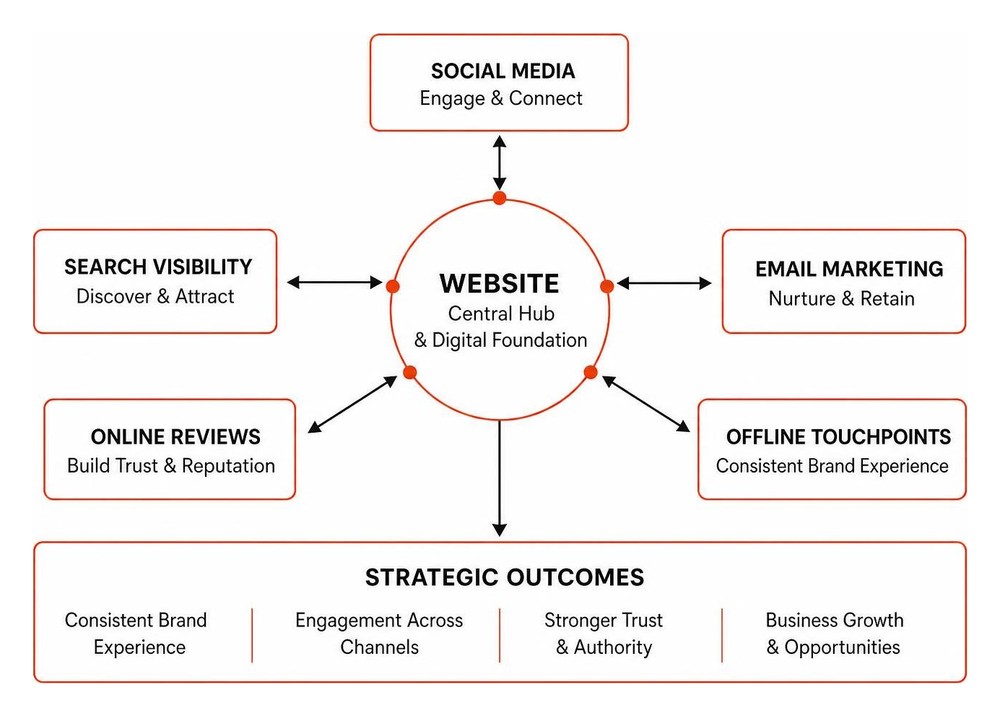
Achieving multi-platform coherence is vital. This means your website, social media, email campaigns, and even offline marketing materials should all speak the same brand language. For businesses looking to refine their online identity and user experience, understanding the nuances of effective branding and web design is paramount. It’s about creating a unified narrative that resonates with your audience and solidifies your position in the market.
Core Pillars of Digital Presence and Web Design
To build a truly impactful digital presence, several core pillars must be addressed:
- UX Architecture: User Experience (UX) architecture is the blueprint for how users interact with your site. It focuses on intuitive navigation, clear information hierarchy, and logical pathways that guide visitors effortlessly towards their goals, whether that’s making a purchase or contacting your team.
- Visual Hierarchy: This involves arranging elements on a page to guide the user’s eye and emphasize key information. Effective visual hierarchy ensures that important calls-to-action (CTAs) and crucial content stand out, improving readability and engagement.
- Domain Authority: A measure of a website’s overall strength and trustworthiness in the eyes of search engines. High domain authority contributes significantly to search engine rankings and overall visibility.
- Technical SEO: Beyond keywords, technical SEO ensures your site is crawlable, indexable, and understandable by search engines. This includes site speed, mobile-friendliness, structured data, and secure HTTPS connections.
- Conversion Pathways: These are the clear, optimized routes visitors take on your site to become leads or customers. Designing effective conversion pathways involves strategically placed CTAs, streamlined forms, and compelling content that encourages action.
The Business Value of High-Performance Interfaces
Investing in high-performance web design isn’t just about aesthetics; it’s a strategic business decision with tangible returns. Studies show that a one-second delay in page load time can lead to a 7% loss in conversions. In an era where 53% of mobile users abandon sites that take over three seconds to load, speed is not just a convenience—it’s a critical factor for success.
Optimized interfaces directly impact key metrics:
- Reduced Bounce Rates: A fast, intuitive, and engaging site keeps users on your pages longer, signaling to search engines that your content is valuable.
- Increased Conversion Lift: Websites designed with a focus on user experience and clear conversion pathways can significantly boost lead generation and sales. Some businesses have reported a 33% increase in conversion rates after a strategic redesign.
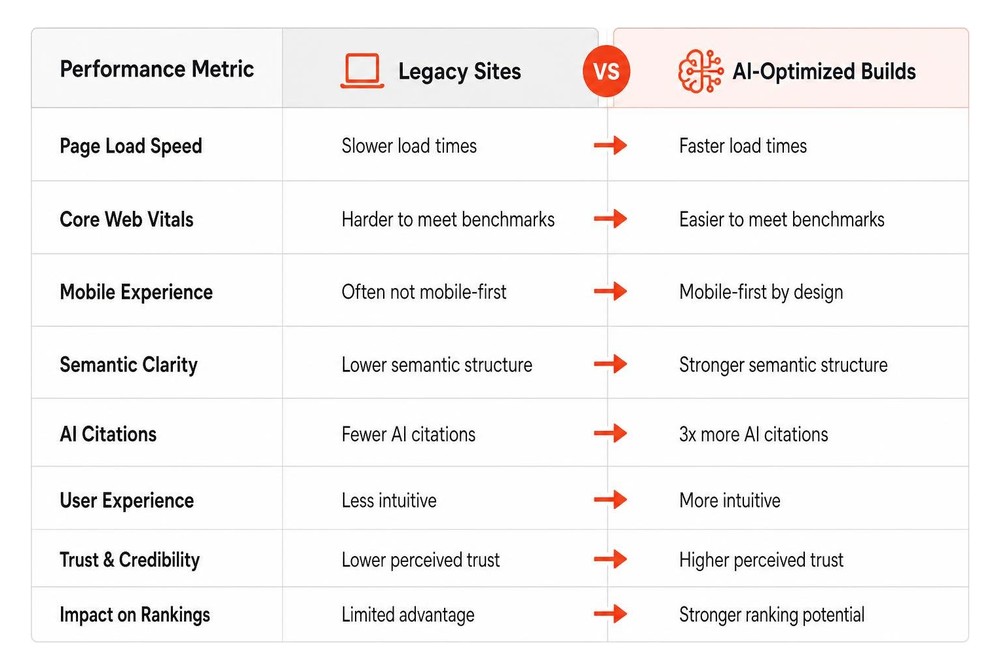
- Improved Core Web Vitals: Meeting Google’s Core Web Vitals benchmarks (Largest Contentful Paint, Interaction to Next Paint, Cumulative Layout Shift) not only enhances user experience but also positively influences search rankings and can lead to 3x more AI citations.
- Enhanced Retention Metrics: A positive user experience fosters trust and encourages repeat visits, turning one-time visitors into loyal customers.
- Stronger User Trust: A professional, secure, and well-functioning website signals credibility and reliability, which is particularly important for service-based businesses.
A high-performance website acts as a powerful asset, working 24/7 to attract, engage, and convert your ideal customers.
Technical Engineering: Speed, Accessibility, and AI Search Optimization
In September 2026, the technical backbone of your website is as crucial as its visual appeal. Search engines, particularly Google, prioritize sites that offer an excellent user experience, are technically sound, and are optimized for emerging AI-driven search paradigms. This necessitates a deep dive into mobile-first indexing, structured data, semantic HTML, and passage indexing.
Since 2019, Google has predominantly used the mobile version of websites for indexing and ranking. This means your site must be designed with a mobile-first approach, not merely as an afterthought or a “shrunk desktop” version. Furthermore, the rise of AI search means websites must be engineered to be easily understood and cited by AI systems like ChatGPT. This involves structuring content with semantic HTML, implementing JSON-LD schema markup, and creating passage-level content that AI can readily extract and interpret.
The shift towards AI-powered search has introduced new performance benchmarks. Modern AI-optimized builds significantly outperform legacy sites in terms of speed, semantic clarity, and citation frequency.
Core Web Vitals and User Experience Benchmarks
Google’s Core Web Vitals are a set of metrics that measure real-world user experience. Meeting these benchmarks is paramount for both search ranking and user satisfaction:
- Largest Contentful Paint (LCP): Measures the time it takes for the largest content element on the page to become visible. A good LCP score is 2.5 seconds or less.
- Interaction to Next Paint (INP): Measures the responsiveness of a page to user interactions. An INP of 200 milliseconds or less is considered good.
- Cumulative Layout Shift (CLS): Measures the visual stability of a page. A good CLS score is 0.1 or less, meaning minimal unexpected layout shifts.
Achieving these targets requires a focus on page speed through strategies like image optimization, code minification, and effective caching strategies. Every element on your page, from images to scripts, contributes to load time, and optimizing them is key to a smooth user experience and higher rankings.
Optimizing Content Architecture for AI Engines
The way AI engines process and present information is rapidly evolving. To ensure your website content is discoverable and cited by these advanced systems, we must adopt an Answer Engine Optimization (AEO) approach. This goes beyond traditional SEO by focusing on how AI understands and synthesizes information.
Key strategies include:
- Semantic Passages: Breaking down content into short, focused passages that directly answer common user questions. This makes it easier for AI to extract relevant snippets.
- Entity Extraction: Clearly defining key entities (people, places, products, services) within your content using schema markup. This helps AI understand the context and relationships between different pieces of information.
- Machine Readability: Ensuring your site’s code and content are structured in a way that is easily parsed by search bots. This involves using proper HTML tags, clear headings, and logical content flow.
- Structured Data (JSON-LD Schema): Implementing structured data markup (e.g., LocalBusiness, FAQPage, Service schema) directly tells search engines and AI what your content is about, enhancing its visibility in rich results and AI-generated summaries.
By engineering your site with these technical considerations, you’re not just optimizing for today’s search engines but future-proofing your digital presence for the evolving landscape of AI-powered information retrieval.
Strategic Integration: Connecting Design with Growth Channels
A beautifully designed and technically sound website is only half the battle. To truly drive business growth, your digital presence must be strategically integrated with your broader marketing and sales efforts. This means connecting your web design with lead funnels, CRM integration, and ongoing conversion rate optimization (CRO) to maximize your return on investment.
Your website should serve as the central hub for all your lead generation activities. Clear lead capture forms, strategically placed calls-to-action, and compelling content work together to guide visitors through your sales funnel. Integrating these elements directly with your Customer Relationship Management (CRM) system ensures that leads are captured, nurtured, and tracked effectively. This seamless flow of information allows your sales team to follow up promptly and personalize their approach, significantly improving conversion rates.
For businesses looking to optimize their online performance and generate measurable results, a comprehensive approach to data-driven digital marketing is essential. This involves analyzing user behavior, identifying bottlenecks in the conversion process, and making data-backed decisions to refine your website and marketing strategies. Focusing on organic visibility through robust SEO, coupled with efficient lead capture forms, creates a powerful engine for sustainable growth.
Modernizing Your Digital Presence and Web Design for 2026
The digital landscape is constantly evolving, and your website must evolve with it. For many businesses, this means undertaking a strategic modernization effort. This isn’t just about a visual refresh; it’s often a comprehensive tech stack evaluation and a migration to a more robust, scalable, and AI-ready platform.
Key considerations for modernization include:
- Site Migrations: When moving to a new platform or redesigning, a carefully planned site migration is critical to preserve your existing SEO equity. This involves meticulous planning of 301 redirects to ensure old URLs seamlessly point to new ones, preventing broken links and maintaining search rankings.
- URL Preservation: Maintaining consistent URL structures or implementing proper redirects is crucial to avoid losing valuable search engine authority built over time.
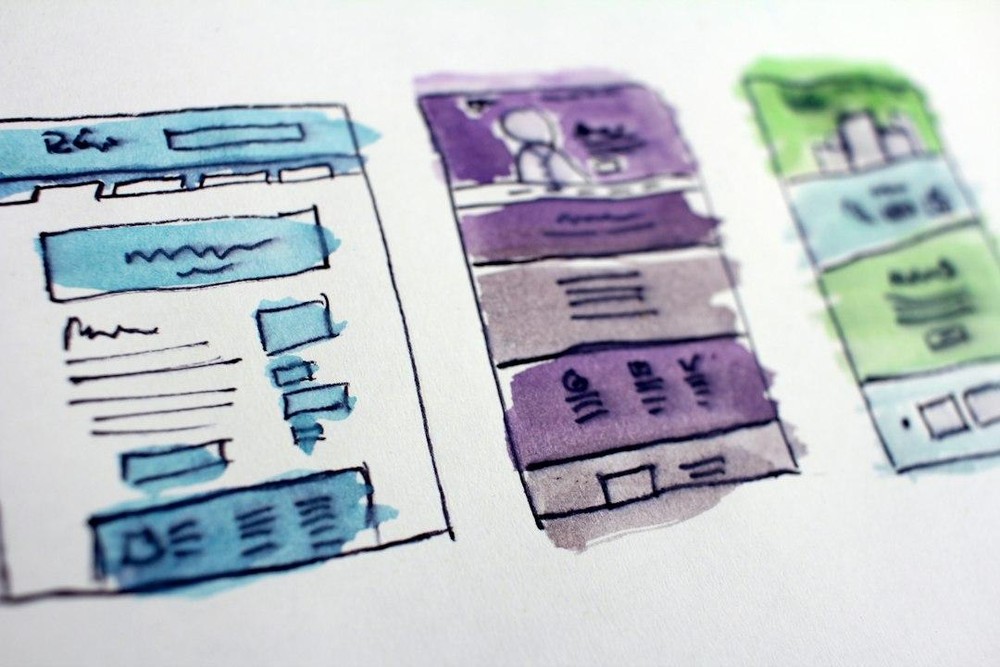
- Visual Refresh: While not the sole focus, an updated visual design can significantly enhance user experience and reflect your brand’s current identity. This should be guided by modern UX/UI principles and tested for responsiveness.
- Tech Stack Evaluation: Assessing your current website’s underlying technology (CMS, hosting, plugins) to ensure it meets current performance, security, and scalability requirements. WordPress, Shopify, and Webflow are popular choices, each offering different advantages depending on business needs.
A well-executed modernization project ensures your digital presence remains competitive, secure, and capable of supporting future growth initiatives.
Cultural Localization and Multi-Market Adaptability
For businesses operating in diverse markets, cultural localization is not merely about translation—it’s about adapting your entire digital experience to resonate with local audiences. This goes beyond language to encompass cultural nuances, regional preferences, and market-specific functionalities.
Considerations for multi-market adaptability include:
- RTL Layouts: For languages like Arabic and Hebrew, implementing true Right-to-Left (RTL) layouts is essential. This involves not just text direction but also the orientation of UI elements, navigation, and visual flow, ensuring speed parity with Left-to-Right (LTR) versions.
- Regional Gateways: Integrating local payment gateways, shipping options, and tax displays (e.g., VAT) is crucial for e-commerce success in different regions.
- Localized Typography: Choosing fonts that are culturally appropriate and highly legible in specific languages can significantly enhance user experience.
- International UX: Adapting user interface elements, imagery, and content to align with local cultural expectations and conventions.
- Translation Frameworks: Utilizing robust translation management systems to ensure consistent and high-quality localized content across all digital touchpoints.
By embracing cultural localization, businesses can build stronger connections with international audiences, fostering trust and expanding their market reach.
Frequently Asked Questions About Digital Architecture
As businesses navigate the complexities of online visibility and user engagement, several common questions arise regarding the strategic intersection of digital presence and web design. We aim to address these to provide clarity on how to achieve optimal search visibility, user retention, and modern design practices.
How do web design choices directly impact search engine rankings?
Web design choices have a profound and direct impact on how search engines perceive and rank your site. It’s not just about keywords anymore; it’s about the overall user experience and technical integrity.
- Crawlability: A clean, well-structured website with logical internal linking allows search engine bots to easily crawl and index your content. If bots struggle to navigate your site, your content may not be fully discovered.
- Page Speed: As highlighted earlier, page speed is a critical ranking factor. Google prioritizes fast-loading sites because they offer a better user experience. Slow sites lead to higher bounce rates, signaling to search engines that users are dissatisfied.
- Internal Linking: A strategic internal linking structure helps distribute “link equity” across your site, boosting the authority of important pages and guiding users and bots to related content.
- Mobile Responsiveness: With mobile-first indexing, a responsive design that adapts seamlessly to all devices is non-negotiable. Sites that are not mobile-friendly will suffer in mobile search rankings.
- Dwell Time: The amount of time a user spends on your page after clicking through from search results. A well-designed, engaging site with relevant content encourages longer dwell times, indicating to search engines that your page is valuable.
What is the difference between brand presence and technical web design?
While closely related and mutually supportive, brand presence and technical web design serve distinct purposes:
- Brand Presence: This encompasses your visual identity (logo, color palette, typography), messaging strategy, tone of voice, and the overall perception of your business in the market. It’s about how your audience feels about your brand and what they associate it with. A strong brand presence evokes trust, recognition, and loyalty.
- Technical Web Design: This refers to the underlying code structure, platform performance, security, and functional execution of your website. It includes aspects like HTML, CSS, JavaScript, server configuration, database management, and ensuring the site is fast, secure, and accessible.
While brand presence dictates the “what” and “why” of your online identity, technical web design provides the “how” – the robust, functional framework that delivers that brand experience effectively. A powerful digital presence requires both a compelling brand and flawless technical execution.
How often should an enterprise update its website architecture?
The frequency of website architecture updates depends on several factors, but generally, enterprises should consider significant updates every 2-5 years, with continuous smaller optimizations in between.
- Technology Lifecycles: Web technologies evolve rapidly. Frameworks, programming languages, and CMS platforms regularly release updates that offer improved performance, security, and features. Staying current prevents your site from becoming obsolete.
- Core Web Vitals: Google’s continuous refinement of Core Web Vitals and other ranking factors necessitates ongoing adjustments to maintain optimal performance.
- Rebranding Cycles: If your brand undergoes a significant visual or strategic rebrand, your website architecture and design must reflect these changes to maintain consistency.
- Security Updates: Cybersecurity threats are constant. Regular architectural reviews and updates ensure your site remains secure against new vulnerabilities.
- Competitive Benchmarking: Monitoring competitors and industry leaders helps identify new features, design trends, and performance standards that your site may need to adopt to remain competitive.
Ignoring these updates can lead to declining search rankings, poor user experience, and increased security risks, ultimately hindering your digital presence and business growth.
Conclusion
In the dynamic digital landscape of September 2026, building a strong digital presence is no longer a luxury but a fundamental requirement for business success. The synergy between thoughtful web design and a robust digital strategy is what separates thriving enterprises from those struggling to connect with their audience. We have explored how aligning these elements, focusing on high-performance interfaces, technical engineering for speed and AI optimization, and strategic integration with growth channels, can lead to significant and sustainable growth.
From ensuring mobile-first design and adherence to Core Web Vitals to optimizing content for AI engines and localizing for diverse markets, every aspect of your digital architecture contributes to your overall success. By prioritizing continuous optimization, maintaining technical stability, and fostering brand trust through consistent and engaging experiences, businesses can future-proof their digital ecosystem. Investing in a meticulously crafted digital presence and web design is an investment in your company’s future, ensuring you not only meet but exceed the expectations of today’s digitally-savvy consumers.