Choosing window blinds is about more than picking a color that matches the room. The best option should help manage daylight, privacy, comfort, cleaning, and daily use. If existing coverings are sticking, damaged, or difficult to operate, arranging blinds repair may also be worth considering before replacing everything.
A blind that works beautifully in a dry living room may be a poor fit for a humid bathroom or a bedroom that receives direct sunlight. Start by looking at how each room is used, when sunlight enters, and who will most often operate the covering.
Start With the Room
Each room creates a different set of priorities. A living room may need flexible light control that preserves an outdoor view, while a bedroom may need stronger privacy and reduced early-morning light. Kitchens and bathrooms usually call for materials that are easier to wipe clean and better suited to humid conditions.
Consider the room’s everyday activities before narrowing down the style. A home office may need to soften the glare on a monitor, while a child’s room should prioritize straightforward operation and safety over decorative details alone.
For homeowners comparing styles, materials, and operating options across several rooms, the product information available at https://www.bloominblinds.com/ can provide a useful starting point for organizing those decisions.
Room-Specific Planning Points
- Living rooms: Prioritize adjustable daylight, glare control, views, and style.
- Bedrooms: Consider nighttime privacy, outside lighting, and sleep schedules.
- Kitchens and bathrooms: Choose surfaces that handle humidity and routine cleaning.
- Home offices: Reduce screen glare without unnecessarily darkening the workspace.
- Children’s rooms: Favor safer, simple-to-use designs with minimal accessible cords.
Balance Light and Privacy
Sun exposure changes throughout the day, so inspect the room at the times when it is actually used. East-facing windows often receive stronger morning light, while west-facing windows can bring intense afternoon sun. South- and north-facing exposure can also affect how much direct light enters, depending on the home’s location and surrounding shade.
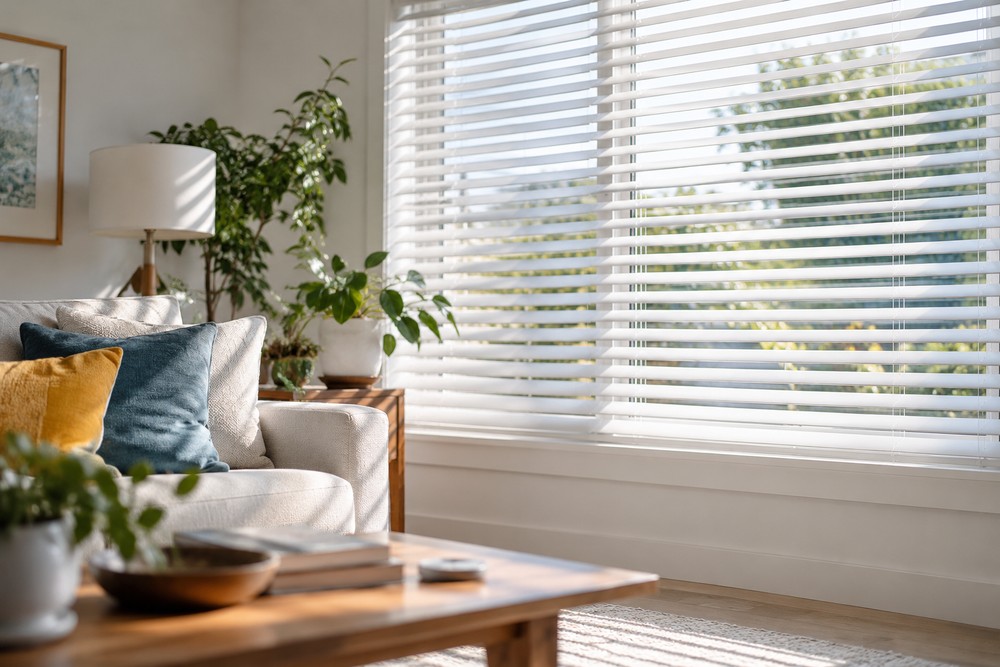
Light-filtering blinds soften daylight while maintaining a brighter feel. Room-darkening choices can reduce incoming light more substantially, which may suit bedrooms, media rooms, or shift workers. Adjustable slats offer a middle ground by allowing users to redirect light and limit direct views without fully closing the blind.
Privacy deserves separate consideration because it can change after sunset. During the day, a bright exterior may limit views into a room. At night, indoor lighting can make the interior more visible from outside, especially near streets, walkways, or neighboring homes.
Compare Materials and Maintenance
Material affects how blinds look, how they clean, and how they hold up in different conditions. Wood adds warmth and natural texture, but it is generally better suited to dry areas where repeated exposure to moisture is less likely. Composite or faux-wood products can provide a similar visual effect while being practical for rooms that need easier wipe-down care.
- Wood: A classic option for dry living spaces, bedrooms, and offices.
- Composite or faux wood: A durable choice for spaces where humidity and cleaning are bigger concerns.
- Aluminum: Lightweight, simple to maintain, and available in many finishes.
- Fabric-based coverings: Useful for a softer appearance, though they may require more careful dust- and spot-cleaning.
For routine care, dust slats with a microfiber cloth or a soft vacuum attachment. Use only a lightly damp cloth when the manufacturer’s care guidance allows it, and avoid soaking wood products or control hardware.
Match Blinds to Window Size and Shape
Accurate measuring is essential for appearance and operation. Decide first whether the blind will be mounted inside or outside the frame. Then measure the width at the top, middle, and bottom, and the height at the left, center, and right. For an inside mount, the narrowest width is often important because window openings are not always perfectly square.
Also check for handles, locks, trim, shallow frames, and nearby furniture. Wide windows, sliding doors, skylights, arches, and high windows may require a specialized configuration. A standard-size product can leave unwanted gaps or become awkward to raise and lower when the opening is unusually large.
Make Safety Part of the Decision
Window-covering cords can create a serious hazard for young children. The Consumer Product Safety Commission recommends cordless window coverings in homes with young children and advises keeping cords out of reach. Furniture, cribs, beds, and climbable items should also be kept away from windows with accessible cords.
- Choose cordless designs where young children live or visit.
- Inspect older blinds for loose or dangling cords.
- Use tension devices correctly for continuous-loop cords or chains.
- Avoid placing furniture where children can reach window controls or cords.
Consider Comfort and Energy Use
Blinds can help manage glare and unwanted solar heat, but they are only one part of overall window performance. Glass type, installation quality, climate, window direction, and daily use all influence comfort. The Department of Energy notes that interior blinds and shades can reduce undesirable solar heat gain while also helping occupants manage daylight.
It is helpful to distinguish between blocking harsh sun and improving insulation. Closing blinds during strong afternoon sun may make a room feel more comfortable, while other window treatments may be selected specifically for their insulating properties near the glass.
Choose the Right Operating Style
Manual controls can be a straightforward choice for standard windows. Cordless operation offers a cleaner appearance and removes loose operating cords. Motorized blinds may be especially useful on tall foyer windows, wide openings, or windows behind furniture where manual access is inconvenient. Smart controls can add scheduling or app-based operation, but buyers should confirm power needs and compatibility before ordering.
Avoid Common Buying Mistakes
- Choosing a style before evaluating sunlight and privacy.
- Measuring only once or rounding dimensions too early.
- Selecting moisture-sensitive materials for damp spaces.
- Overlooking trim, handles, locks, or shallow mounting depth.
- Forgetting to plan for cleaning and long-term maintenance.
- Ignoring accessible cords in homes with young children.
- Adding motorization without checking power and access requirements.
Use a Simple Selection Checklist
- Identify how the room is used each day.
- Note when the strongest sunlight enters the window.
- Decide how much daytime and nighttime privacy is needed.
- Choose a material that fits the room’s moisture and cleaning needs.
- Measure carefully and check for obstructions.
- Review cordless or motorized choices when safety or accessibility matters.
- Compare upkeep requirements alongside the initial purchase price.
Common Questions About Window Blinds
Which Blinds Work Best for a Bedroom?
Bedrooms often benefit from privacy and stronger light control. The best fit depends on the window direction, nearby outdoor lighting, and whether the occupant sleeps during daytime hours.
What Blinds Work Well in a Bathroom?
Moisture-resistant, easy-clean materials are generally practical for bathrooms. Good ventilation still matters because persistent moisture can affect finishes and surrounding window areas.
Should Large Windows Use Motorized Blinds?
Motorization can be useful for windows that are tall, wide, difficult to reach, or operated on a predictable schedule. It is a convenience decision that should be weighed against budget, power access, and preferred controls.
Conclusion
The right window blinds fit the way a room is actually lived in. By considering light, privacy, material, measurements, safety, cleaning, and operation before making a purchase, homeowners can choose coverings that are more comfortable, practical, and easier to use over time.