Purchasing a new vehicle in Sarasota involves more than just the drive home from the dealership. Daily errands along Tamiami Trail, beach weekends, school drop-offs, seasonal traffic, summer rain, and trips across the Sunshine Skyway can all shape what feels practical behind the wheel. Whether you are comparing compact crossovers or looking at pick up trucks for sale, the best choice is the one that makes everyday driving easier.
A new vehicle should suit your actual life for years to come. That may mean easy parking near downtown Sarasota, enough rear-seat space for family members, cargo room for beach chairs and groceries, or the confidence to carry tools and equipment for work. Start with the needs you have most often, then consider the features and capabilities that will support those needs.
Why Daily Habits Should Guide the Decision
Your driving pattern often reveals the right vehicle category. Someone who primarily travels short distances between home, work, and local shops may value efficiency, a compact footprint, and simple maneuverability. A driver with a long commute toward Bradenton, Venice, or Lakewood Ranch may prioritize supportive seats, highway comfort, and fuel economy.
Families may need wide door openings, accessible child-seat anchors, useful third-row seating, or room for sports equipment. A contractor, boater, or homeowner with frequent hauling duties may need a pickup or SUV with appropriate payload or towing capability. The goal is not to buy the biggest vehicle available. It is to buy enough vehicles for the jobs it will regularly perform.
When comparing options from Sarasota car dealerships, write down the three most important ways you use a vehicle each week. That simple list can keep the shopping process focused when different trims, screens, and upgrades begin competing for attention.
Set a Practical Vehicle Budget
The purchase price is only one part of vehicle ownership. Before shopping, estimate a comfortable monthly payment and account for insurance, fuel or electricity, routine maintenance, registration costs, and potential repairs after the warranty period. A longer loan term can reduce the monthly payment, but it can also increase the total interest paid over the life of the loan.
Sarasota drivers can also compare operating costs by considering miles driven, local fuel prices, and charging availability. The federal vehicle cost calculator can help shoppers compare fuel consumption and ownership costs across different vehicle types before making a final decision.
Choose the Right Vehicle Shape
Vehicle body style affects comfort, utility, parking, and ownership costs. A sedan can be a sensible choice for efficient commuting and highway travel. Hatchbacks add flexible cargo access while maintaining a smaller overall footprint. Crossovers offer a higher seating position and versatile interior space that suits many Sarasota households.
Larger SUVs can be useful for growing families, road trips, and bulky cargo, while pickups are better suited to regular hauling, work-site use, or towing when properly equipped. Do not assume that a larger size automatically means more value. Larger vehicles can cost more to purchase, fuel, insure, and maintain, so added capability should have a clear purpose.
Compare Gas, Hybrid, Plug-In Hybrid, and Electric Options
Gas-powered vehicles remain straightforward for drivers who want broad fueling access and frequent long-distance flexibility. Hybrids can reduce fuel consumption without requiring home charging, which may appeal to drivers with varied schedules or apartment living arrangements. Plug-in hybrids and electric vehicles can be appealing when dependable charging is available at home or work.
Before selecting a plug-in model, consider your typical daily mileage, access to charging, hurricane-season preparedness, and how often you travel beyond the Sarasota area. Compare fuel economy or electric range among vehicles in the same size class. A highly efficient compact model and a larger family SUV solve different transportation needs, even if both offer electrified powertrains.
Check Space, Seating, and Cargo Needs
Seating capacity does not tell the whole story. Sit in every row and check front-seat comfort, rear legroom, headroom, door opening width, and the ease of reaching child-seat anchors. If a vehicle will carry visitors, teenagers, or aging family members, access and comfort matter as much as the number of seat belts.
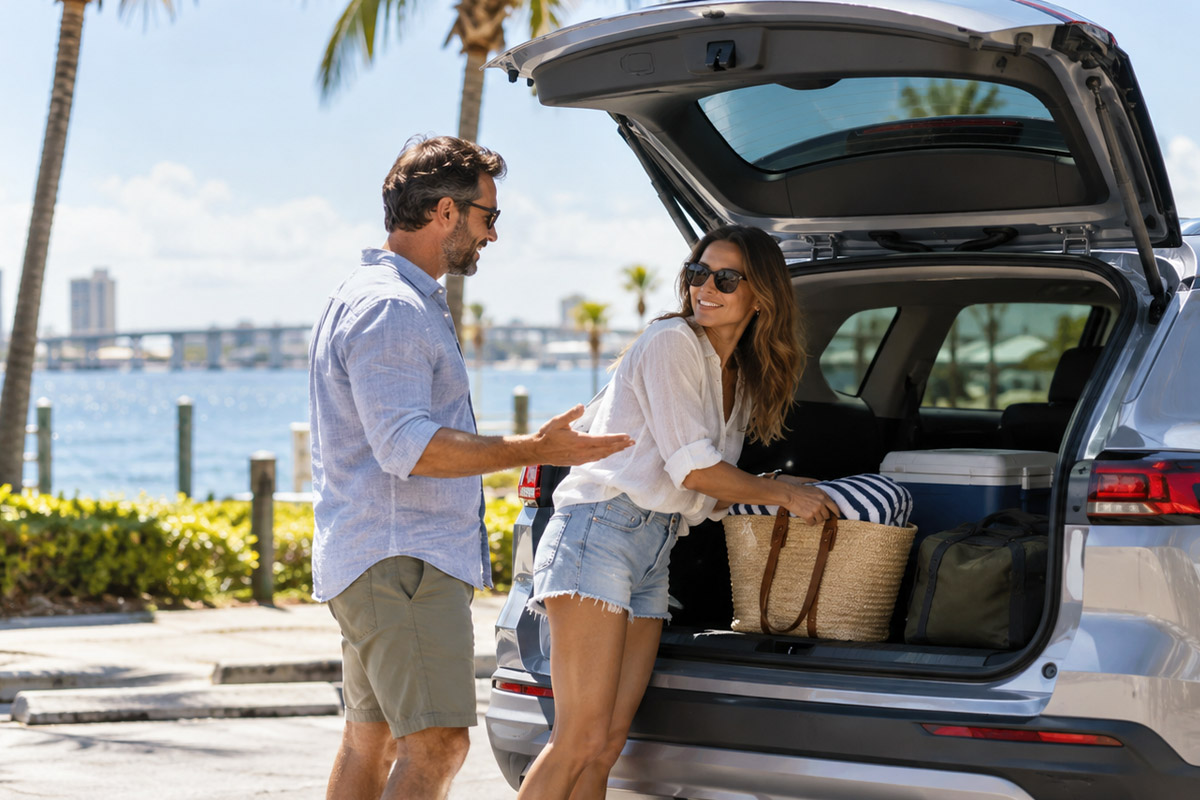
Look closely at cargo height, floor shape, lift-over height, and fold-flat seating. Bring items that reflect your routine when possible, such as a stroller, golf clubs, work tools, fishing gear, luggage, or a beach wagon. Measurements and real loading tests are more useful than relying on a broad label such as “large SUV.”
Look Beyond the Feature List
Useful technology should make daily driving calmer and more convenient. Wireless smartphone connectivity, clear backup cameras, physical climate controls, adjustable seating, charging ports, blind-spot monitoring, and adaptive cruise control can all be worthwhile when they work naturally for the driver.
During a vehicle visit, test the infotainment system rather than judging it by its screen size. Connect your phone, adjust the climate controls, check camera visibility in bright Florida sunlight, and make sure the menus are easy to understand without taking your attention off the road.
Use Independent Safety Information
Crash-test results, safety awards, and driver-assistance features are related but not identical. Compare vehicles within the same size category and verify the exact model year and trim, as available equipment can vary. The crash protection and crash-avoidance information from the Insurance Institute for Highway Safety can help shoppers review independent safety details.
Safety technology is most helpful when it is easy to understand and used correctly. Learn what each feature does, what its limitations are, and whether it is standard or optional on the vehicle you are considering.
Build a Shortlist Before the Test Drive
- List your top three daily driving needs.
- Select two or three vehicle types that fit those needs.
- Set a full ownership budget rather than focusing only on payment.
- Compare powertrains, passenger space, cargo room, and safety equipment.
- Test drive the strongest candidates on familiar Sarasota-area roads.
What to Check During a Test Drive
Use the test drive to assess visibility, steering, braking, acceleration, ease of parking, road noise, and seat comfort. Try a few turns, a parking maneuver, and a highway merge if possible. Pay attention to how the vehicle handles uneven pavement and wet-weather visibility concerns that can arise during Florida’s heavy summer showers.
Common Questions Before Buying
Is a Larger Vehicle Always Better?
No. More space can be valuable, but only when you will use it often enough to justify the additional cost and size.
Should Fuel Economy Be the Top Priority?
Fuel economy matters, but it should be balanced with comfort, passenger needs, cargo space, range, and purchase price.
How Many Vehicles Should Be on a Shortlist?
Two or three well-matched choices are usually easier to compare than a long list without clear priorities.
Conclusion
The right new vehicle for Sarasota life is not necessarily the largest, fastest, or most feature-filled option. It is the one that fits your budget, passengers, daily routes, weather conditions, and long-term plans. By comparing total costs, powertrains, space, safety, and real-world comfort, you can make a choice that stays useful long after the purchase in Sarasota, Florida.