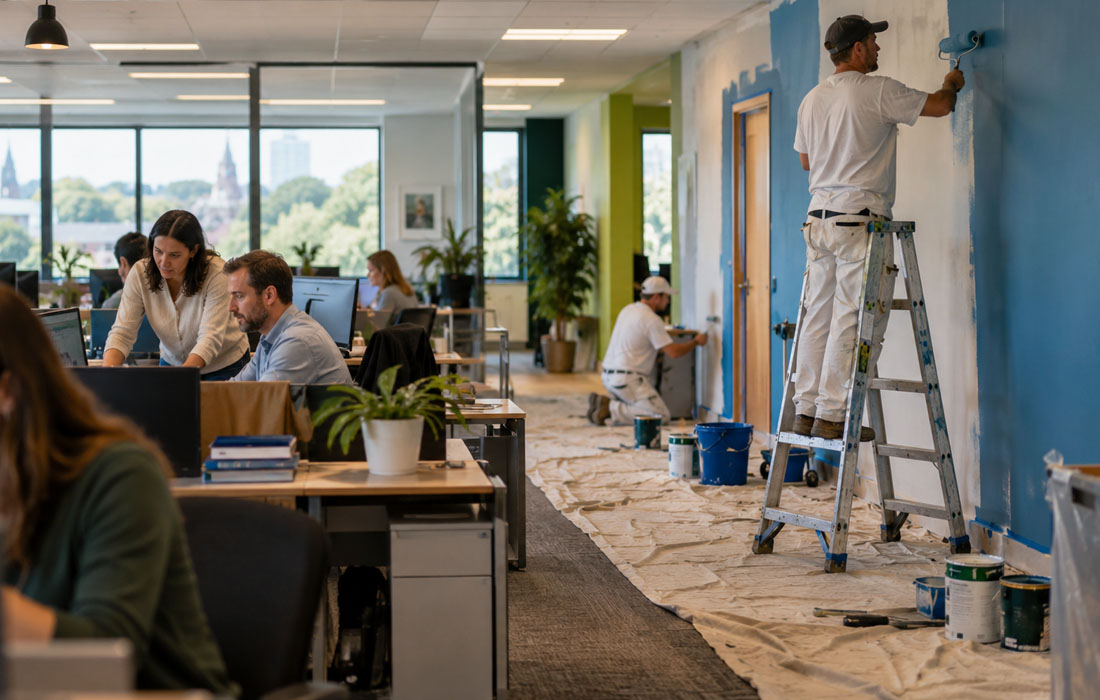
Refreshing a workplace while employees, clients, and deliveries keep moving is very different from repainting an empty suite. In Hanover, VA, where many offices are fully booked during business hours, the most successful repaints start with a plan that respects foot traffic, cleaning schedules, and building rules. Thoughtful phasing, the right low-odor coatings, and realistic cure windows matter more than pure speed. This article lays out a practical approach for facility managers and office administrators who want new wall color without missed meetings, smeared corners, or air-quality complaints the next morning.
Map Foot Traffic and Create Paint Zones Before Drop Cloths Come Out
Before you tear off a single roll of blue tape, sketch how people actually use the space between 8 a.m. and 6 p.m. Reception counters, corridors to restrooms, and the break area will not go dark at the same time, so divide the plan into zones that match real movement. Establish alternate routes with stanchions and clear signs, and block off only what you can complete and demask overnight. If you want local context for an occupied repaint, compare approaches used in office painting in Hanover, VA to see how teams phase high-traffic suites, handle after-hours access, and coordinate with property managers.
Two scenarios illustrate why this mapping helps. At a front desk that must stay open, paint the wall and soffit behind the counter in two halves on consecutive evenings, using zipper door plastic to keep dust out of electronics and a narrow roller to cut around monitors. For conference rooms that book up fast, reserve them for one-night windows, then post “wet paint” door signs with the reentry time. Label furniture with painter’s tape before moving, unplug and bag outlet plates, and never mask or coat life safety devices. Skipping these steps often creates bottlenecks the next morning and fresh scuffs in the very places you just finished.
Match Sheen and Coating Type to Use, Lighting, and Cleaning Routines
Not every wall wears the same paint well. Private offices typically do fine with eggshell, which hides minor roller tracks and looks soft under 3500K to 4000K lamps. Corridors and copy rooms collect fingerprints and cart scrapes, so specify a scuff-resistant acrylic in satin for easier wipe-downs. Doors and frames see keys and bags all day; a durable waterborne alkyd in semi-gloss resists blocking and cleans up with soap and water. Always test color chips on primed sample cards in the actual office lighting, because 5000K LEDs push grays colder and beiges greener. When covering dark accent walls, a tinted primer reduces the risk of show-through and keeps you from forcing a third coat. Zero-VOC paints minimize odor, but some ultra-flat versions mark more easily, so weigh air-quality goals against cleanability where hands touch surfaces daily.
A frequent mistake is rolling finish coat directly over joint compound patches. Unprimed spots will “flash,” creating dull halos that read through even premium paint. Seal repairs with a dedicated drywall primer or a stain-blocking primer if you are covering marker or cooking splatter. On typical office drywall, a 3/8-inch microfiber roller leaves a smooth film without excessive stipple; reserve 1/2-inch naps for more textured surfaces. Spraying can be faster in vacant areas, but in occupied suites it increases overspray risk and masking time. In many offices, brushing and rolling deliver better control with fewer odors, even if it stretches the schedule slightly.
Control Odor, Dust, and Noise While People Work
Low-VOC or zero-VOC latex paints are the baseline for occupied interiors, but odor control also depends on how work is performed. Keep lids on buckets, use sealed paint kettles, and schedule high-odor tasks like solvent-based metal priming after hours. Sanding generates complaints faster than painting; connect pole sanders to a HEPA extractor, and place sticky walk-off mats at zone exits to trap dust. In long corridors, a portable air scrubber with a carbon prefilter can pull lingering smells away from workstations. Plan louder tasks such as pole sanding or door hardware removal for early mornings or evenings to reduce disruption. Never prop fire doors with wedges, and confirm with the property manager before using any negative air setup that could affect building pressure.
In an open-plan bullpen, set zip wall plastic between desk rows and paint one aisle at a time. Mask supply diffusers and return grilles carefully so overspray or roller spatter does not enter the HVAC. After painting, run the system in circulate mode to help exchange room air without overcooling fresh paint. Remove masking and plastic daily rather than letting it accumulate, and route cords for lights or HEPA units under low profile covers to prevent trips at crowded pinch points.
Sequence Nights, Weekends, and Cure Windows Realistically
Dry to the touch is not the same as ready for furniture. Many interior paints recoat within a few hours, but they can take several days to harden. If chairs sit against a freshly coated wall overnight, you can wake up to burnished rings. Build in cure time: paint busy corridors on a Friday evening to capture a two-day window, and install simple door standoffs so newly painted frames do not stick. Temperature and humidity drive cure speed; aim for manufacturer-recommended ranges and, when summer humidity spikes, use portable dehumidifiers and gentle air movement. Ceiling, then walls, then trim is a reliable sequence, but adjust per zone in occupied spaces, pushing door and frame enamel to the end of each phase so tacky surfaces are not touched during daytime transitions.
Coordination matters beyond paint. Do not schedule a deep clean the morning after painting, because damp wiping can burnish matte finishes and lift tape edges. Hang “do not clean” tags on newly painted rooms, and use delicate surface tape on finished areas when you must mask nearby work. Remove tape within the recommended window to avoid tearing edges. In multi-story buildings, reserve elevator time for material staging and debris removal, and place floor protection along the route so movers and painters don’t compete for the same narrow corridor during business hours.
Close With Documentation, Touch Up Kits, and Early Care
When the last zone opens, document the finish schedule before everyone forgets. Create a simple color-by-room log with brand, color name, formula code, sheen, and completion date. Leave a touch-up kit that includes labeled quart cans, an angled sash brush, a 4-inch mini roller with a smooth cover, and a roll of delicate surface tape. Store paint at room temperature and photograph each label for the maintenance file. In high-traffic corners, consider clear corner guards or chair rails to keep carts off the new film. For the first weeks, clean with a mild detergent and a microfiber cloth, avoiding aggressive erasers on matte areas until the film fully cures. A short staff memo about temporary wet paint signs, furniture clearance, and when routine wipe-downs may resume will help the new finish look “day one” far longer.
A repaint does not have to stall the workday. By carving the office into sensible zones, selecting low-odor and scuff-resistant coatings for the right surfaces, and allowing realistic cure time, you can refresh walls without derailing meetings or frustrating visitors. Control dust and noise with HEPA sanding and air movement, schedule louder tasks for evenings, and keep safety systems unobstructed. Finish with clean documentation and a touch-up plan so small marks do not become big distractions. With a clear sequence and a little patience, Hanover offices can look sharp while staying open for business.