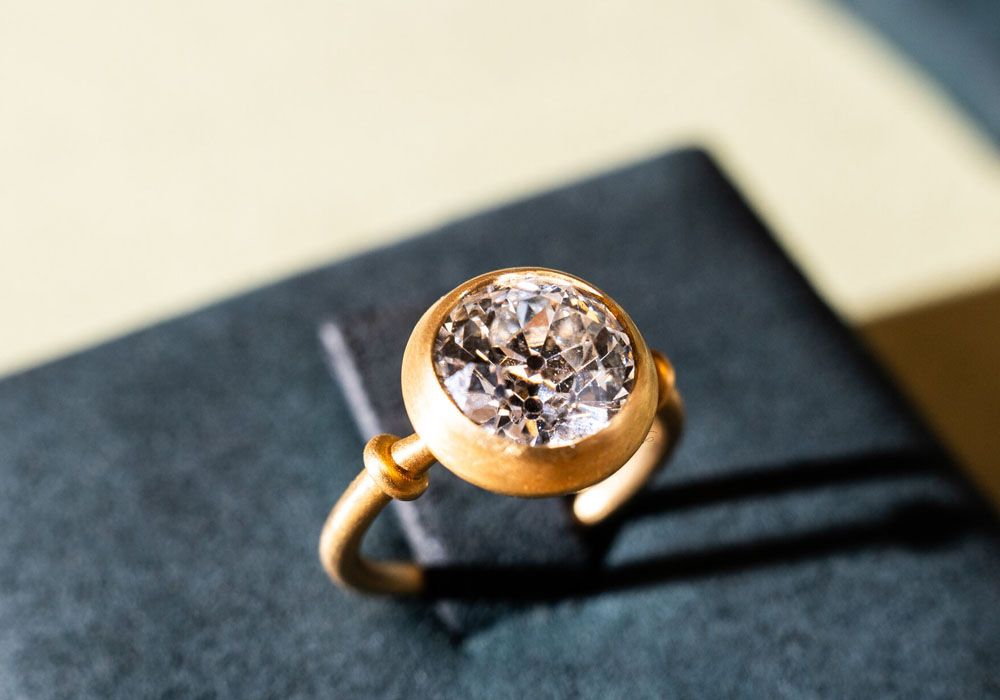
A bezel setting wraps a thin metal rim all the way around a diamond. It holds the stone tight on every side. No prongs stick out. Nothing snags on your jumper or your gloves.
Diamond scores a perfect 10 on the Mohs hardness scale, so it never scratches. But the metal around it still needs to protect the edges from hard knocks. That is exactly what bezel set diamond rings in Australia do best. This guide breaks down shapes, metals, and care, in plain words, so picking one feels easy, not stressful.
What Is A Bezel Setting, Really?
A bezel setting is a metal rim that hugs a diamond from all sides, like a tiny fence around it. Jewellers cut a groove into that rim, sit the stone inside, then press the metal edge down over the girdle. This locks the diamond in place. There is no gap for the stone to wiggle. That is why old coins and old rings from hundreds of years ago still show this exact setting style. It is one of the oldest ways to hold a stone, going back over 3,000 years to ancient Egypt and Greece.
Why Pick A Bezel Over A Prong?
A bezel protects the diamond edges far better than thin metal claws do. Prong settings leave the girdle, the sharpest and thinnest part of a diamond, exposed on all sides. One hard bump against a doorframe or a gym weight can chip that edge. A bezel closes that gap completely.
- No sharp prongs to catch on wool jumpers, gloves, or hair
- Low profile sits close to the finger for daily jobs and sport
- Fewer metal points mean less cleaning and less snagging on skin
- Clean, modern lines that still look sharp decades later
Which Diamond Shape Suits A Bezel Best?
Round and oval diamonds suit a bezel setting the best out of every shape. The curve of the metal rim follows a round or oval outline in one smooth line, with no odd corners to fill. Emerald and cushion cuts work too, but jewellers need sharper corner folds in the metal, which takes more skill and more time on the bench. A pear shape needs a v-tip at the point, or the metal can crack under pressure over the years.
Which Metal Holds Up Best In Australia’s Climate?
Platinum holds up the longest against Australia’s heat, sweat, and beach salt air. It is dense, at roughly 21.45 grams per cubic centimetre, so the bezel wall resists thinning even after decades of daily wear. White gold looks similar at first, but it needs a fresh rhodium coat every one to two years to stay bright, especially near the coast where salt speeds up fading. Yellow and rose gold need less upkeep than white gold, since their colour comes from the metal itself, not a plated layer.
| Metal | Durability | Upkeep Needed |
| Platinum | Very high, dense metal | Occasional polish only |
| White Gold | Good, but plated layer wears | Rhodium plating every 1-2 years |
| Yellow Gold | Good, softer than platinum | Occasional polish only |
| Rose Gold | Good, copper alloy adds strength | Occasional polish only |
How Do You Keep A Bezel Ring Clean?
Warm water, a drop of mild soap, and a soft toothbrush clean a bezel ring in under two minutes. Dip the ring, scrub gently around the metal rim where dust and lotion build up, then rinse and pat dry with a soft cloth. Because the setting has no open prongs, dirt cannot hide in tiny gaps the way it does on a claw setting. A jeweller check once a year is still smart, mainly to look for wear on the rim, not to check for loose stones, since bezels rarely loosen.
Does A Bezel Setting Cost More?
Yes, a bezel setting usually costs more than a prong setting for the same diamond. Jewellers use more metal to build the rim, and the hand-fitting work around the stone’s exact edge takes longer on the bench. The trade-off is fewer repair bills later, since chipped girdles and bent prongs are two of the most common reasons rings need fixing within the first five years.
Is A Bezel Setting Right For Your Lifestyle?
A bezel setting suits anyone whose hands stay busy all day, from nurses and chefs to tradies and gym regulars. It also suits anyone who just wants a ring that looks the same in twenty years as it does today. If sparkle and light are your top priority over daily toughness, a prong or halo setting may throw more fire. But for a ring built to survive real, everyday Australian life, the bezel keeps winning.
Frequently Asked Questions
Does a bezel setting hide too much of the diamond?
A full bezel does cover more of the stone’s edge than a prong, which can slightly dim the sparkle. An open or half bezel fixes this by leaving the sides bare while still guarding the top and bottom.
Can a bezel set ring be resized later?
Yes, but it takes more work than resizing a prong ring. A jeweller has to carefully refit the whole metal rim around the stone again, so budget a bit more time and cost for this job.
Are bezel set rings good for people with active jobs?
Yes, this is exactly where bezels shine. Nurses, tradies, chefs, and gym-goers pick bezels most often because the smooth rim will not snag gloves, fabric, or equipment during the day.
Do bezel settings suit every diamond shape?
Round and oval diamonds fit a bezel the easiest. Sharp-cornered shapes like pear or marquise need extra metalwork at the points, so ask your jeweller about reinforced tips for those cuts.
How often should a bezel set ring be checked by a jeweller?
Once a year is enough for most bezel rings. The check is mainly to look for thinning on the metal rim from years of contact, not for loose stones, since bezels rarely let a diamond come loose.