Look at a standard lounge room. What do you see? Right angles. Boxy sofas. Rectangular coffee tables. Square rugs. It is a strict geometry lesson masquerading as a living space. Human brains actually hate living inside a rigid grid. Ever wondered why that pristine display home feels a bit too stiff to actually relax in? It is the corners.
Neuroarchitecture studies reveal a fascinating quirk about human psychology. Sharp angles trigger a subtle threat response in the amygdala. Early humans associated sharp things with danger. Thorns, teeth, jagged rocks. Smooth curves signal safety. River stones, rolling hills, clouds. Bringing rounded profiles into a domestic space essentially tells the human nervous system to clock off for the day.
The Neuroscience of Soft Edges
Designing a truly relaxing space goes far beyond simply picking a nice colour palette. It requires hacking the way the brain interprets physical environments. When someone walks into a room filled with harsh lines, their eyes dart abruptly from corner to corner. The visual processing requires more effort.
Swap those sharp corners for soft, sweeping lines. The eye glides continuously around the room without stopping. This frictionless visual journey mimics the way people take in natural landscapes. The resulting feeling is an immediate drop in cortisol. Retail sales data backs up this behavioural shift perfectly. Furniture showrooms stocking predominantly rounded profiles saw a 23% jump in customer dwell time last year. People literally want to linger longer around soft edges.
Fixing the Box in a Box Problem
Most residential architecture is stubbornly orthographic. Rooms are square. Windows are rectangular. Doors are vertical slabs. Placing a rectangular sofa opposite a rectangular TV unit just creates a smaller box inside a larger box. It feels restrictive and highly predictable.
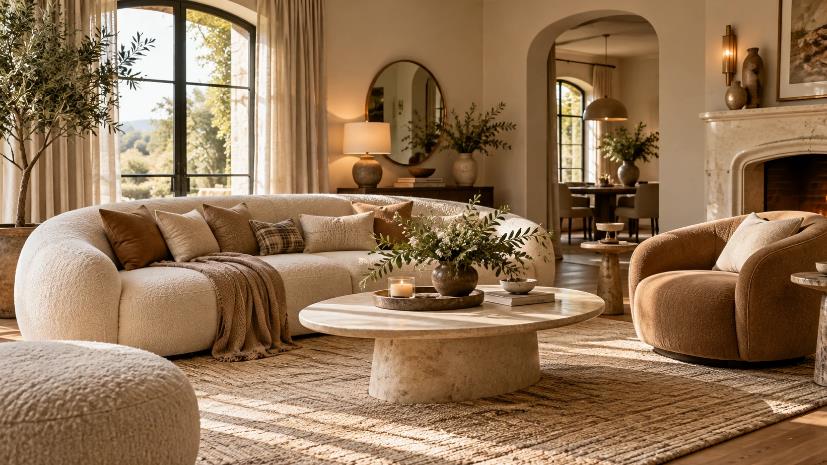
Curved furniture acts as a visual disruptor. A circular coffee table or a kidney-bean shaped sofa shatters that rigidity immediately. The eye suddenly has a wandering path to follow instead of bouncing off harsh plasterboard corners. It creates visual breathing room. Space. Fluidity.
How does this translate to everyday living? Consider the classic Queenslander home or a modern apartment overlooking the river. The local lifestyle demands a seamless blend of indoor and outdoor lounging. Brisbane’s warm, subtropical climate naturally encourages a laid-back, breezy approach to interior styling. Cramming a stiff, modular square sofa into these breezy spaces interrupts that natural flow. Instead, sourcing cohesive setups through furniture packages Brisbane allows locals to effortlessly match the city’s relaxed subtropical vibe with organic, flowing shapes. One curved bouclé sofa instantly softens the harsh lines of traditional VJ panel walls or modern apartment glass.
Designing for Unforced Movement
Square furniture dictates strict pathways. You walk around the sharp edge of the coffee table. You navigate the exact 90-degree corner of the chaise lounge. It is like walking through a gridlocked city street.
Curved furniture completely changes the physical traffic flow of a room. A round ottoman or an arched console table invites natural, sweeping movement. People glide around the pieces rather than navigating around them like obstacles. Anyone who has ever cracked their shin on the sharp corner of a heavy wooden coffee table understands the immediate appeal of a soft, rounded edge. The physical environment becomes entirely forgiving.
Fostering Genuine Connection
Think about a traditional pub layout versus a campfire. A straight line of stools facing a wall discourages talking. A circle naturally pulls people inward.
Curved furniture forces a similar social dynamic in the lounge room. A crescent-shaped sectional gently angles the people sitting on it toward one another. Nobody has to crane their neck awkwardly to chat. Eye contact becomes effortless. It transforms a room designed exclusively for staring at a television screen into a space built for actual conversation. Stylists frequently watch clients physically change posture when testing out different sofa shapes. A rigid tuxedo sofa makes people sit bolt upright. A curved lounge makes them lean back, tuck their legs in, and truly unwind.
Pairing Shapes with Tactile Fabrics
Shape is only half the equation here. A beautifully curved sofa upholstered in stiff, unforgiving faux leather completely defeats the purpose. The tactile experience needs to match the visual softness.
Heavy linens, textured bouclé, and brushed cottons are the undisputed champions for this style. These materials absorb light rather than reflecting it. The way natural sunlight hits a curved, textured surface is entirely different from how it hits a flat plane. A flat surface creates a harsh, definitive shadow line. A curve creates a gentle gradient of light. This subtle shadow gradient adds incredible depth and warmth to a room.
Combine a sweeping, organic silhouette with a rich rust or sage green linen. The result is a room that feels like a physical exhale. Add a textured, circular wool rug underneath to ground the space. The entire room shifts from a showroom aesthetic to a genuine sanctuary.