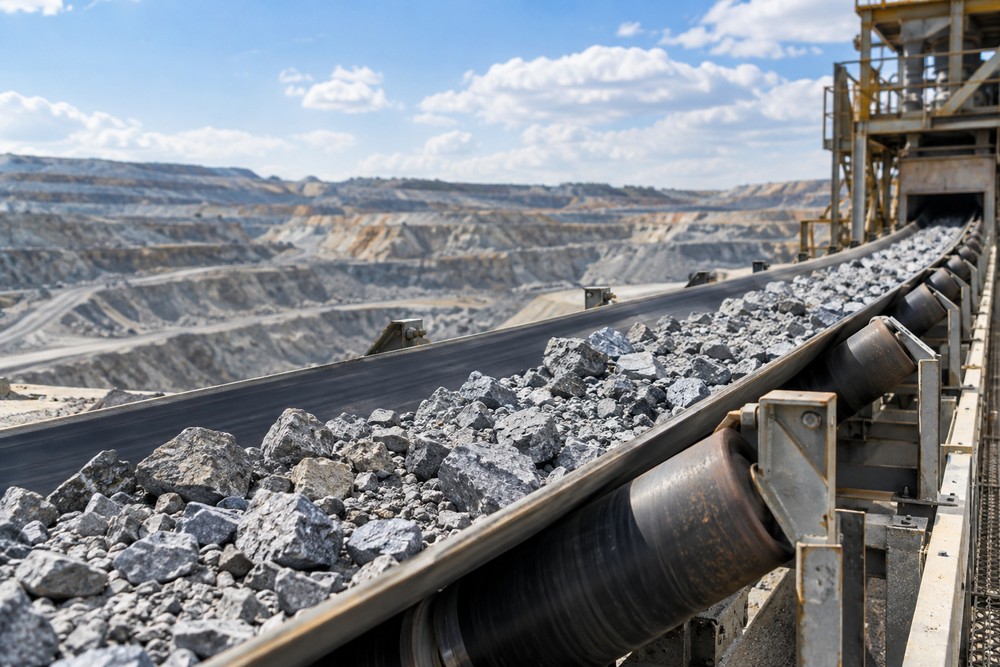
Modern mining operations face continuous pressure to increase output while managing rising operational costs, fluctuating commodity prices, and strict environmental regulations. Enhancing operational efficiency is essential for maintaining high profit margins, protecting worker safety, and ensuring sustainable resource extraction. Achieving long-term productivity gains requires integrating digital technology, optimizing material handling workflows, refining equipment maintenance practices, and modernizing site power infrastructure. By applying targeted operational improvements across surface and underground facilities, mining companies can reduce downtime, maximize output velocity, and build a resilient extraction enterprise.
Implement Real-Time Telematics and Digital Fleet Management
Managing heavy haul fleets and mobile machinery efficiently is critical for minimizing fuel consumption, reducing haulage delays, and maximizing daily ore throughput. Relying on manual shift logs or static scheduling creates communication gaps that slow down material transport across sprawling mine sites.
Deploying digital fleet management software equipped with satellite telematics enables dispatch teams to track equipment locations, payload weights, fuel levels, and cycle times in real time. Automated dispatch algorithms dynamically route haul trucks to active shovels, eliminating queues at loading bays and reducing idle times at primary crushing facilities.
Furthermore, continuous telematics monitoring provides actionable insights into operator driving habits, highlighting aggressive braking, unnecessary idling, or speeding. Addressing operational inconsistencies lowers fuel expenditure, reduces tire wear, and prolongs the service life of expensive haulage assets.
Transition to Predictive Maintenance Strategies
Unscheduled equipment breakdowns represent one of the most significant causes of lost productivity and inflated operational expenses in the mining industry. When a primary crusher or critical haul truck experiences unexpected mechanical failure, entire processing lines can grind to a sudden halt.
Shifting from reactive repair schedules to condition-based predictive maintenance utilizes Internet of Things sensors to monitor vibration levels, fluid temperatures, acoustic signatures, and oil quality continuously. Analyzing sensor data allows maintenance teams to identify mechanical wear early, scheduling repairs during planned maintenance windows before catastrophic failures occur.
Predictive maintenance extends component life cycles, minimizes spare parts inventory holding costs, and optimizes technician labor allocation. Keeping heavy machinery running at peak efficiency ensures continuous material throughput across all extraction and processing phases.
Utilizing Vibration and Thermal Analysis
Installing wireless vibration and thermal sensors on heavy crushers and conveyor drive motors detects internal bearing degradation weeks before mechanical failure occurs.
Early detection enables technicians to replace worn components during routine shift changes, preventing catastrophic equipment destruction. Predictive monitoring preserves primary processing equipment.
Analyzing Oil Fluid Samples Automatically
Deploying automated fluid analysis systems tracks microscopic metal particle contamination inside heavy diesel engine blocks continuously.
Monitoring oil quality in real time alerts mechanics to internal engine wear before structural failure happens. Fluid analytics optimize heavy fleet engine longevity.
Optimize Ore Crushing and Comminution Workflows
Comminution—the process of crushing and grinding raw ore into fine particles for mineral extraction—is traditionally the most energy-intensive stage of any mining operation, consuming up to three-quarters of total site energy budgets. Inefficiencies in crushing circuits directly inflate utility overhead and restrict plant capacity.
Optimize comminution performance by implementing advanced process control systems that adjust crusher feed rates, mill speeds, and water addition dynamically based on incoming ore hardness. Utilizing automated particle size analyzers guarantees that rock is ground to optimal sizing without wasting electrical energy on over-grinding.
Additionally, upgrading to high-efficiency wear liners and implementing pre-sorting technologies—such as sensor-based sorting—discards barren waste rock before it enters the energy-heavy grinding circuit. Streamlining comminution workflows reduces power draw, lowers liner wear rates, and increases mineral recovery yields.
Deploying Sensor-Based Waste Pre-Sorting
Utilizing X-ray transmission and optical sensors to identify and eject low-grade waste rock before grinding reduces total material volume entering processing plants.
Pre-sorting saves massive amounts of electrical power and grinding media by processing only high-value ore. Sensor sorting maximizes plant recovery efficiency.
Implementing Advanced Closed-Loop Process Controls
Automating mill speed adjustments based on real-time ore hardness data prevents motor overload while maintaining steady grinding velocity.
Closed-loop process controls maintain optimal slurry density, maximizing mineral separation efficiency during downstream flotation steps. Automated controls optimize comminution energy usage.
Upgrade Site Power Infrastructure and Electrical Systems
Mining facilities operate massive electrical infrastructure, including high-voltage substations, long power distribution lines, heavy motor control centers, and underground trailing cables. Power sags, harmonic distortion, and electrical equipment failures lead to costly processing downtime and safety hazards.
Partnering with certified mining electrical contractors in Texas guarantees that high-voltage substations, switchgear, and motor drive systems are custom-engineered for harsh, heavy-duty site conditions. Upgrading aging electrical infrastructure with modern digital relays and active power factor correction reduces energy transmission losses and protects sensitive processing equipment from power surges.
Furthermore, deploying Variable Frequency Drives on heavy slurry pumps, ventilation blowers, and conveyor systems allows operators to match motor output directly to real-time process demand. Modernizing site power systems improves total energy efficiency, prevents electrical tripping, and ensures reliable power delivery across all extraction zones.
Upgrading Switchgear with Digital Protection Relays
Replacing legacy electromechanical relays with digital microprocessors accelerates fault detection and isolates electrical anomalies in milliseconds.
Rapid fault isolation protects personnel from arc-flash hazards and prevents localized power surges from damaging main transformers. Digital protection safeguards high-voltage infrastructure.
Installing Active Harmonic Filters on Motor Drives
Deploying active harmonic filtering systems eliminates electrical noise generated by heavy variable frequency drives and arc welders.
Clean power quality prevents transformer overheating and protects automated control systems from data corruption. Harmonic filtering ensures stable electrical distribution.
Automate Material Handling and Conveyor Transportation
Transporting crushed ore from open pits or underground stopes to surface processing facilities via diesel haul trucks can be inefficient over long distances. Fuel costs, driver shortages, and haul road maintenance consume significant operational capital.
Replacing or supplementing haul truck fleets with high-capacity overland conveyor systems provides a continuous, highly efficient material transport alternative. Modern conveyor networks feature automated belt-ripping detection, tensioning controls, and gearless drives that move vast quantities of material at a fraction of the per-ton energy cost of mobile diesel fleets.
For operations utilizing haul trucks, automating conveyor transfer points and installing dynamic belt scale weighing systems prevents material spillage and ensures optimal loading. Continuous material handling automation stabilizes throughput rates and slashes fuel overhead.
Utilizing Gearless Conveyor Drive Systems
Gearless conveyor drives eliminate mechanical gearboxes, transmitting power directly to the drive pulley with minimal friction loss.
Eliminating gearboxes lowers maintenance requirements, improves electrical efficiency, and increases drive reliability over long-distance conveyor runs. Direct drives optimize material transport.
Integrating Automated Belt-Ripping Sensor Systems
Installing optical or electromagnetic sensors along conveyor belts detects longitudinal rips instantly, stopping belts before catastrophic tears occur.
Automated belt protection prevents extended downtime and saves hundreds of thousands of dollars in replacement belt costs. Sensor protection safeguards critical logistics routes.
Deploy Autonomous Heavy Equipment and Robotics
Integrating autonomous technology into mining operations transforms productivity by enabling continuous machinery operation across shift changes, weather disruptions, and blasting cycles. Autonomous systems operate equipment with mathematical precision, eliminating human operational variability.
Deploying autonomous haulage systems, robotic production drills, and remote-controlled loaders allows equipment to operate continuously in hazardous underground stopes or high-wall open pits. Autonomous haul trucks navigate haul roads safely at optimized speeds, reducing fuel usage and minimizing collisions.
Furthermore, remote operation centers allow skilled operators to manage multiple machines simultaneously from comfortable, centralized control rooms miles away from active extraction faces. Automation increases operational availability, elevates site safety, and maximizes daily equipment utilization.
Implementing Autonomous Drilling Platforms
Autonomous production drills execute precise blast-hole patterns automatically based on 3D geological mapping data.
Consistent hole depth and spacing optimize blasting efficiency, resulting in superior rock fragmentation and easier downstream crushing. Robotic drilling improves excavation speed.
Utilizing Tele-Remote Underground Loaders
Operating underground loaders remotely from surface control rooms allows material clearing to begin immediately after blasting, bypassing ventilation clearing delays.
Tele-remote operation removes workers from hazardous underground zones while maintaining continuous muck-pile clearance. Remote loading accelerates underground development.
Enhance Ore-Body Knowledge with Advanced 3D Geological Modeling
Attempting to mine without precise, real-time geological data leads to dilution—processing barren waste rock along with valuable ore—or leaving high-grade ore unextracted in pit walls. Precise ore-body knowledge is essential for optimizing blast designs and processing efficiency.
Utilize advanced 3D block modeling software, hyperspectral core logging, and real-time drill-hole sensing tools to map mineral deposits accurately. Continuously updating geological models with real-time assay data allows mining engineers to adjust pit boundaries and stope designs dynamically.
Accurate geological modeling ensures that mining teams extract high-grade ore selectively, preventing low-grade rock from clogging processing plants. Maximizing feed grade optimizes recovery rates and reduces energy spent per unit of recovered metal.
Utilizing Real-Time Drill-Hole Assay Sensing
Mounting X-ray fluorescence sensors directly onto blast-hole drills provides instant geochemical analysis as holes are bored.
Immediate assay data allows geologists to map ore boundaries accurately before charging explosives. Real-time sensing eliminates lab analysis delays and prevents ore dilution.
Updating 3D Block Models Dynamically
Integrating daily excavation data into central 3D block models gives planning teams precise visibility into active ore faces.
Dynamic spatial mapping guides shovel operators to extract high-yield zones accurately, maximizing processing plant feed quality. Advanced modeling optimizes resource recovery.
Streamline Supply Chain Management and Vendor Integration
Mining operations rely on complex, global supply chains for critical consumables, including grinding media, explosive reagents, heavy equipment tires, and specialized replacement components. Stockouts or logistics delays halt production rapidly.
Implement centralized enterprise resource planning software integrated directly with key vendor inventory systems. Vendor-managed inventory arrangements allow suppliers to monitor site usage rates in real time, shipping replacement parts automatically before local stock levels drop below safety thresholds.
Streamlining procurement workflows, standardizing equipment models across sites, and optimizing warehouse stocking levels prevents costly emergency freight charges. Strategic supply chain management guarantees that critical operating consumables are available whenever needed.
Standardizing Fleet Components Across Operating Sites
Standardizing heavy equipment models and engine platforms simplifies spare parts inventories across multiple mining locations.
Shared component inventories reduce holding costs while ensuring replacement engines and hydraulic pumps are readily available. Fleet standardization lowers inventory overhead.
Implementing Vendor-Managed Inventory Protocols
Allowing key suppliers to manage on-site consignment stock for high-wear items ensures continuous availability without tied-up capital.
Vendors maintain optimal inventory levels based on real-time consumption metrics, eliminating stockouts. Vendor integration optimizes supply chain fluidity.
Prioritize Water Management and Recycling Systems
Water is an indispensable resource in mining operations, used extensively for ore washing, mineral separation, dust suppression, and tailings transport. However, inefficient water management leads to high pumping utility bills, environmental compliance risks, and potential operational halts during dry seasons.
Implement closed-loop water recycling networks that capture, treat, and reuse process water from tailings storage facilities and thickener overflows. Utilizing high-efficiency thickeners and paste tailings systems recovers clean water immediately at the processing plant, reducing raw water intake demands.
Additionally, installing automated pumping systems equipped with variable speed drives optimizes dewatering across open pits and underground shafts. Efficient water management reduces pumping power costs, ensures regulatory compliance, and secures water supply continuity.
Deploying High-Rate Paste Thickeners
High-rate thickeners accelerate solids settling, recovering up to eighty percent of process water for immediate reuse in processing circuits.
Recovering water at the plant reduces pumping requirements from distant tailings dams, lowering power consumption. Paste thickeners optimize water recycling rates.
Automating Dewatering Pump Operations
Installing automated water level sensors and smart pump controls prevents dewatering pumps from running dry or operating during peak electricity tariff hours.
Automated pumping maintains safe working conditions in underground mines while minimizing utility costs. Smart dewatering optimizes water management efficiency.
Empower a Continuous Improvement Workplace Culture
The most advanced technologies and optimized workflows yield maximum results only when supported by an engaged, highly skilled workforce dedicated to operational excellence. Building a culture centered on continuous improvement empowers frontline workers to identify waste and propose practical solutions.
Implement structured Lean and Six Sigma frameworks tailored for mining environments, providing workers with practical tools like Kaizen events and root-cause analysis. Frontline miners and mechanics possess hands-on insights into daily operational friction points that management teams often miss.
Recognize and reward employee-led innovations that improve safety, reduce cycle times, or lower energy consumption. Cultivating an agile, collaborative workplace culture transforms daily task execution into a collective effort toward total operational efficiency.
Holding Daily Frontline Kaizen Huddles
Brief shift-start meetings allow operators and mechanics to discuss yesterday's bottlenecks and propose immediate, practical workflow fixes.
Engaging workers directly fosters personal accountability and drives incremental daily process improvements. Frontline huddles build an agile operational culture.
Implementing Transparent Visual Performance Dashboards
Displaying key metrics—such as hourly tonnage moved, equipment availability, and safety indicators—on visual digital dashboards keeps teams aligned.
Real-time visibility encourages friendly competition between shifts and highlights operational targets clearly. Visual dashboards maintain high workforce focus.
Conclusion
Improving operational efficiency in modern mining is a continuous, multi-faceted strategy that combines technological innovation, process optimization, robust infrastructure, and strong workforce engagement. By deploying real-time telematics, shifting to predictive maintenance, optimizing comminution circuits, modernizing site electrical systems, automating material handling, and fostering a continuous improvement culture, mining companies eliminate waste and maximize profitability. Taking a structured, long-term approach to operational excellence guarantees that mining enterprises maintain high recovery rates, protect worker safety, and achieve lasting commercial success.