Coastal Florida’s beauty comes with a tough mix of heat, humidity, salt spray, and sudden downpours. Those conditions punish concrete slabs, pool decks, patios, and garage floors. Coatings chalk, colors fade, sealers peel, and algae takes hold where water lingers. The projects that last share two traits: the surface is prepared to handle moisture and movement, and the finish is matched to sun, traffic, and maintenance reality. This article outlines how climate affects materials, the prep that controls outcomes, and the trade-offs behind popular systems so owners can pick finishes that stay attractive and safe year after year.
What Heat, Humidity, and Salt Do to Concrete and Coatings
Salt-laden air accelerates corrosion at exposed steel and can feed efflorescence that pushes coatings off the slab. High UV levels yellow standard epoxies and can chalk low-grade acrylics. Afternoon storms drive moisture through pores and hairline cracks. In this setting, project planners often compare regional options like surfacing solutions Fort Myers to see which systems handle sun and splash zones. For any product, success depends on how it deals with vapor coming up from the slab and UV coming down from the sky.
Timing matters. In humid weather, surface temperature and the dew point can get uncomfortably close. If a coating is applied when the slab is cooling and water condenses, adhesion failures show up as blisters or cloudy patches. Quick showers drop the surface below the dew point in minutes. That is why installers monitor temperature, humidity, and dew point and choose fast-curing primers or adjust schedules so materials set before moisture returns.
Prep That Makes or Breaks a Coastal Project
Preparation creates the surface profile and dryness that coatings and overlays need. Mechanical methods like diamond grinding or shot blasting produce a Concrete Surface Profile (CSP) that primers can wet into and lock onto. Where vapor drive is suspected, a moisture vapor emission test helps determine whether a moisture-tolerant epoxy primer is needed. Skipping these steps invites peeling, especially in shaded lanais where humidity lingers and in garages with cooler slabs that sweat.
Crack and joint treatment is another failure point. Control joints must be honored through overlays to avoid reflective cracking. Active cracks are routed and filled with flexible epoxy or polyurea, while spalled areas are rebuilt with polymer-modified repair mortars. Efflorescence or curing compounds left on the slab can block adhesion, so acid washing is rarely a cure-all and often leaves salts behind. Mechanical prep followed by a thorough rinse or vacuum usually wins in coastal environments.
Matching Materials to Use and Exposure
Epoxy builds strong film thickness and levels pitted concrete, which makes it a workhorse for garages and workshops. The trade-off is UV sensitivity; unpigmented or light epoxies can amber outdoors. Many teams solve this by using an epoxy base for build, then a UV-stable polyaspartic or aliphatic urethane topcoat for color retention. Polyaspartic cures quickly and can return a garage to service faster, but that speed shortens pot life and demands tight coordination during installation.
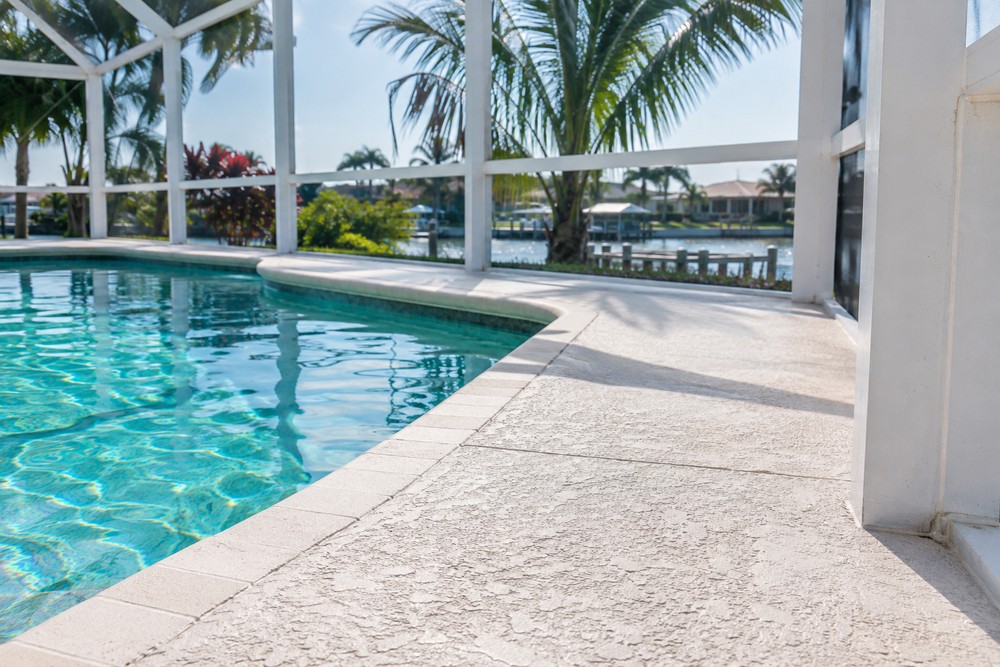
At pool decks and patios, texture, heat reflectance, and slip resistance matter as much as durability. Acrylic knockdown coatings create a cooler-to-the-touch, textured finish that resists hot tire pickup and accepts anti-slip additives. Polymer-modified microtoppings can resurface tired slabs and mimic stone or tile with saw cuts and integral pigments. Pavers ventilate and handle minor slab movement well, but they require regular joint sand maintenance and sealing to control weeds and efflorescence. Solvent-based acrylic sealers often deepen color on pavers, while water-based sealers carry lower odor and can be friendlier in enclosed lanais. Each choice balances appearance, cure time, VOCs, and maintenance intervals.
Slip Resistance and Surface Temperature in Wet Areas
Coastal living means wet surfaces around lanais, outdoor kitchens, and pool steps. Anti-slip performance varies with aggregate type and loading. A silica sand or quartz broadcast in a coating increases wet grip, but the heavier the broadcast, the harder the finish is to keep clean. Aluminum oxide offers aggressive traction for ramps and thresholds but can feel too abrasive for barefoot areas. On pool decks, many owners choose a light-color acrylic texture with a fine silica additive to maintain comfort and rinsability while reducing the chance of a slide after rain.
Heat also drives decisions. Dark, dense surfaces can get hot under direct sun. Light pigments, higher-reflectance sealers, and air-pocket textures like knockdown reduce surface temperature by reflecting more light and limiting skin contact area. This is a practical safety upgrade for families using pools through long, bright afternoons.
Two Realistic Scenarios that Show Cause and Effect
Garage example: A homeowner coats a Fort Myers garage with a standard epoxy on a humid weekend without checking moisture. Within weeks, small blisters appear where the slab stayed cool and condensed water under the coating. A better path is to grind for profile, test for vapor, and apply a moisture-tolerant epoxy primer, then finish with a polyaspartic topcoat. A light flake or quartz broadcast improves traction and masks telegraphed imperfections. The primer manages vapor; the topcoat handles UV at the threshold and hot tires.
Pool deck example: A shaded lanai has slick stamped concrete that grows algae after summer storms. Rather than a clear sealer alone, the owner selects an acrylic knockdown overlay in a light tone with a fine anti-slip additive. The installer cleans and mechanically profiles the surface, treats cracks, knockdowns the texture, and applies a UV-stable sealer. The result drains better, stays cooler, and resists algae because microtexture and periodic rinsing limit standing water and nutrient buildup.
Aftercare That Extends Service Life
Every finish performs longer with a simple maintenance plan. Rinse salt spray and dust before they embed. Use pH-neutral cleaners on coated floors and avoid harsh degreasers that soften acrylic sealers. Pressure washing can help, but an overly tight tip or close pass can scar overlays or blast joint sand from pavers. In pool areas, promptly rinse chlorine splashes to protect pigments. Expect to re-seal acrylic systems on cycles suited to sun exposure, and check high-traffic paths for wear first. For pavers, refresh polymeric joint sand where it erodes and reseal to control efflorescence and staining. Small upkeep prevents the surface from crossing the threshold where wholesale repair becomes the only option.
Coastal conditions do not forgive shortcuts, but they reward good fundamentals. When surfaces are profiled correctly, moisture is accounted for, and finishes are matched to sun, splash, and foot traffic, results hold up through seasons of heat and storms. Owners who plan around dew point and cure windows, honor control joints, and set a realistic cleaning and reseal rhythm see fewer callbacks and less downtime. Start with the slab you have, pick materials for the weather you live in, and let texture, color, and topcoat choices support the way the space is actually used.