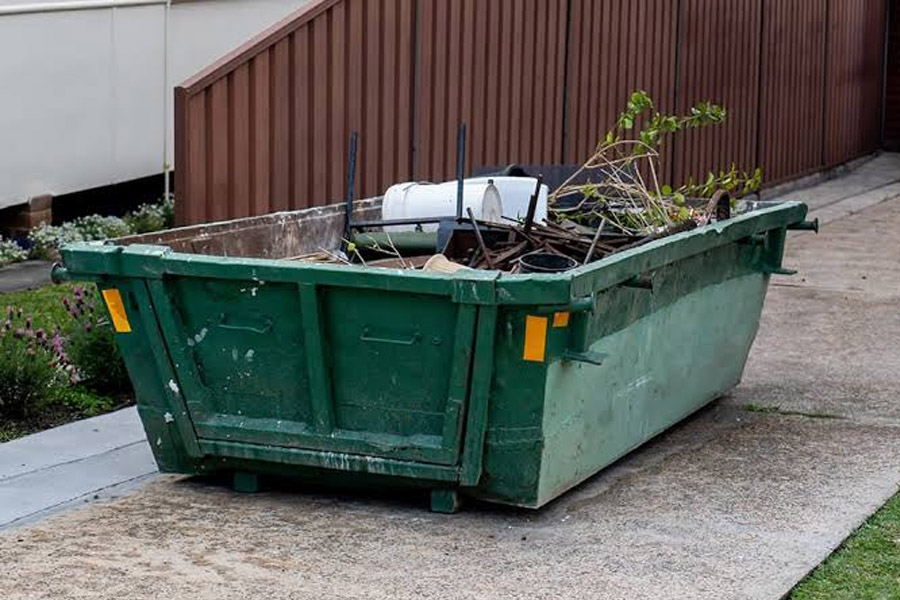
Australia made 75.6 million tonnes of waste in 2022 to 2023. Building and demolition work made 29.2 million tonnes of it, or 39 percent. That is a lot of broken tiles. Most home jobs are small next to that, but they still make a mess. A bin at your gate beats five trips to the tip in a ute, and adelaide skip bins hire is one local way to get one. Their bins run from 2 to 10 cubic metres. Read on for what to throw in, what to keep out, what councils charge, and how to fill a bin.
What goes in the bin
Sort before you toss. The hire site lists separate waste types, and each one is handled a different way. Here are the main ones.
- General waste: old couches, toys, boxes and broken chairs.
- Renovation waste: timber, plasterboard, tiles and worn out vanities.
- Concrete and masonry: bricks, pavers and slabs. Keep these on their own.
- Clean fill: soil and sand with no rubbish mixed in.
- Green waste: branches, prunings and lawn clippings.
- Scrap metal: pipes, wire and old sinks.
The one thing that never goes in
Asbestos. Australia banned it on 31 December 2003, yet it never left the walls and roofs that already had it. About 1 in 3 homes still hold some, and houses built or fixed up before 1990 are the likely ones. Roughly 4,000 Australians die from asbestos disease every year. That is over three times the road toll. My rule is blunt. If your house is older than 1990 and you are ripping off fibro sheets, stop. Get a test first. A skip bin is the wrong place for a guess.
Pick the size by weight
Most people pick by how much space the stuff takes. That is the wrong way round, because weight bites first. Solid concrete weighs about 2.4 tonnes per cubic metre, so a small 2 cubic metre bin of it is nearly 5 tonnes. Dry soil is about 1.5 tonnes per cubic metre. Timber and plasterboard are much lighter, which is why a big bin suits a kitchen strip out. For one bathroom I would take 4 cubic metres. For a kitchen or a big garage clear out, take 6 or 7. Ten is for whole house jobs. When two sizes tempt you, go up. A second bin halfway through a job is a headache.
Do you need a council permit?
On your own driveway, usually not. On the nature strip, footpath or road, yes. Fees and waiting times change from council to council. This is what the hire site’s council guide listed for five areas. Prices move, so check with your council first.
| Council | Permit fee | Notice needed |
| City of Adelaide | $64 per week | 2 working days |
| Port Adelaide Enfield | $25 | 8 days |
| Playford | Free | 2 weeks |
| West Torrens | $70 | 2 to 3 weeks |
| Prospect | $25 | 3 working days |
Prospect also caps bins at 3 cubic metres and 4 days, unless a safety officer says a bigger one is fine. West Torrens is the slow one. Apply there before you book anything else.
Fill it like you mean it
You get up to 7 days, and same day delivery is possible if you book before 10 am and a bin is free. Put heavy things in first, flat on the floor. Stand plasterboard sheets up against the walls. Keep everything below the top edge, because a heaped bin cannot be lifted safely. An empty looking bin on the street attracts other people’s rubbish. Cover it if rain is coming, since wet timber and plaster weigh more.