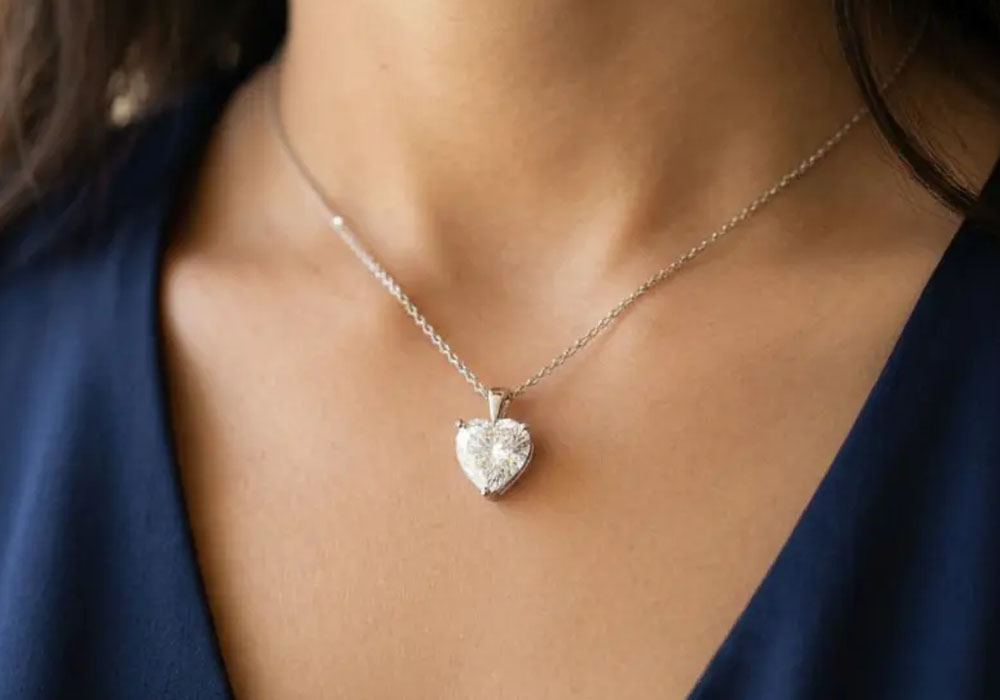
A necklace lives or dies by four things: cut, color, clarity, and carat. Miss one of them, and the sparkle you paid for never actually shows up. Style comes from the setting. Sparkle comes from the stone itself. diamond necklace only earns both when the person choosing it understands what each of the 4Cs is doing. The round brilliant cut alone makes up close to 75% of all diamonds sold worldwide, according to GIA estimates, because its 58 facets are engineered to bounce back more light than almost any other shape.
Cut Decides How Much Light Comes Back
Cut is not the same as shape, even though people mix the two up constantly. Shape is round, oval, or pear. Cut is the angles and proportions inside that shape. A well cut round brilliant returns close to 90% of the light that hits it, while a poorly cut stone leaks light out the sides and looks flat even under good lighting. This is the one feature I’d never compromise on, more than color, more than size.
Color Grading Runs From D to Z
D is colorless. Z carries a visible yellow tint you can spot across a room. Most necklace stones sit in the G to I range, which look white to the naked eye but cost noticeably less than a D or E. Save your money here. Nobody at dinner is holding your necklace up next to a grading chart.
Clarity Measures the Inclusions Inside
Every diamond has tiny internal marks called inclusions, formed under intense heat and pressure deep in the earth. The GIA clarity scale runs from Flawless down to I3. A necklace pendant sits further from the eye than a ring does, so VS2 or SI1 clarity is usually invisible without a loupe. Paying extra for Flawless clarity on a pendant is, frankly, money spent on a number nobody will ever check.
Carat Weight Isn’t the Whole Story
Carat measures weight, not size or sparkle. Two one carat diamonds can look completely different depending on cut quality. A well cut 0.9 carat stone can outshine a poorly cut 1.1 carat stone every time. Chasing round numbers like exactly one carat often means paying a premium for a number instead of paying for actual beauty.
Setting Style Changes How the Stone Reads
A bezel setting protects the stone but hides some of its width. A prong setting shows more of the diamond’s edges and lets in light from the sides too. Pendant settings that let light hit the diamond from underneath, not just the top, tend to sparkle more under normal indoor lighting. That’s where most necklaces actually get worn, not under a jeweller’s spotlight.
Chain Length Changes the Whole Look
An 18-inch chain sits at the collarbone and suits most people. A 16-inch choker-style chain sits higher and works best on longer necks. Go past 20 inches and the pendant starts falling toward the chest, which shifts the whole look from delicate to statement piece. Neither length is wrong, but they read completely differently in photos and in person, so try before you commit.
Fluorescence Is the Feature Everyone Skips
Some diamonds glow faintly blue under UV light, a trait called fluorescence, and it shows up on every grading report as none, faint, medium, or strong. Strong fluorescence can make a stone look slightly hazy in daylight, though most people never notice it at all. Medium or faint fluorescence in a G to I color stone often goes completely unnoticed, and can actually help the stone look a shade whiter than its grade suggests.