Mountaineering is far more than a simple outdoor hobby; it is a demanding test of physical endurance, technical skill, and mental resilience. Whether you are a weekend hiker looking to tackle your first challenging peak or a seasoned alpine climber preparing for a high-altitude expedition, success on the mountain begins long before you set foot on the trail. It starts in your living room with the deliberate, strategic selection of gear inside your pack.
Packing for a mountain expedition requires striking a careful balance between preparedness and agility. Carrying too little leaves you vulnerable to sudden atmospheric shifts and unforeseen emergencies, while carrying too much causes unnecessary fatigue and drastically slows your climbing pace. To help you navigate your next summit push efficiently, here is a comprehensive guide to essential mountaineering gear, safety strategies, and packing principles.
1. Footwear and Smart Layering Systems
Your apparel and footwear serve as your primary shield against harsh alpine environments. Because mountain weather is notoriously unpredictable and prone to sudden shifts, relying on a dynamic layering system is far more effective than packing a single heavy jacket.
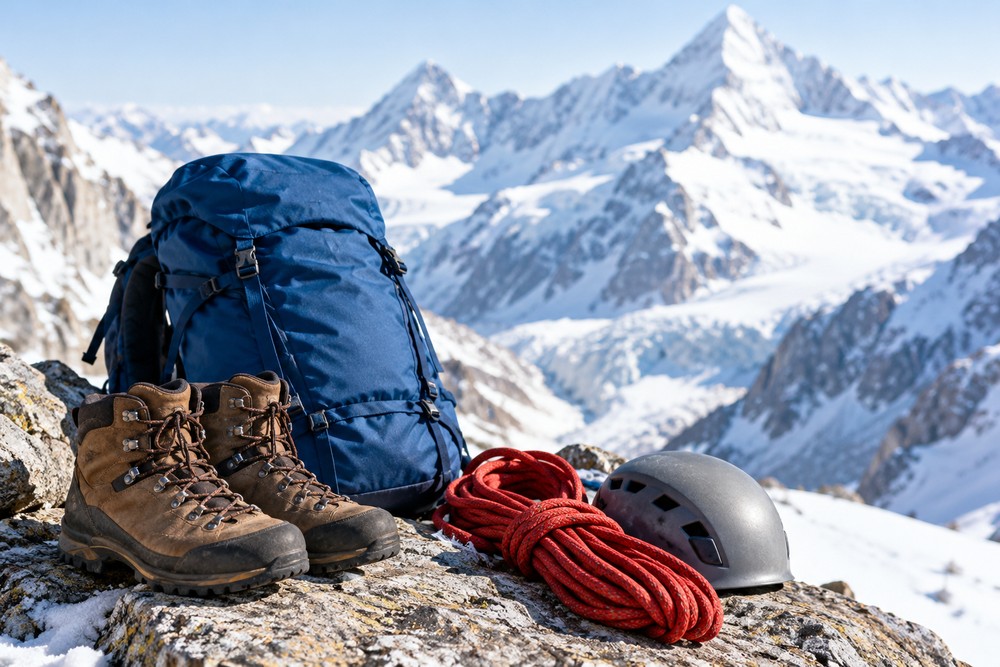
- Footwear: Sturdy, well-fitting mountaineering or heavy-duty hiking boots with solid ankle support are non-negotiable. Ensure your boots are thoroughly broken prior to your expedition to prevent painful blisters on steep climbs.
- Base Layer: Moisture-wicking synthetic or merino wool fabrics draw sweat away from your skin, keeping you dry and preventing hypothermia during high-exertion pushes.
- Mid-Layer: Synthetic insulation or fleece jackets trap vital body heat, providing flexible warmth when temperatures drop at higher elevations.
- Outer Shell: Windproof and waterproof jackets and trousers shield your body from punishing gales, freezing rain, and heavy snowstorms.
2. Navigation and Communication Hardware
Venturing into remote wilderness requires clear-headed navigation and reliable communication tools. Even on well-established routes, unexpected blizzards, dense fog, or darkness can obscure trails in seconds.
Always pack a physical topographic map alongside a dependable magnetic compass, and practice using them without relying on battery-powered technology. A handheld GPS unit offers convenient real-time position tracking. However, when traditional cellular coverage drops completely in deep valleys or alpine passes, carrying a dedicated satellite walkie talkie provides a vital communication link to coordinate with team members or reach emergency assistance.
Before setting off, outline your planned route, note key landmarks, and share your detailed itinerary with a reliable contact back home.
3. Technical Safety and Shelter Essentials
Depending on the terrain complexity and altitude of your route, specialized safety equipment is mandatory to protect against mountain hazards.
- Personal Safety Gear: Climbing helmets protect against rockfall, while harnesses, ropes, ice axes, and crampons are essential for navigating steep snowfields or technical glaciers.
- Emergency Shelter: Always carry a lightweight emergency bivy sack or reflective shelter, even on planned single-day ascents.
- Illumination: A high-lumen headlamp equipped with fresh batteries ensures hands-free navigation if your descent extends past sunset.
4. Sustenance, Hydration, and Altitude Care
High physical exertion at high altitudes rapidly consumes energy reserves and accelerates dehydration. Consistent fueling maintains mental sharpness and physical endurance during critical moments.
Pack dense, energy-rich foods that remain easy to eat in cold weather, such as mixed nuts, dried fruits, energy bars, and nutrient-dense snacks. Hydrate continuously throughout the day, as fluid loss worsens fatigue and heightens susceptibility to altitude sickness. Learn to recognize symptoms like persistent headaches, dizziness, or nausea, and be prepared to descend immediately if symptoms progress.
5. Environmental Stewardship: Leave No Trace
True mountaineering performance includes a commitment to preserving fragile high-altitude ecosystems. Practice strict Leave No Trace principles by packing out all waste, respecting local wildlife, and sticking strictly to established trails to prevent soil degradation.
By approaching your pack with intention, prioritizing core safety equipment, and respecting the unpredictable alpine environment, you set yourself up to reach new heights with absolute confidence.