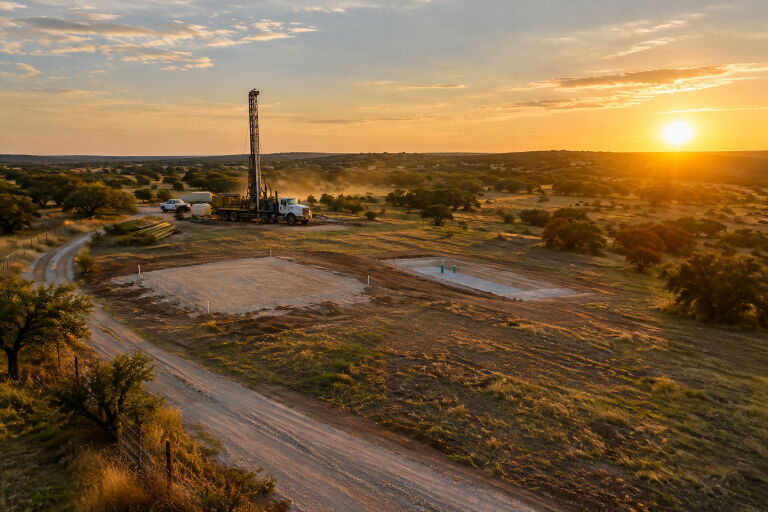
Drilling a private well is a major property decision, not simply a construction task. The finished system may involve site planning, drilling, casing, a pump, electrical work, pressure equipment, water lines, permits, testing, and future maintenance. Planning each piece before work begins can reduce delays and help you compare proposals on equal terms.
For landowners evaluating residential water well drilling, Hazelett Drilling, Inc. offers Texas homeowners domestic well, landscape irrigation, geothermal, pump, pressure system, and storage services. The company has operated since 1979 and serves more than 35 counties, making regional experience with Texas geology and residential water-system needs an important consideration during early project planning.
Why Planning Matters Before Drilling
Well depth and production can differ substantially between nearby properties because underground conditions are not uniform. A project can also change when a driller encounters harder formations, needs additional casing, or must go deeper than initially expected. Understanding the overall system before accepting a proposal helps prevent a mismatch between the well, the pump, and the property’s actual demand.
Check The Property And Building Plan
Start with a scaled site plan, even if it is simple. Mark the planned home, driveway, septic components, barns, gardens, utility routes, fences, and future additions. Identify slopes, drainage paths, flood-prone ground, large trees, and narrow entrances that could limit access for heavy drilling equipment.
Measure the likely route from the well to the home and electrical service. Long pipe runs, elevation changes, and distant outbuildings can affect equipment selection and installation work. Also consider future uses, such as irrigation, livestock watering, a guesthouse, or geothermal equipment. Planning only for the initial home can leave a system undersized as the property changes.
Review Local Rules And Well Records
Requirements can vary by state, county, municipality, and groundwater district. Before scheduling work, ask which agency governs the parcel and whether the project requires a permit, registration, inspection, production reporting, or a final driller’s report. Confirm setback rules involving septic systems, property boundaries, roads, structures, and potential contamination sources.
Nearby well records can provide useful context about reported depths, construction details, and water-bearing formations, but they are not a guarantee of results on your lot. Texas property owners can review nearby water well reports through the Texas Water Development Board before discussing expectations with a drilling professional.
Choose A Safe Well Location
The preferred location balances groundwater potential, sanitation, service access, and the practical needs of a drilling rig. The wellhead should remain accessible for inspection and repair after construction is complete. Surface water should drain away from the well rather than ponding around it.
Questions To Ask Before Choosing A Site
- Is the location separated from septic tanks, drain fields, fuel storage, animal areas, and chemical storage?
- Can the drilling rig reach the location without crossing unstable ground or damaging planned improvements?
- Will future buildings, paving, landscaping, or fencing block service access?
- Does the site account for drainage and the final finished grade around the wellhead?
Estimate Household Water Needs
Prepare a realistic list of normal and peak water uses before discussing pump capacity. Include the number of residents, bathrooms, appliances, outdoor faucets, gardens, irrigation zones, livestock, rental spaces, and planned outbuildings. A household well can sometimes support additional uses, but the answer depends on well yield, recovery, storage, pump capacity, and local requirements.
Compare Drilling Quotes Carefully
Two proposals may differ because they include different work. Ask each contractor for a written scope that identifies the drilling method and diameter, estimated depth, casing, screen, grout, well development, pump testing, pump and controls, pressure tank, electrical work, trenching, water lines, storage, testing, permits, and disposal charges.
Clarify Uncertain Costs
- How will deeper drilling, extra casing, or difficult formations be priced?
- What happens if the first location has an inadequate yield?
- Who authorizes and pays for a second attempt or abandoning work?
- At what point will the owner be contacted about a change in scope?
Plan The Pump And Pressure System
A completed borehole does not automatically provide usable household water. A typical system may include a submersible pump, controls, pressure tank, piping, electrical connections, and sometimes a storage tank or booster equipment. Equipment should be matched to the well’s tested performance, household demand, elevation, pipe distance, and desired pressure. Larger equipment is not automatically the better choice.
Test And Treat The Water
Clear water is not necessarily safe drinking water. Arrange laboratory testing for a new well before using it for drinking, cooking, or food preparation. The EPA advises private well owners to test annually for total coliform bacteria, nitrates, total dissolved solids, and pH, and to test after flooding, repairs, nearby land disturbance, or noticeable changes in color, taste, or odor. Its guidance on testing and protecting private well water also emphasizes the use of laboratories certified for drinking-water analysis.
Select treatment after reviewing test results. A device intended for iron or hardness may not address bacteria, nitrate, salinity, or another issue identified by the laboratory.
Use This Pre-Drilling Checklist
- Review property boundaries, building plans, septic plans, drainage, and access.
- Confirm local rules, permits, registrations, and setbacks.
- Check nearby well information where records are available.
- Estimate current and future household, irrigation, and livestock demand.
- Compare written proposals with matching scopes of work.
- Discuss low-yield, deeper-drilling, and unsuccessful-well terms before signing.
- Plan pump, pressure, storage, electrical, and water-line needs.
- Schedule water testing and organize all well and equipment records.
Plan For Reliable Water Beyond 2026
A well project is easier to manage when the property layout, local rules, water demand, equipment, testing, and budget are considered together. Ask clear questions before drilling begins, document decisions in writing, and retain all reports and service records. That preparation supports a water system designed for the property you have now and the uses you may add later.