Why Storm-Damaged Trees Need A Coordinated Recovery Plan
After an ice storm, severe thunderstorm, or high-wind event, the visible debris is only part of the problem. A tree can remain standing while carrying cracked limbs, torn roots, hidden trunk damage, or a new lean toward a roof, driveway, fence, or utility line. Tennessee guidance on storm-damaged trees emphasizes that removal near structures and power lines is dangerous and should be handled by qualified professionals. Storm damage can also create tension in wood and branches that is not obvious from the ground. A limb caught in another tree, resting on a roof, or partially broken above a walkway may shift unexpectedly when surrounding debris is moved. Even trees that appear largely intact deserve attention when they are close to places where people park, walk, play, or enter the home. The safest initial response is to keep people out of the affected area and let a qualified professional determine the next step. Nashville has a particularly strong reason to think beyond immediate cleanup. The city’s 2021 urban-tree-canopy assessment found that tree cover accounted for 56% of Metro Nashville, although the area lost 674 acres of canopy between 2016 and 2021. That scale means tree recovery affects much more than one yard. It can affect access to electricity, street safety, drainage, shade, property appearance, and future planting decisions.
How This Nashville Resource List Was Created
This list was built around the practical question homeowners ask after a storm: “Who do I call first, and who helps next?” Each organization was selected for a distinct role in a connected recovery process, rather than as a direct competitor. The criteria included local relevance, the ability to address a defined stage of storm recovery, recognizable service capacity, homeowner usefulness, and a clear handoff to the next provider. Chop Nashville is included as the tree-care anchor because its services span emergency response, risk assessment, preservation, removal, cleanup, and replacement planning. The goal is to make the order of decisions easier to understand during a stressful situation. Utility hazards should be addressed before private tree work begins; documentation should be preserved before repairs obscure damage; and landscaping restoration should follow, rather than precede, heavy tree work. This approach also helps homeowners avoid treating a temporary visual cleanup as a complete safety evaluation.
Chop Nashville
For homeowners who need a local assessment, emergency response, or a long-term tree-care plan, Chop Nashville tree service provides the core arborist support that connects the wider recovery process.
When a damaged tree may be saved rather than removed, professional tree cabling and bracing can be part of a preservation plan for certain structurally vulnerable trees, following an on-site arborist evaluation.
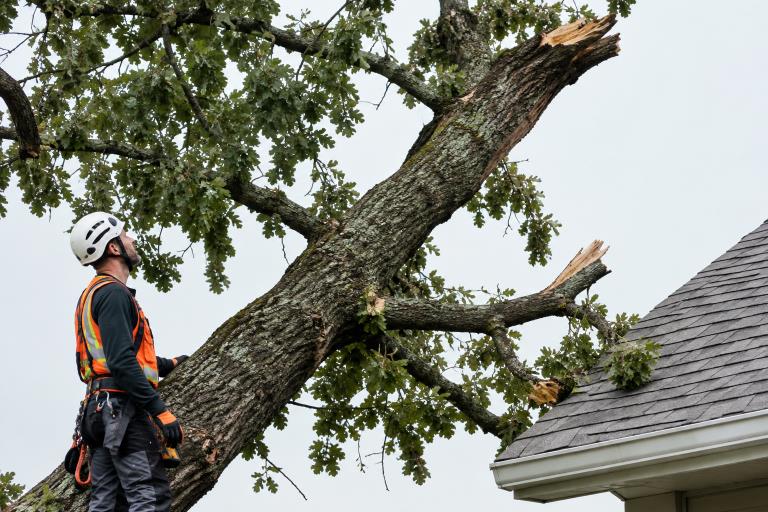
A common use case is a split oak leaning toward a roof after an ice storm. Rather than assuming the tree must come down, a qualified arborist can assess the trunk, canopy, root plate, targets beneath the tree, and the practical options for removal, selective pruning, or stabilization. That evaluation is especially useful because storm damage is not always an all-or-nothing decision. A professional can look for broken branch attachments, trunk cracks, root-zone disturbance, decay concerns, and changes in the tree’s lean before recommending a course of action. When removal is necessary, planning the work around nearby structures, access points, and debris placement can make the rest of the property-recovery process more manageable.
Nashville Electric Service
Why It’s On The List
Nashville Electric Service is the essential first contact when a tree, limb, or debris pile touches or threatens energized equipment. NES serves nearly 460,000 customers across roughly 700 square miles and maintains nearly 5,900 miles of distribution and transmission lines. Its vegetation-management work and utility response address electrical infrastructure, while a private arborist addresses trees and debris on private property.
- Report potential electrical hazards before arranging tree work near lines.
- Keep people, pets, ladders, tools, and vehicles away from downed or low-hanging lines.
- After utility guidance, use a qualified tree company for private-property assessment, removal, pruning, or debris management.
For example, if a limb blocks a driveway beneath an overhead service line, the safe sequence is to report the electrical concern, wait for the line to be evaluated, and only then plan tree work.
NES advises the public to assume downed lines are energized and to stay at least 30 feet away. That caution applies even when a wire is hidden by limbs, resting on a fence, or appears inactive after a storm. Arborists should not begin cutting or moving material until the appropriate utility or emergency personnel has addressed the electrical risk.
State Farm
Why It’s On The List
Insurance is a separate but important part of a storm-recovery network. State Farm can help policyholders review whether a loss may be covered under their homeowners policy when a storm-felled tree damages a covered structure, subject to deductibles, limits, exclusions, and individual policy terms. Before cleanup begins, if conditions are safe, homeowners should photograph the damage to the tree, roof, fence, vehicle, garage, or outbuilding from multiple angles. Save written estimates, invoices, and notes about the date and nature of the event. If a tree damages a garage, the insurer reviews the claim while a licensed and insured arborist removes the active hazard and helps prevent additional property damage. Photos should show both close-up damage and wider views that establish where the tree or limb came from and what it struck. Homeowners should not delay emergency work solely to wait for an inspection when there is an active safety risk, but keeping receipts and detailed records can make it easier to explain the work that was needed.
The Home Depot
Why It’s On The List
The Home Depot can be a practical stop for temporary property-protection supplies while homeowners wait for an arborist, utility response, roofer, or insurance inspection. It is not a substitute for professional tree work, especially where chainsaws, climbing, large limbs, or power lines are involved.
- Tarps, plastic sheeting, and basic fasteners for temporary weather protection
- Heavy-duty bags, gloves, rakes, and shovels for light debris cleanup
- Portable lighting, batteries, caution tape, and temporary fencing for safer access control
- Wet/dry vacuums and basic repair materials for manageable indoor cleanup
A homeowner can use a tarp and temporary barrier to limit exposure around a damaged area, but should avoid climbing, cutting suspended limbs, or working anywhere near electrical lines.
Temporary supplies are most useful when they support safe access control and prevent additional weather exposure without asking the homeowner to work under an unstable tree. Marking off a driveway, covering an undamaged opening, and keeping tools clear of the hazard zone are sensible interim measures while professional help is arranged.
TruGreen
Why It’s On The List
Once the immediate tree hazard is resolved, lawn and landscape recovery becomes the next phase. TruGreen fits into the network as a lawn-care resource for property owners dealing with damaged turf, compacted soil, ruts, displaced mulch, exposed roots, and bare areas left after tree removal or heavy cleanup equipment. The handoff is straightforward. Chop Nashville manages tree risk, pruning, removal, and stump work. A lawn-care provider can then support turf-health planning, while the homeowner addresses grading, reseeding, irrigation, mulch replacement, and future planting. This sequence helps avoid repairing a lawn before hazardous tree work is complete. Replacement planting should also account for the available space above and below ground. Selecting a tree with an appropriate mature size and keeping it clear of overhead utilities, structures, and crowded root areas can reduce future maintenance conflicts. The fall after leaf drop and the early spring before bud break are commonly suitable planting windows for many trees, depending on the species and site conditions.
How These Services Work Together
- Identify immediate life-safety and electrical hazards.
- Contact Nashville Electric Service when power lines or equipment may be involved.
- Document visible property damage for insurance purposes.
- Schedule Chop Nashville for professional tree assessment and emergency work.
- Use temporary supplies to protect the property and restrict access.
- Restore turf, soil, beds, and replacement plantings after the site is safe.
This sequence can change when conditions require emergency action, but the central principle remains the same: do not place property cleanup ahead of personal safety. A clear handoff between the utility, insurer, arborist, and landscape-recovery provider helps prevent duplicate work, reduces avoidable risk, and allows each professional to focus on work within their expertise. Nashville’s trees are central to the city’s character and function, but storm recovery works best when every provider handles the role it is equipped to manage. Start with safety and utility coordination, preserve documentation, bring in qualified arborist expertise, and restore the landscape only after the immediate risk is controlled. In that connected process, Chop Nashville serves as the local tree-care resource, helping homeowners move from urgent storm response to long-term tree and property care.
Conclusion
Effective storm recovery in Nashville begins with safety, professional tree assessment, and coordination between the right service providers. Chop Nashville serves as the central tree-care resource for evaluating hazards, removing damaged trees, exploring preservation options, and managing cleanup. Nashville Electric Service should be contacted when electrical lines are involved, while insurance providers can help homeowners understand their coverage and document property damage. Temporary repair supplies and lawn-care services can support the remaining recovery work once the site is safe. By following a clear recovery plan, keeping records, and addressing hazards promptly, Nashville property owners can reduce risks, protect their homes, and support the long-term health of the city’s urban tree canopy.