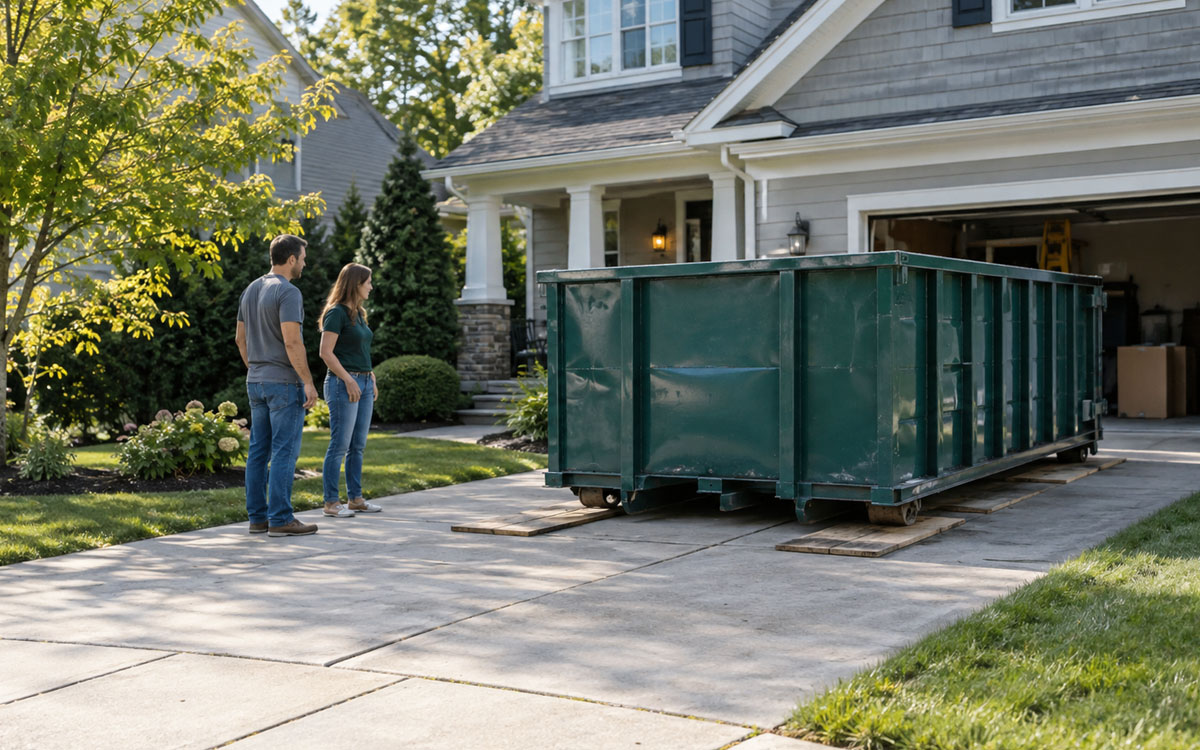
On many Melrose properties, driveways are short, streets are narrow, and overhead wires cross the curb area. Those details matter when you bring in a roll off dumpster for a renovation, roofing project, or long overdue cleanout. Container size is only part of the decision. The placement location, the surface beneath the container, the approach angle for the truck, and even the way you load debris can determine whether the rental goes smoothly. This guide focuses on practical choices for placing a dumpster on a small residential property, working within street and driveway constraints, and loading it safely without damaging asphalt, pavers, or landscaping.
1. Choosing a Spot: Clearance, Slope, and Surface Matter
Choose a placement area that gives the roll off truck a straight and unobstructed approach similar to what a large box truck would require. Check for low tree branches, roof eaves, and utility lines in the area where the truck bed will tilt while placing the container. If you are comparing providers that offer dumpster rental for Melrose homeowners, ask whether the driver can assess your driveway slope and turning radius from photos. A gentle slope is usually manageable, but a steep incline can cause a container to shift during loading or make retrieval unsafe. Leave enough space for the rear door of the container to swing open. On many roll off containers, this door provides the easiest walk in loading route.
Avoid placing the dumpster on soft ground. The wheels and support rails can sink into soil, crack pavers, or leave impressions in new asphalt. Place 3/4 inch plywood or sturdy cribbing blocks beneath the rails and wheels to distribute the load, especially on brick or decorative pavers. Mark the intended footprint with chalk and leave enough clearance for garage doors to open and vehicles to pass. If your driveway borders a retaining wall or steps, provide enough space to stand safely near the container door while loading without forcing the door against masonry.
2. Size, Weight, and Debris Density: Match the Container to the Job
Container size and weight limits depend heavily on the type of material you are discarding. Drywall, cabinets, and lumber are bulky but relatively light, so a 15 or 20 yard dumpster may reach its volume limit before its weight allowance. Asphalt shingles, tile, concrete, and soil are much denser. Even a 10 yard container filled with these materials can reach its weight limit quickly. Mixing dense debris with bulky materials makes the total weight harder to estimate and may result in additional fees. When you are unsure, ask the hauler how heavy materials should be handled. Many companies recommend smaller loads or dedicated containers for concrete, dirt, or similar debris.
Consider two common situations. A kitchen demolition involving wall studs, drywall, and base cabinets may fit comfortably in a midsize container because most of the material is relatively light and can be broken down. In contrast, a landscaping project that removes several inches of sod and topsoil from even a modest area can produce a very heavy load. In that case, the trade off may be between using a smaller container with one or two exchanges and using a larger container that must remain only partially filled to stay within the weight allowance. Planning according to material density rather than volume alone can prevent surprises on pickup day.
3. Street Placement Realities: Permits, Neighbors, and Visibility
If your driveway is too narrow or short, placing the container along the curb may be the only practical option. Many municipalities require a street occupancy or right of way permit when a dumpster sits on public pavement. Check local requirements before scheduling delivery, and ask the hauler whether they need any documentation from you. Place reflective cones or sawhorses at both ends of the container to improve visibility, especially on curved or poorly lit streets. Keep the dumpster away from fire hydrants, crosswalks, bus stops, and intersections where it could restrict the view of approaching traffic.
Street placement also requires planning around trash collection, leaf pickup, school traffic, and other activities that may block truck access. For example, your driveway may have enough room for the container, but the delivery truck may be unable to approach because parked vehicles crowd the street during the morning. In that situation, schedule delivery for a quieter time and ask nearby neighbors to keep the area clear temporarily. A clearly marked container that is securely covered and surrounded by visible cones, along with a defined pickup schedule, can reduce inconvenience and the risk of an unexpected relocation.
4. Loading Strategy: Door Swing, Weight Distribution, and Fill Lines
Use the walk in door first when loading heavy materials. Place items such as permitted appliances, boxes of tile, or bundled shingles on the container floor rather than throwing them over the side. Position the densest debris low and distribute it evenly throughout the container, then place lighter materials such as drywall and bagged insulation above it. Keep the weight balanced from side to side so the load does not become uneven. Never stack debris above the top rail. Most haulers cannot safely cover or transport an overloaded container and may refuse pickup until the excess material is removed.
Work carefully to reduce the risk of property damage and injury. A dolly or wheelbarrow can make long carries easier. Avoid throwing heavy objects from a height because they can bounce, damage the container, or create dangerous flying debris. Keep scrap metal separate if you plan to recycle it, and make sure prohibited materials do not enter the dumpster. Commonly restricted items include wet paint, solvents, batteries, propane cylinders, tires, and appliances containing refrigerants. Check local resources for appropriate hazardous waste disposal options. At the end of each workday, close the container door securely and cover the load when necessary to prevent rain from increasing weight or wind from scattering light debris.
Protection and Weather: Preventing Damage on Asphalt, Pavers, and in Snow
Residential asphalt can soften during hot weather, so plywood beneath the container rails can provide valuable surface protection in summer. On paver driveways, consider using plywood along with protective mats if available. Sharp truck turns can shift edge stones, so provide enough space for the driver to approach as straight as possible. During winter, remove snow and ice down to the pavement before delivery. Apply salt or sand to areas where the truck will travel and where people will walk to the container. Avoid placing the dumpster beneath roof valleys where falling snow or ice could create hazards or near storm drains that might become blocked by loose debris.
Wind and precipitation create additional challenges. A secure tarp and properly fastened straps can prevent cardboard, insulation, and other light materials from blowing into neighboring properties or the street. Keep a push broom and magnetic sweeper nearby because nails, screws, and other small metal pieces often collect along driveway edges and curbs. If a nor’easter or another severe storm is forecast, contact your provider to discuss whether delivery or pickup should be adjusted. Keeping the container dry, secure, and accessible makes loading easier and reduces mess around the property.
Thoughtful placement and loading can make a dumpster a reliable part of your project instead of a source of problems. Begin by confirming truck access, driveway slope, overhead clearance, and surface protection. Match the container to the density of your debris rather than considering volume alone, and plan street placement carefully when permits, visibility, and neighbor access are involved. Load heavy materials low, distribute weight evenly, respect the fill line, and secure the container at the end of each day. Ask your hauler about surface protection, acceptable materials, and weight limits before delivery. With these details addressed in advance, even a tight New England driveway can accommodate a roll off dumpster safely and efficiently.