What Is the Best First Step for a Failing Central Texas Shoreline?
The best first step is a professional site review before choosing a wall style, approving a repair, or requesting a final construction price. A qualified seawall construction company can review visible erosion, soil movement, drainage, access, water exposure, and nearby structures to determine what the property actually needs.
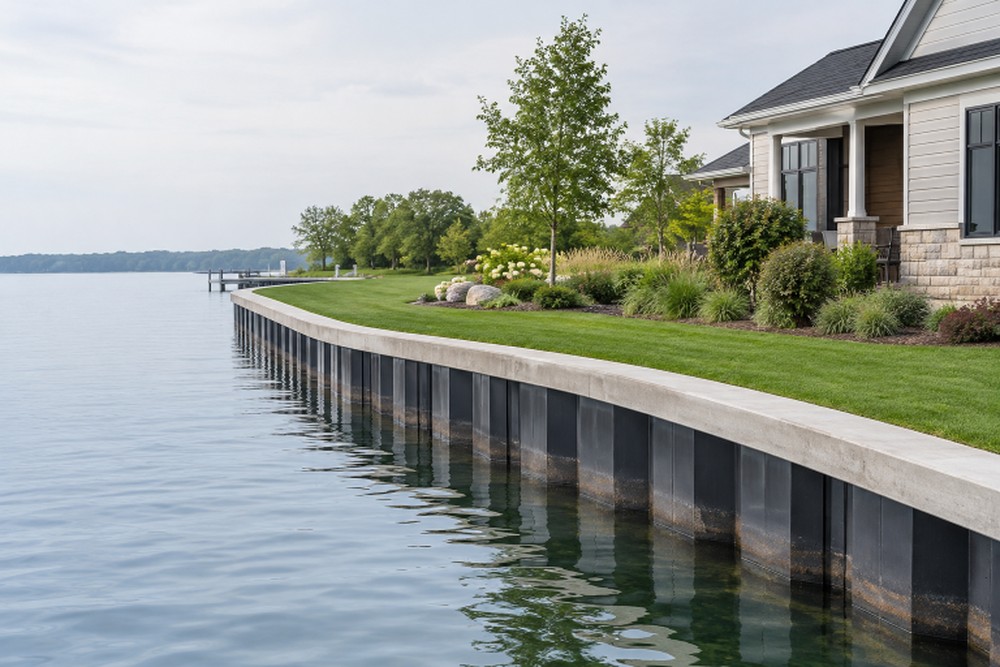
Lakeside Structures approaches waterfront work as a property-specific construction project rather than a one-size-fits-all wall installation. According to the company, it has worked on Central Texas waterfront structures since 2002 and has completed more than 300 projects. That experience can help owners begin with the right question: whether the shoreline needs a new seawall, a bulkhead, a retaining wall, targeted repair, reinforcement, or a broader waterfront improvement plan.
Property owners should arrange a review when soil or landscaping is washing toward the water, an existing wall is bowing or cracking, the ground behind a wall is sinking, or water appears to be scouring the base of the structure. Unstable stairs, docks, pilings, and boathouses can also indicate that the shoreline and waterfront structures need to be assessed together.
Why Do Central Texas Waterfront Properties Need Site-Specific Planning?
Waterfront construction differs from ordinary land-based construction because the shoreline is affected by water levels, soil conditions, drainage, slope, lakebed conditions, waves and boat wake, and limited equipment access. A structure that works well on one property may not suit another property only a short distance away.
Shoreline protection also involves more than stopping visible soil loss. The National Oceanic and Atmospheric Administration explains that site-specific shoreline stabilization is important because armoring methods can protect land while also affecting sediment movement and natural shoreline processes. Although Central Texas lakes and rivers are different from coastal environments, the broader principle still applies: the solution should fit the conditions at the individual site.
For example, a waterfront owner may need a structural wall to retain soil behind a yard or patio, while another property may need a plan that addresses drainage, access stairs, dock foundations, and shoreline protection simultaneously. Reviewing the entire waterfront can reduce the risk of treating one symptom while leaving the underlying problem unresolved.
How Does Lakeside Structures Approach Seawall Construction?
Lakeside Structures combines shoreline planning, construction coordination, permitting support, specialized marine equipment, and final project review. Its services include seawalls, bulkheads, retaining walls, marine repairs, docks, piers, boathouses, boat lifts, and pile driving.
Capabilities That Matter on Waterfront Projects
- Central Texas experience: Local familiarity can help the team account for regional lake conditions, changing water levels, shoreline access, and nearby waterfront development.
- Marine equipment: Lakeside Structures reports operating barges and specialized pile-driving equipment, which can be useful in areas with steep terrain or limited land access, where conventional equipment is difficult to use.
- Integrated planning: A seawall project may need to coordinate with a dock, boathouse, stairs, drainage improvements, retaining walls, or foundations for structures over water.
- Permitting coordination: The company provides in-house permitting coordination as part of its project process.
- Project communication: A single construction team can provide owners with a clear point of contact from initial review through final walkthrough.
Which Shoreline Protection Service Does a Property Need?
The appropriate service depends on the source and extent of the problem. A site review helps separate similar-looking issues that may require different construction methods.
- Erosion at the waterline: Seawall construction or another shoreline stabilization approach may be considered when land is washing away, or the shoreline edge is retreating.
- Soil loss behind a wall: A bulkhead or retaining wall may be appropriate when soil, a slope, landscaping, a patio, or other improvements need structural support.
- An aging or failing wall: Marine repair, reinforcement, or replacement may be considered based on structural movement, foundation condition, drainage, and the cause of failure.
- Unsafe access to the water: A project may include stairs, a pier, a dock, or a boathouse so that shoreline protection and daily waterfront access work together.
- Unstable structures over water: Pile driving or piling replacement may be needed when foundations must support docks, lifts, piers, or boathouses.
What Happens During a Lakeside Structures Seawall Project?
- Consultation: The owner describes the property, visible concerns, goals, and intended use of the waterfront.
- Site review: The team evaluates shoreline conditions, access, drainage, existing structures, water exposure, and project constraints.
- Scope definition: Lakeside Structures identifies the likely work area, recommended services, and related construction needs.
- Design and engineering coordination: When required, the project can be coordinated with licensed professionals for structural and site-specific requirements.
- Permitting: Documentation and agency coordination are addressed before work begins when approvals are required.
- Construction and walkthrough: The crew completes the approved work and reviews the finished structure with the owner.
How Does Permitting Affect Shoreline Construction?
Permitting is often a critical part of waterfront construction because requirements can vary by lake, jurisdiction, project type, shoreline disturbance, dredging, fill, and the location of work relative to the waterline. Owners should not assume that a land-based permit covers all shoreline activity.
On the Highland Lakes, the LCRA notes that shoreline stabilization activities may involve dredge-and-fill requirements. Smaller projects may qualify for notification procedures, while larger projects can require an LCRA permit. The applicable process depends on the actual work proposed, so permitting should be confirmed for the individual property before construction starts.
How Can a Property Owner Submit a Seawall Construction Request?
A useful request gives Lakeside Structures enough information to identify the proper next step. Include the property location and lake name, photos of the shoreline and existing structures, the approximate length of the affected area, a description of the visible problem, and any known history of flooding, water-level changes, repairs, or permits.
It also helps to explain whether the project could involve a dock, pier, boathouse, retaining wall, stairs, boat lift, or piling work. A consultation initiates the site review process, but it does not replace engineering, permitting, or a property-specific construction assessment.
Frequently Asked Questions
Should an existing seawall be repaired or replaced?
That depends on the wall’s condition, its foundation, surrounding soil, drainage, and the reason it is moving or failing. A site review can help determine whether repair, reinforcement, or replacement is the more practical option.
Can a seawall project include a dock or boathouse?
Yes. Lakeside Structures provides related marine construction services, so owners can plan shoreline protection, water access, and over-water structures as part of a coordinated waterfront project.
How long does seawall construction take?
Timelines vary based on site access, permitting, design needs, materials, water conditions, project size, and related structures. A project-specific schedule can be developed after the site review and scope definition.