Installing a standby generator is one of the most practical ways to protect a home during extended power outages. However, many common problems do not come from the generator brand itself. They result from planning mistakes made before the unit ever runs its first exercise cycle. If you are considering a Generac home generator, decisions about sizing, fuel supply, placement, transfer equipment, and site preparation will determine whether the system handles your actual electrical loads smoothly or struggles with nuisance trips, voltage problems, and inspection delays. Here are five planning mistakes that can undermine performance and what to consider instead.
Mistake 1: Matching Generator Size to Panel Amperage Instead of Actual Loads
It is tempting to assume that a 200 amp electrical service automatically requires a certain generator size, but service capacity doesn’t reflect actual household demand. Generator sizing should be based on a proper load calculation that considers both continuous electrical demand and the temporary starting requirements of larger appliances and motors.
Air conditioner compressors, well pumps, refrigerators, and other motor-driven equipment can draw significantly more current during startup than during normal operation. If several large loads start at nearly the same time, the generator may experience voltage fluctuations, nuisance breaker trips, or reduced performance even when the nominal capacity appears adequate.
A proper plan identifies the circuits and major appliances that need backup power and evaluates how they may operate together during an outage. It should also determine whether load management is necessary.
Providers that perform detailed load calculations, transfer switch planning, permitting, and installation, such as teams offering Select Power Generac generator installation, can help match generator capacity to actual household needs and determine whether load management equipment is appropriate.
Qualified professionals should handle electrical sizing to manufacturer requirements and applicable electrical codes.
Upgrading an electrical panel beforehand ensures the main system can easily accommodate backup power connections without overcrowding circuits. Consulting qualified electricians at DT Electric can help clarify whether your home’s central electrical panel has sufficient space and capacity for additional generator breakers or transfer switch integration.
Mistake 2: Assuming Your Gas Meter or Propane Tank Can Supply Any Generator
Standby generators can consume significant amounts of fuel when operating under heavy load. Natural gas and propane systems have practical limits based on meter capacity, regulator performance, pipe sizing, run length, and the demands of other appliances connected to the same fuel supply.
If fuel pressure cannot remain within the generator manufacturer’s required range while the unit is operating, the engine may run poorly, lose power, or shut down.
Before purchasing equipment, have the appropriate gas utility, propane provider, or licensed professional evaluate the available fuel supply. Compare the generator manufacturer’s published fuel requirements with the available system capacity.
In some cases, you may need to change the meter, regulator, piping, or propane storage system. Do not perform these modifications without qualified personnel; they can create fire, explosion, or carbon monoxide hazards.
For propane systems, tank capacity and vaporization performance can also affect operation during cold weather or extended outages. A qualified installer can determine whether the existing system can support both the generator and other connected appliances.
Mistake 3: Putting the Unit Too Close to Openings or Property Lines
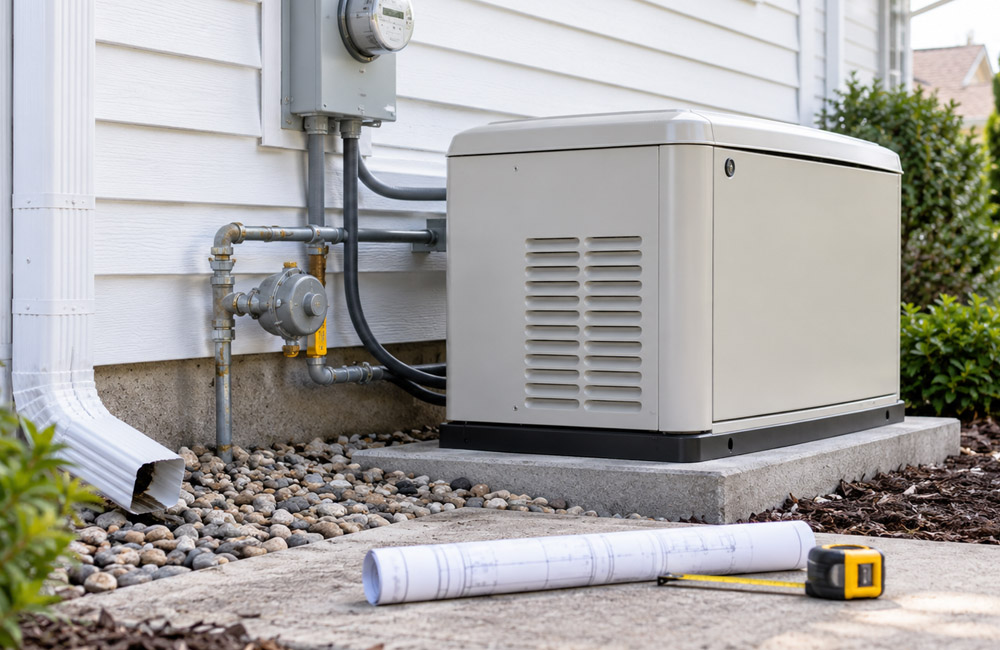
Install standby generators according to manufacturer requirements and applicable local codes. Clearances from doors, windows, vents, combustible materials, and other structures are particularly important because generator exhaust contains carbon monoxide.
The exhaust should never be directed toward enclosed spaces, open windows, doors, vents, covered patios, or other areas where fumes could accumulate.
Property line setbacks and local noise requirements may also influence placement. Installing the generator in an extremely tight location may cause inspection problems, reduce airflow, increase heat buildup, or make maintenance difficult.
Develop a site plan before installation. The location should provide appropriate airflow, service access, exhaust clearance, and space for electrical and fuel connections.
Also consider where sound will travel. A location near bedrooms, patios, or neighboring homes may create unnecessary noise even if the installation technically meets minimum requirements.
Plan electrical and fuel routes early. A location may simplify conduit or piping routes while still meeting safety and code requirements.
Mistake 4: Treating the Transfer Switch as an Afterthought
The automatic transfer switch is a critical part of a standby generator system. It safely separates utility power from generator power and determines how backup electricity is distributed through the home.
The appropriate transfer switch configuration depends on the electrical service, generator size, household loads, and overall backup strategy.
Some systems are designed to support most or all household circuits with load management, while others supply a selected group of essential circuits. The right approach depends on which appliances need to operate during an outage and how much simultaneous demand the generator can safely handle.
Consider an all electric home with several large electrical loads. Running multiple air conditioners, cooking appliances, water heating equipment, and an electric vehicle charger at the same time may exceed the practical capacity of a residential standby generator.
Load management can automatically delay or temporarily disable certain nonessential loads so priority circuits remain powered. Another option is to design the system around a selected group of essential circuits.
Make these decisions before purchasing the system; changing them later can add cost and complexity.
Transfer switch installation involves utility and generator power sources and should always be completed by qualified electrical professionals.
Mistake 5: Forgetting Pad Height, Drainage, Noise, and Service Access
The generator pad does more than support the unit. Its height, stability, drainage, and placement affect long term durability and serviceability.
A generator installed in a low area where rainwater collects may experience increased moisture exposure, corrosion, mud, or settlement around the enclosure. An unstable base can also shift over time and place stress on connected conduit or fuel piping.
Prepare the installation surface according to the manufacturer and local site conditions. Proper drainage should move water away from the generator rather than allowing it to pool around the base.
Service access matters as well. The generator should be positioned so technicians can safely open panels, replace filters, inspect the battery, and perform routine maintenance without squeezing between walls, fences, or landscaping.
Vegetation should not block ventilation openings or interfere with exhaust flow.
After professional commissioning, confirm the exercise schedule and operating settings according to the manufacturer’s recommendations.
Qualified technicians, not homeowners, should perform fuel system inspections, electrical testing, internal adjustments, and major repairs.
Good Generator Performance Starts With Planning
A properly planned standby generator system should operate predictably when utility power fails. The transfer equipment should respond correctly, important household loads should remain supported, and the fuel system should provide reliable engine operation.
That outcome begins with accurate load calculations, verified fuel capacity, a safe, code-compliant location, the right transfer strategy, and a site that supports future maintenance.
Spend time resolving these decisions before equipment is ordered. A generator is only one part of the backup power system. Electrical service, fuel supply, controls, placement, drainage, and ongoing maintenance all need to work together.
When the installation is designed around the home’s actual conditions rather than assumptions, the generator is far more likely to provide dependable backup power during an extended outage.